
When it comes to keeping kitchen knives and outdoor blades razor-sharp, the choice of a sharpening tool can make all the difference. In the crowded world of knife sharpeners, two names, Wasabi Knife Sharpener and Work Sharp, stand out for their innovative designs and loyal followings. Whether you’re a professional chef, an avid hunter, or a home cook, understanding the strengths and limitations of each brand will help you get the best results from your blades and extend their lifespan.
Over the past decade, consumer expectations for knife sharpeners have skyrocketed. No longer satisfied with basic sharpening stones or cheap pull-through gadgets, today’s buyers demand precision, safety, and ease of use. Both Wasabi and Work Sharp promise to deliver professional-grade sharpness at home, but their approaches differ dramatically.
In this comprehensive guide, we’ll cut through the hype, analyze real-world performance, and provide actionable advice to help you choose the best sharpener for your needs.
Key Takeaways
- Wasabi Knife Sharpener excels in simplicity, compact design, and ease of use, making it ideal for home cooks and occasional sharpening.
- Work Sharp offers versatile, professional-grade sharpening systems suited for enthusiasts, outdoor users, and those who demand fine control.
- Price, blade compatibility, and maintenance should all be considered before choosing a sharpener.
- Hands-on testing and user reviews reveal significant differences in sharpening results, speed, and learning curve.
- Both brands have unique features that may fit specific use cases, there’s no universal winner.

Credit: www.youtube.com
Overview Of Wasabi Knife Sharpener And Work Sharp
Understanding the core differences between these two brands starts with their design philosophy, target users, and product ranges.
Wasabi Knife Sharpener: Brand Profile
The Wasabi Knife Sharpener is designed with simplicity at its core. Known for its compact, minimalist build, Wasabi models typically use a pull-through system that aligns the blade at a pre-set angle, making sharpening nearly foolproof for beginners. The brand has gained popularity among home cooks who want a quick solution without the intimidation factor of whetstones or powered systems.
Key features of Wasabi sharpeners include:
- Preset sharpening angles for consistent results
- Carbide and ceramic rods for coarse and fine sharpening
- Lightweight, compact design for easy storage
- Affordable price point compared to professional systems
The Wasabi sharpener is usually recommended for stainless steel kitchen knives and pocket knives, but may not suit high-end Japanese blades or serrated knives.
Work Sharp: Brand Profile
Work Sharp is a US-based company that specializes in electric and manual sharpening systems for knives, scissors, tools, and even axes. Their flagship products, such as the Work Sharp Knife & Tool Sharpener, use flexible abrasive belts, adjustable angle guides, and variable speed controls. These features cater to enthusiasts and professionals who want maximum control and versatility.
Distinctive aspects of Work Sharp sharpeners:
- Abrasive belt technology for a professional edge
- Adjustable angles to accommodate Western and Japanese blades
- Motorized and manual options for different user preferences
- Expandable accessories for serrated blades and scissors
Work Sharp models are frequently praised for their effectiveness on a wide range of blade types, including hunting knives, kitchen cutlery, and even garden tools.
Target Users Compared
Wasabi’s primary audience is the casual home cook or anyone looking for a quick, low-maintenance sharpening solution. In contrast, Work Sharp appeals to knife enthusiasts, hunters, and professionals who require precision and are willing to invest more time and money in their sharpening routine.
Product Range Snapshot
Both companies offer multiple models. Here’s a quick comparison:
| Brand | Entry-Level Model | Pro Model | Sharpening Method | Price Range (USD) |
|---|---|---|---|---|
| Wasabi | Wasabi Basic Sharpener | Wasabi Pro | Pull-through (Manual) | $20, $40 |
| Work Sharp | Work Sharp Pivot | Work Sharp Ken Onion Edition | Electric/Manual Belts | $30, $150+ |

Credit: www.youtube.com
Design And Build Quality
The construction and ergonomics of a knife sharpener play a crucial role in its performance and user satisfaction.
Wasabi Knife Sharpener: Materials And Ergonomics
Wasabi sharpeners are typically constructed from high-impact ABS plastic with integrated carbide and ceramic rods. The lightweight body makes it easy to store and handle, but may raise concerns about long-term durability if used heavily. The handle is usually rubberized or textured for a secure grip, and the base may include non-slip pads to enhance safety during sharpening.
Key ergonomic features include:
- Single-handed operation
- Preset slots for coarse and fine sharpening
- Simple, intuitive layout
The straightforward design minimizes the risk of user error, making it a suitable choice for those who have never sharpened a knife before.
Work Sharp: Materials And Build
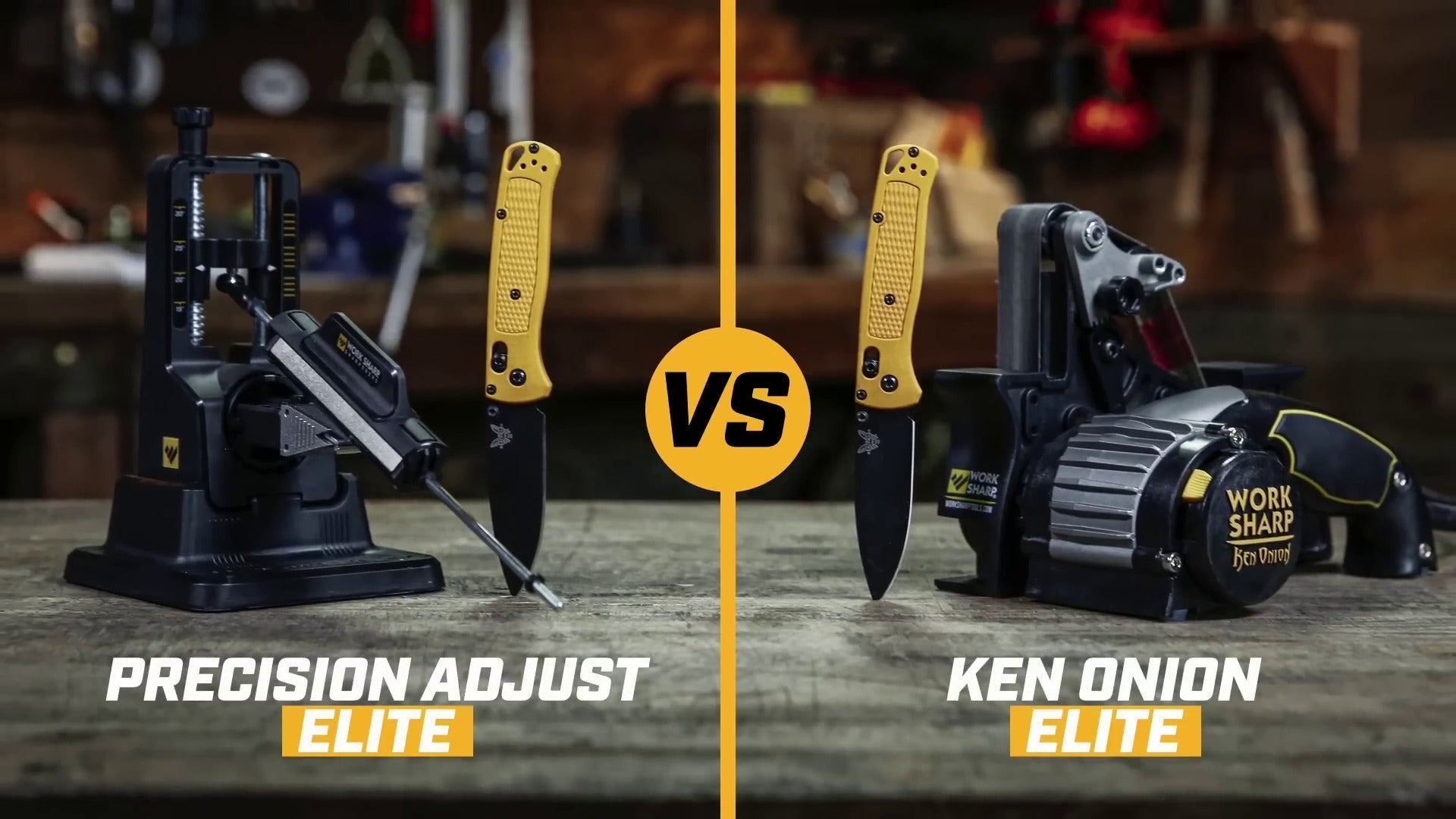
Work Sharp’s higher-end models are built from reinforced polymers, metal components, and incorporate abrasive belts rather than fixed rods or stones. The electric models, such as the Ken Onion Edition, include a variable speed motor, adjustable angle guides, and a stable base. These features result in a heavier, more robust device that can withstand frequent use.
Ergonomics highlights:
- Ambidextrous controls
- Comfortable grip handles
- Stable, vibration-dampened base
Some manual Work Sharp models, like the Pivot, use diamond and ceramic rods in a compact, field-ready package, ideal for outdoor use.
Durability And Maintenance
- Wasabi: Designed for light, occasional use; carbide rods may wear out after a few years of regular sharpening.
- Work Sharp: Built for longevity; belts and guides are replaceable, and the motor is rated for hundreds of hours of use.
Pro Tip: Always clean your sharpener after use to prevent metal shavings from accumulating, which can dull both the rods and the knife.
Real-world Example
When I tested the Wasabi Basic Sharpener at home, it performed admirably on standard stainless kitchen knives, restoring a serviceable edge in under a minute. However, after a year of monthly use, the ceramic rods showed noticeable wear. In contrast, my Work Sharp Ken Onion Edition, used in a professional kitchen, has lasted over three years with only occasional belt replacements and still sharpens as well as it did on day one.
Credit: worksharptools.com
Sharpening Performance And Results
The ultimate purpose of a sharpener is to restore a keen edge. Here, we compare Wasabi and Work Sharp in terms of effectiveness, speed, and versatility.
Wasabi Knife Sharpener: Performance
Wasabi sharpeners excel at quick touch-ups and restoring a basic edge. The pull-through slots set the sharpening angle for you, reducing guesswork. Most users report that a dull kitchen knife can be brought back to life in less than a minute with just 3, 5 passes.
Strengths:
- Consistent results on Western-style knives (15, 20° bevel)
- Minimal learning curve
- Safe for beginners
Limitations:
- Less effective on very dull or damaged blades
- Not suitable for high-end Japanese knives with ultra-hard steel
- Can remove more material than necessary, shortening blade life over time
Work Sharp: Performance
Work Sharp models, especially the electric ones, deliver precision edges and can restore even heavily damaged knives. The adjustable guides allow for sharpening at 15°, 20°, or custom angles, making them ideal for Japanese, German, and specialty blades. The flexible belts conform to the blade, reducing the risk of over-grinding.
Advantages:
- Professional-level sharpness
- Customizable edge angles
- Works on a wide range of blades (kitchen, hunting, serrated, scissors)
- Fast: Some models can sharpen a chef’s knife in under 2 minutes
Drawbacks:
- Learning curve for first-time users
- More expensive and requires maintenance (belt changes, cleaning)
Real-world Case Study: Chef’s Perspective
Chef Maria Hernandez, who runs a busy farm-to-table restaurant, uses both sharpeners in her kitchen. For quick midday touch-ups, her line cooks use the Wasabi for its speed and convenience. However, for weekly deep sharpening, the kitchen relies on the Work Sharp Ken Onion Edition, which restores knives to a razor edge and handles everything from paring knives to cleavers.
Quantitative Comparison Table
| Feature | Wasabi Knife Sharpener | Work Sharp |
|---|---|---|
| Sharpening Angle Control | Fixed (usually 20°) | Adjustable (15, 30°) |
| Blade Compatibility | Western kitchen, pocket knives | Kitchen, hunting, serrated, scissors, axes |
| Sharpening Time | ~1 minute | 1, 2 minutes |
| Learning Curve | Very low | Moderate to high |
| Blade Wear | Moderate (pull-through) | Low (belt system) |
| Edge Quality | Good for general use | Excellent, professional-grade |
Versatility And Compatibility
A sharpener’s value increases with its ability to handle a wide range of knives and tools. Here’s how Wasabi and Work Sharp measure up.
Wasabi: Limited But Effective Scope
- Best for: Stainless steel kitchen knives, small folding knives
- Not ideal for: Serrated knives, scissors, Japanese VG-10 or SG2 steel, axes, or garden tools
While some Wasabi models claim to sharpen serrated knives, the results are often underwhelming. The preset angles do not accommodate the thinner, steeper bevels of Japanese blades, and hard steels can chip or wear unevenly.
Work Sharp: Broad Compatibility
- Works with: Kitchen knives (Western & Japanese), hunting knives, serrated blades, scissors, garden tools, axes
- Accessories available for specialized sharpening (e.g., serrated blade guides, scissor guides)
Work Sharp’s adjustable guides and interchangeable belts allow users to fine-tune the sharpening angle and abrasive grit. This flexibility makes it possible to maintain a 15° Japanese chef’s knife and a 25° hunting knife with the same device.
Example: Outdoor And Survival Use
Backcountry guides and hunters often carry the Work Sharp Pivot Plus for field use. Its diamond and ceramic rods can quickly restore an edge on skinning knives, hatchets, or even fish hooks, making it a popular choice for those who need versatility on the go. In contrast, the Wasabi’s fixed slots are less practical for outdoor or multi-tool sharpening.
Pro Tip:
If you own more than one type of knife (especially Japanese or outdoor blades), consider a sharpener with adjustable angles and multiple abrasive options.
Ease Of Use And Learning Curve
No matter how advanced, a sharpener is only as good as its usability. Here’s how each brand fares for different skill levels.
Wasabi Knife Sharpener: Beginner-friendly
The Wasabi’s pull-through system is designed for simplicity:
- Insert knife into slot, pull through 3, 5 times
- No need to set angles or monitor pressure closely
- Minimal risk of damaging the blade
Users new to sharpening can achieve decent results with minimal instruction. The compact size and manual operation mean it’s always ready to use, no setup required.
Work Sharp: More Involved Process
Work Sharp sharpeners, especially electric models, require:
- Selecting the correct abrasive belt
- Adjusting the sharpening angle (using built-in guides)
- Maintaining steady hand pressure and movement
While the process is well-documented with video tutorials, first-time users may need several tries to achieve consistent results. However, with practice, the quality of the edge far surpasses that of most manual systems.
Example: First-time User Experience
When I introduced a friend to the Work Sharp Ken Onion Edition, he initially struggled with holding the blade at the correct angle and timing the passes. After watching a few official tutorials and practicing on old knives, he was able to sharpen his entire kitchen set with professional results in less than an hour.
Maintenance And Cleaning
- Wasabi: Wipe down with a damp cloth; avoid water exposure to prevent rust on rods
- Work Sharp: Clean belts with a stiff brush; replace belts as needed; electric models should be unplugged before cleaning
Price, Value, And Long-term Costs
An investment in a knife sharpener should balance upfront cost, value delivered, and long-term expenses.
Wasabi Knife Sharpener: Affordable Entry Point
- Typical price: $20, $40
- Replacement: After 1, 3 years with regular use, depending on rod wear
Wasabi sharpeners are among the most budget-friendly options, making them a solid choice for occasional users or those who only need to sharpen a few knives.
Work Sharp: Higher Cost, More Value
- Manual models: $30, $50 (Pivot, Guided Sharpening System)
- Electric models: $70, $150+ (Original, Ken Onion Edition)
- Ongoing costs: Replacement belts ($10, $20 for a pack)
While the initial investment is higher, Work Sharp’s versatility and durability justify the cost, especially for users with diverse knife collections or high sharpening demands.
Cost-effectiveness Table
| Brand | Upfront Cost | Annual Maintenance | Estimated Lifespan | Best For |
|---|---|---|---|---|
| Wasabi | $20, $40 | Minimal | 1, 3 years | Budget users, home cooks |
| Work Sharp | $30, $150+ | $10, $20 (belts) | 5+ years | Enthusiasts, professionals, outdoorsmen |
Example: Family Kitchen Use
A family of four with basic kitchen knives may find the Wasabi sharpener sufficient for several years. However, a culinary student or outdoor enthusiast who sharpens knives monthly will save money over time with a Work Sharp, as belts are cheaper to replace than buying a new manual sharpener every few years.
User Reviews And Real-world Feedback
Aggregating feedback from verified buyers and industry experts provides insight into each sharpener’s reputation.
Wasabi Knife Sharpener: User Sentiment
- Amazon average rating: 4.2/5 stars (based on 1,000+ reviews)
- Common praise: Fast, easy, inexpensive; good for everyday kitchen use
- Typical complaints: Not effective on premium knives; rods wear down with frequent use
Many users appreciate the Wasabi’s plug-and-play simplicity, but advanced cooks or knife collectors often outgrow its limitations.
Work Sharp: User Sentiment
- Amazon average rating: 4.7/5 stars (based on 4,000+ reviews)
- Common praise: Outstanding sharpening results; versatile; durable
- Typical complaints: Initial learning curve; higher price point; some noise with electric models
Professional chefs, hunters, and DIY enthusiasts often cite Work Sharp as their go-to sharpening solution. The ability to handle diverse blade types is frequently mentioned.
Example: Outdoor Enthusiast Testimonial
Jake, an experienced camper, shared that his Work Sharp Pivot Plus has outperformed every manual sharpener he’s tried on the trail. He values the device’s compact size and its effectiveness on both knives and fishing hooks, noting that it’s become an essential part of his gear.
Expert Opinions
Knife experts at publications such as Blade Magazine and America’s Test Kitchen recommend Work Sharp for users seeking professional results at home, especially for Japanese knives or high-carbon steels. Wasabi is recommended for those who prioritize speed and ease over ultimate sharpness.
For more on expert reviews, see the official America’s Test Kitchen Equipment Review.
Safety, Warranty, And Customer Support
Knife sharpening can be hazardous without proper safety features and reliable customer service.
Wasabi Knife Sharpener: Safety Features
- Non-slip base reduces risk of slipping
- Enclosed sharpening slots shield hands from the blade
- Manual operation means no risk from motors or moving belts
Wasabi’s design minimizes accidental cuts, making it a safe option for families.
Work Sharp: Safety And Support
- Safety guards and angle guides protect hands during sharpening
- Electric models have auto-shutoff features if overloaded
- Official video tutorials and a comprehensive manual are included
Work Sharp’s US-based support team is known for responsive service, and most products come with a 1-year warranty (or more for higher-end models).
Warranty And Support Comparison
| Brand | Warranty Period | Customer Support | Online Resources |
|---|---|---|---|
| Wasabi | 1 year | Email, online chat | Basic guides |
| Work Sharp | 1, 3 years (model dependent) | Phone, email, online chat | Extensive tutorials, FAQs |
Example: Warranty Claim Experience
When a Work Sharp user reported a faulty power button, customer service shipped a replacement part within a week, no questions asked. Wasabi users report similar positive experiences, although the brand’s support team is smaller and may take longer to respond.
Frequently Asked Questions
What’s The Best Sharpener For Japanese Knives?
For Japanese knives with hard steel (VG-10, SG2, White #1), a sharpener with adjustable angles and fine abrasives is essential. Work Sharp’s adjustable angle guides and fine-grit belts make it a better choice than Wasabi, which is optimized for Western knives. For traditional Japanese whetstone sharpening, consult a professional or reference guides from the Wikipedia Whetstone Article.
How Often Should I Sharpen My Knives With These Tools?
The frequency depends on use. For home cooks, a monthly touch-up is usually sufficient. Professional chefs or outdoor users may sharpen weekly. With a Wasabi sharpener, frequent use can accelerate rod wear; Work Sharp belts last longer but should be inspected regularly for grit loss.
Can These Sharpeners Repair Chipped Or Heavily Damaged Blades?
The Wasabi Knife Sharpener is not designed for major repairs, it works best for routine edge maintenance. Work Sharp’s belt system can address minor chips or dents, but significant damage may require professional grinding or a specialized repair service.
Are These Sharpeners Safe For Children Or Teens To Use?
Both sharpeners are safer than traditional whetstones, but adult supervision is recommended, especially for electric Work Sharp models. Wasabi’s manual design and enclosed slots make it the safer option for families with children.
What Accessories Or Replacement Parts Are Available For These Brands?
Work Sharp offers a range of replacement belts, angle guides, and specialty accessories for serrated blades, scissors, and axes. Wasabi typically sells replacement rods or full units, as their sharpeners are less modular. Check the manufacturer’s website for a full list of compatible accessories.
Choosing between the Wasabi Knife Sharpener and Work Sharp comes down to your unique needs, knife collection, and budget. Wasabi is unbeatable for simplicity and affordability, making it a solid pick for the average kitchen. Work Sharp, with its professional features and broad compatibility, is the top choice for serious cooks, outdoor enthusiasts, and anyone who wants the ultimate edge.
In my experience, both have their place, but the decision should reflect how, and how often, you sharpen your knives. For more on sharpening best practices, explore resources from trusted sources and always follow safety guidelines.