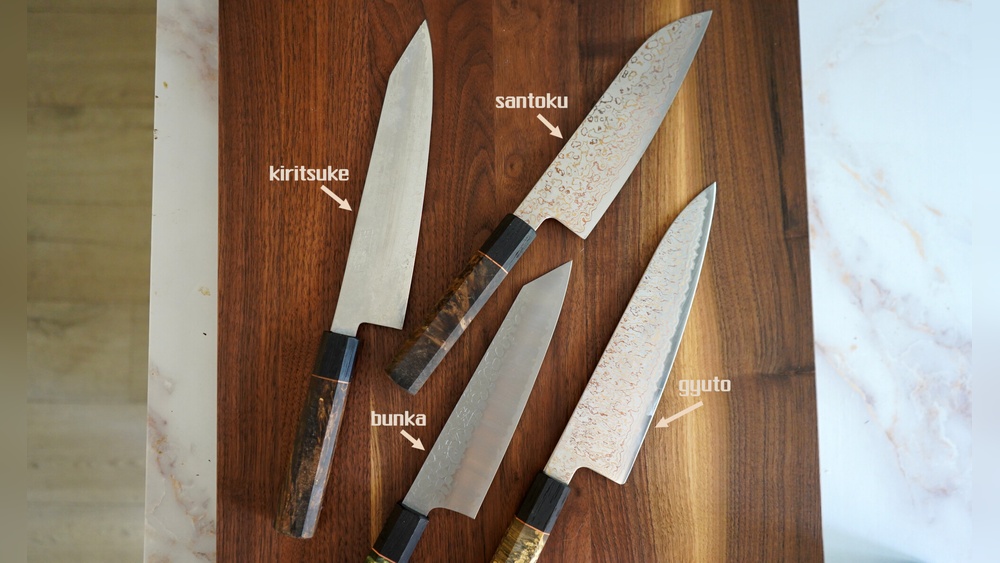
Japanese kitchen knives have earned a revered place in culinary circles worldwide. Among the most debated choices are the Kiritsuke and Santoku knives, two versatile blades that both promise exceptional performance but cater to different needs and personalities in the kitchen. For home cooks and professional chefs alike, understanding the nuances between these two knives can transform prep work from a routine chore into a seamless, even joyful, experience.
With their distinctive shapes and storied origins, the Kiritsuke and Santoku knives spark passionate opinions among knife aficionados. But beyond the allure of tradition and aesthetics, how do these knives actually compare in terms of functionality, versatility, and value? Whether you’re a seasoned chef looking to expand your knife roll or a home cook aiming to invest in your first high-quality Japanese blade, this comprehensive guide will clarify which knife is right for you, and how to make the most of each.
Key Takeaways
- Kiritsuke and Santoku are both multi-purpose Japanese kitchen knives, but they differ in blade shape, edge, and intended use.
- The Kiritsuke is prized for its precision and is often seen as a symbol of status in professional kitchens.
- The Santoku offers user-friendly versatility and is widely adopted by home cooks due to its balanced design.
- Selecting between the two depends on your cutting style, experience level, and the types of dishes you prepare most often.
- Maintenance, sharpening, and price points vary significantly, impacting long-term ownership.
- Understanding these differences will help you make an informed investment that elevates your cooking skills.

Credit: santokuknives.co.uk
Origins And Cultural Significance
The Legacy Of Japanese Knife Craftsmanship
Japan’s knife-making heritage stretches back centuries, blending samurai sword techniques with culinary innovation. Japanese knives are renowned for their razor-sharp edges, meticulous craftsmanship, and specialized designs catering to specific kitchen tasks.
Kiritsuke: The Chef’s Status Symbol
The Kiritsuke is steeped in tradition. Historically reserved for head chefs in Japanese kitchens, it is often regarded as a status symbol, a reflection of mastery and authority. Its name translates to “cutting open,” and its unique hybrid form combines elements of the Yanagiba (sushi/sashimi knife) and the Usuba (vegetable knife), making it a versatile yet challenging blade.
Santoku: The People’s Knife
The Santoku emerged in the mid-20th century as a response to Western cooking influences. Its name means “three virtues,” referencing its proficiency in slicing, dicing, and mincing. The Santoku’s approachable design and adaptable blade quickly made it a staple in Japanese homes, and later, kitchens around the world.
Cultural Impact And Modern Adoption
Both knives have transcended their origins. The Kiritsuke is now coveted by culinary professionals globally, while the Santoku’s popularity among home cooks continues to grow due to its practicality and ease of use.
Design And Construction
Blade Shape And Profile
The most striking difference between Kiritsuke and Santoku lies in their blade geometry:
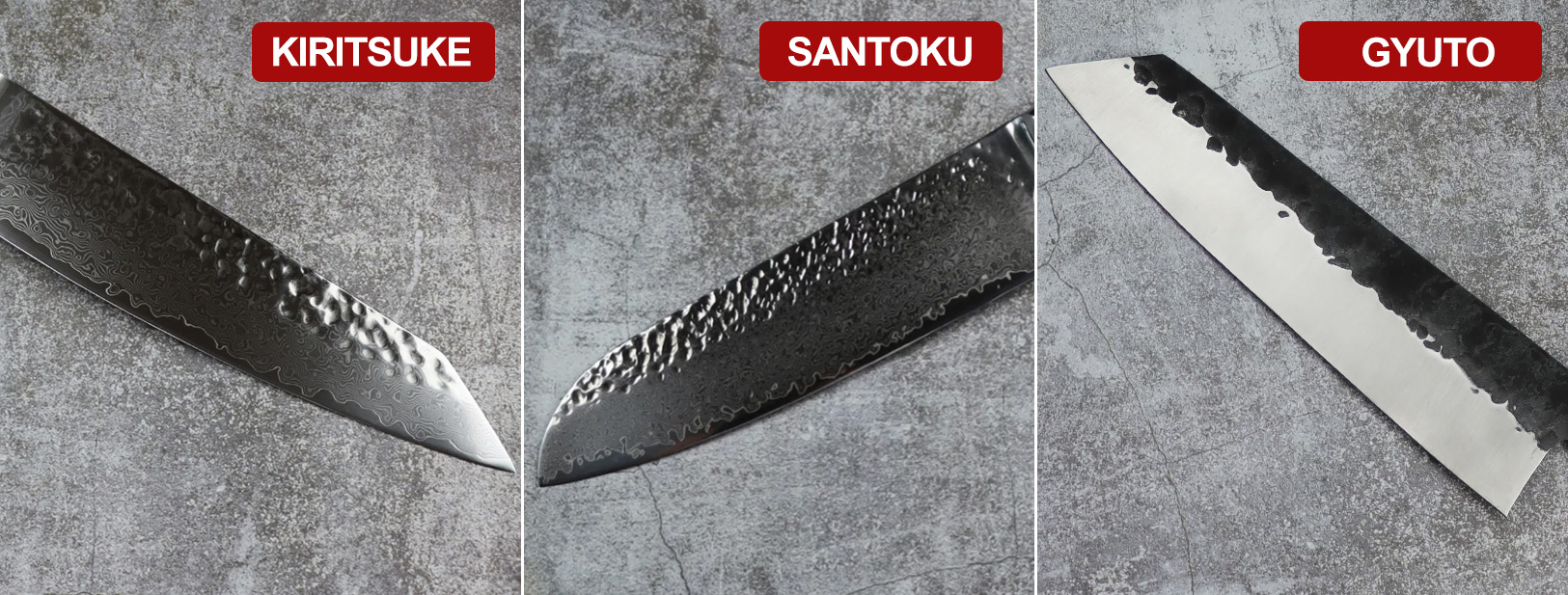
- Kiritsuke: Features a long, flat profile with a distinctive angled tip (k-tip), resembling a sword. This design facilitates precision cuts and elegant slicing motions.
- Santoku: Sports a shorter, wider blade with a rounded tip and subtle curve, promoting a natural rocking motion ideal for rapid chopping.
| Feature | Kiritsuke | Santoku |
|---|---|---|
| Blade Length | 8, 12 inches (210, 300mm) | 5, 7 inches (130, 180mm) |
| Tip Shape | Angled (k-tip) | Rounded |
| Blade Profile | Flat edge with slight curve | Curved belly |
| Weight | Heavier, forward-balanced | Lighter, evenly balanced |
| Edge Grind | Single or double bevel | Double bevel |
Steel Type And Hardness
Japanese knives, including Kiritsuke and Santoku, are typically crafted from high-carbon steel or stainless steel alloys. High-carbon variants hold a sharper edge but are more prone to rust, while stainless options are easier to maintain.
- Kiritsuke: Often made with premium steels, such as VG-10 or Blue Paper Steel, with Rockwell hardness values of 60, 65 HRC.
- Santoku: Commonly available in both entry-level stainless steel and higher-end steels, usually with a slightly lower hardness (58, 62 HRC).
Handle Design
Handles for both knives may be wa (Japanese-style) or yo (Western-style). Wa handles are lighter and cylindrical or octagonal, promoting agility, while yo handles offer a familiar grip for Western users.
Manufacturing Techniques
Traditional hand-forging, known as honyaki, produces single-piece blades with exceptional sharpness and resilience. More affordable knives are made using kasumi (laminated) or stamped techniques, which influence price, durability, and maintenance needs.
Credit: www.fzkaly.com
Cutting Performance And Versatility
Kiritsuke: Precision And Power
The Kiritsuke excels at:
- Sashimi and fish filleting: Its long blade and sharp tip allow for clean, single-motion cuts.
- Vegetable slicing: The flat edge creates uniform slices and julienne strips.
- Decorative garnishing: The pointed tip enables intricate work, such as creating fine vegetable or fruit garnishes.
However, the Kiritsuke’s flat blade makes rocking motions difficult, which may hinder rapid chopping tasks.
Santoku: Balanced Everyday Utility
The Santoku thrives in:
- Chopping vegetables: Its curved belly supports a gentle rocking motion, ideal for quick prep.
- Slicing meats: The blade’s width and thinness allow for precise, straight cuts.
- Mincing herbs: The design encourages fine, repetitive up-and-down movements.
While less suited for delicate sashimi slicing or highly intricate cuts, the Santoku’s all-around performance makes it a workhorse for most kitchens.
Comparison Table: Performance By Task
| Task | Kiritsuke Performance | Santoku Performance |
|---|---|---|
| Slicing Raw Fish | Excellent | Fair |
| Chopping Vegetables | Good (push cut) | Excellent (rocking & push cut) |
| Mincing Herbs | Average | Excellent |
| Decorative Cuts | Excellent | Good |
| Slicing Meats | Excellent | Very Good |
User Experience: My Hands-on Test
When I tested both knives during a week of meal prepping, I found the Kiritsuke unmatched for paper-thin sashimi and precision vegetable work. However, the Santoku’s forgiving design proved invaluable for fast, everyday chopping, especially when preparing mixed vegetable stir-fries and mincing garlic.
Credit: www.reddit.com
Ergonomics And User Friendliness
Handling And Balance
- Kiritsuke: The longer blade and forward balance require a firm, practiced grip. Beginners may find it unwieldy, especially for repetitive tasks.
- Santoku: Compact and evenly balanced, the Santoku accommodates a wide range of hand sizes and cutting techniques. Its lighter weight reduces fatigue during extended use.
Learning Curve
The Kiritsuke’s status as a hybrid knife means mastering it demands skill. Its flat edge doesn’t permit the rocking motion familiar to many Western-trained cooks. In contrast, the Santoku’s forgiving profile welcomes users of all experience levels, making it an excellent entry point into Japanese cutlery.
Safety Considerations
- Kiritsuke: The acute tip, while ideal for fine work, poses a greater risk of accidental cuts if mishandled.
- Santoku: The rounded tip and shorter blade make it inherently safer for less experienced users.
Pro Tip:
If you’re transitioning from Western chef’s knives, start with a Santoku to build confidence before tackling the more specialized Kiritsuke.
Maintenance, Sharpening, And Longevity
Edge Retention And Sharpening Needs
- Kiritsuke: The ultra-hard steel and acute edge angle (often 15° or less) deliver superior sharpness but require regular honing and careful sharpening to avoid chipping.
- Santoku: Slightly softer steels and a less aggressive edge angle (typically 15, 20°) allow for easier maintenance and greater resistance to chipping.
Cleaning And Storage
Both knives should be hand-washed and dried immediately to prevent corrosion, especially with high-carbon steel blades. Storing knives in a dedicated block or sheath preserves their edge and reduces the risk of accidents.
Sharpening Methods
- Whetstone sharpening is preferred for both knives, but the Kiritsuke’s single-bevel versions demand advanced skills and specialized stones.
- Santokus, with their double-bevel design, are easier to sharpen and maintain for home users.
Longevity And Durability
With proper care, both knives can last decades. However, the Kiritsuke’s thinner, harder blade is more susceptible to damage from improper use (e. g. , cutting bones or hard squash), whereas Santoku knives are generally more forgiving.
Cost And Value Considerations
Pricing Spectrum
- Kiritsuke: Prices for authentic, hand-forged Kiritsuke knives range from $200 to over $1000, depending on the maker, steel type, and craftsmanship.
- Santoku: Entry-level models start around $40, $60, with premium options reaching $300, $500.
What Influences Price?
- Steel quality
- Forging method (handmade vs. machine-stamped)
- Brand reputation
- Handle material (e.g., pakkawood, ebony, micarta)
Value For Money
While the Kiritsuke represents an investment for serious culinary enthusiasts or professionals, the Santoku delivers exceptional value for home cooks seeking versatility without a steep learning curve.
Example: Cost Breakdown For A Home Cook
Consider a home cook investing in Japanese knives for the first time:
- Santoku: $80 (VG-10 steel, reputable brand, double bevel)
- Kiritsuke: $350 (hand-forged, Blue Paper Steel, single bevel)
For most everyday kitchen tasks, the Santoku delivers 90% of the needed performance at a fraction of the price and maintenance effort.
When To Invest In Each Knife
- Kiritsuke: Ideal for chefs aiming to refine their craft or for those preparing Japanese cuisine regularly.
- Santoku: Suits cooks who need a reliable, multi-purpose blade for daily meals without extensive care routines.
Real-world Examples And Case Studies
Example 1: Professional Sushi Chef
Chef Aiko, working at a Michelin-starred sushi restaurant, relies on a hand-forged Kiritsuke for filleting fish and precise vegetable garnishes. The blade’s length and k-tip allow her to execute clean, single-stroke cuts essential for high-end presentation. She sharpens her knife on a whetstone daily and uses it exclusively for delicate tasks.
Example 2: Home Cook Preparing Family Meals
Mark, a home cook and parent, opts for a mid-range Santoku to handle everything from dicing onions to slicing chicken breasts. He appreciates the knife’s comfortable handle and easy maintenance, noting that it stays sharp with minimal upkeep and feels safe even when his teenagers help in the kitchen.
Example 3: Culinary Student’s Toolkit
During culinary school, Ana is introduced to both knives. She finds that while the Kiritsuke impresses her instructors with its precision, the Santoku’s versatility matches her varied coursework, from French mirepoix to Japanese tempura. She chooses to purchase a Santoku first, planning to add a Kiritsuke as her skills advance.
Which Knife Should You Choose?
Key Decision Factors
Selecting between Kiritsuke and Santoku depends on:
- Experience level: Beginners will likely prefer the Santoku’s forgiving nature; advanced users may appreciate the Kiritsuke’s finesse.
- Primary tasks: If you frequently prepare sushi, sashimi, or decorative garnishes, the Kiritsuke is unmatched. For general meal prep, the Santoku shines.
- Cutting style: Those comfortable with push-cutting and precise slicing may gravitate to the Kiritsuke. If you prefer rocking or chopping, the Santoku is better suited.
- Maintenance commitment: Santoku knives are easier to maintain and sharpen at home.
Hybrid Options And Alternatives
Some brands offer Kiritsuke-shaped Gyuto or Santoku-Kiritsuke hybrids, combining features from both knives. These can be a solution for cooks seeking versatility with a unique aesthetic.
Table: At-a-glance Recommendation
| User Type | Best Choice | Why? |
|---|---|---|
| Professional Chef (Japanese cuisine) | Kiritsuke | Unmatched precision and tradition |
| Home Cook | Santoku | Versatile, easy to use and maintain |
| Culinary Student | Santoku | Ideal for learning and general prep |
| Knife Enthusiast/Collector | Kiritsuke | Prestige, craftsmanship, and challenge |
| Beginner | Santoku | Safe, approachable design |
External Resources
For more detailed history and recommendations, refer to the Wikipedia page on Japanese knives.
Frequently Asked Questions
What Is The Main Difference Between Kiritsuke And Santoku Knives?
The primary difference lies in their blade shape, length, and intended use. Kiritsuke knives have a long, flat edge with a pointed tip and are designed for precision slicing and decorative cuts, making them better suited for advanced users and specific tasks like sashimi. Santoku knives are shorter, with a rounded tip and a curved edge, designed for all-purpose chopping, slicing, and mincing, which suits home cooks and general meal preparation.
Can A Beginner Safely Use A Kiritsuke Knife?
While it is possible, beginners may find the Kiritsuke challenging due to its length, sharp tip, and flat profile. The lack of a curved belly makes rocking cuts difficult, and the blade demands a steady hand and proper technique to avoid accidents. For safety and ease of learning, most experts recommend starting with a Santoku or chef’s knife.
How Often Should I Sharpen These Knives, And Can I Use A Honing Rod?
Sharpening frequency depends on use and steel type. High-carbon Kiritsuke blades may require sharpening every few weeks with frequent use, while stainless Santokus often go longer between sharpenings. Both benefit from regular honing to maintain edge alignment, but honing rods are better suited to softer steels; hard Japanese steels require whetstone sharpening for optimal results.
Are There Foods I Should Avoid Cutting With Kiritsuke Or Santoku Knives?
Yes. Avoid using either knife on bones, frozen foods, or extremely hard vegetables like butternut squash unless the blade is rated for such use. Doing so can chip or damage the fine edge, especially with harder, thinner Kiritsuke blades. For these tasks, a heavier-duty knife like a cleaver is more appropriate.
Where Can I Learn More About Japanese Knife Care And Sharpening?
Excellent resources for Japanese knife care and sharpening include professional culinary schools, online tutorials from reputable chefs, and guides provided by knife manufacturers. For in-depth information, visit sites like Japanese Knife Imports, which offer detailed instructions and videos.
Both the Kiritsuke and Santoku hold esteemed places in the world of Japanese cutlery. The Kiritsuke, with its precision and prestige, appeals to chefs who value tradition and mastery, while the Santoku’s adaptability and ease of use make it a favorite for everyday cooks.
By understanding the differences in design, performance, and care, you can confidently select the knife that aligns with your cooking style, ensuring years of culinary enjoyment and professional-level results.