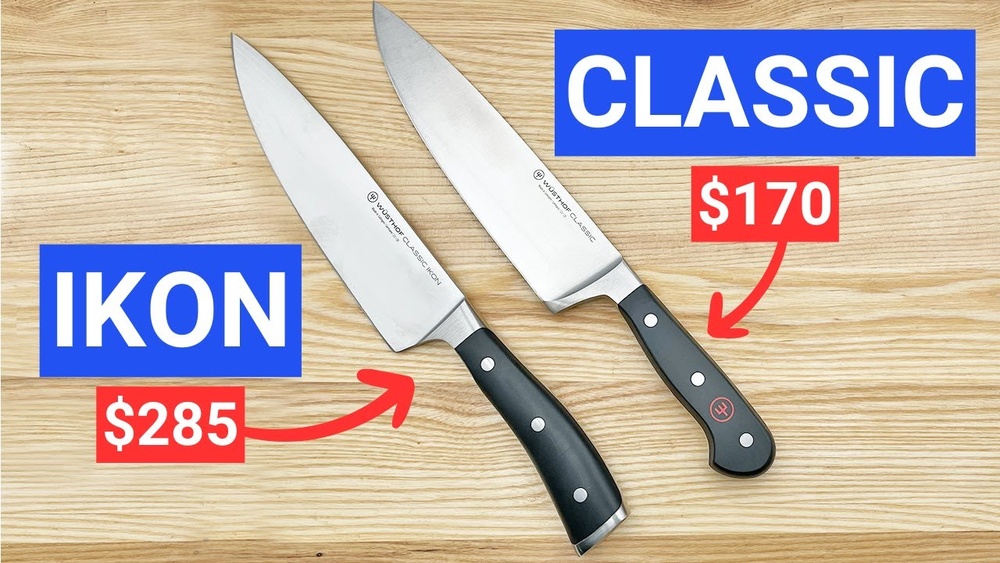
For professional chefs and home cooks alike, the quality of kitchen knives can make or break the culinary experience. Among the world’s most respected knife makers, Wüsthof stands out for its German precision, heritage, and innovation. Two of their most celebrated lines, Wüsthof Classic and Classic Ikon, often spark debate among enthusiasts and professionals. While both boast the brand’s legendary craftsmanship, they feature subtle but significant differences in design, ergonomics, and performance. Choosing between them is more than a matter of style; it’s about finding the perfect tool for your specific needs and preferences.
This comprehensive comparison explores the Wüsthof Classic vs Classic Ikon lines in depth, dissecting their materials, construction, comfort, durability, price, and real-world performance. Whether you’re upgrading your kitchen tools or investing in your first premium knife, understanding these nuances will guide you to the knife that elevates your cooking, enhances safety, and delivers lasting value.
Key Takeaways
- Wüsthof Classic and Classic Ikon knives share the same high-carbon stainless steel but differ in handle design, ergonomics, and bolster construction.
- The Classic line is prized for its traditional, triple-riveted handle and full bolster, offering timeless aesthetics and finger protection.
- Classic Ikon knives feature a more modern, ergonomic handle and a half bolster, providing improved balance and easier sharpening.
- Both lines excel in edge retention, sharpness, and durability, but the choice between them often comes down to personal comfort and style preferences.
- Price differences are modest, with Classic Ikon typically costing slightly more due to its updated design.
- Real-world feedback highlights Classic Ikon’s comfort for extended use, while Classic is favored for precision and tradition.
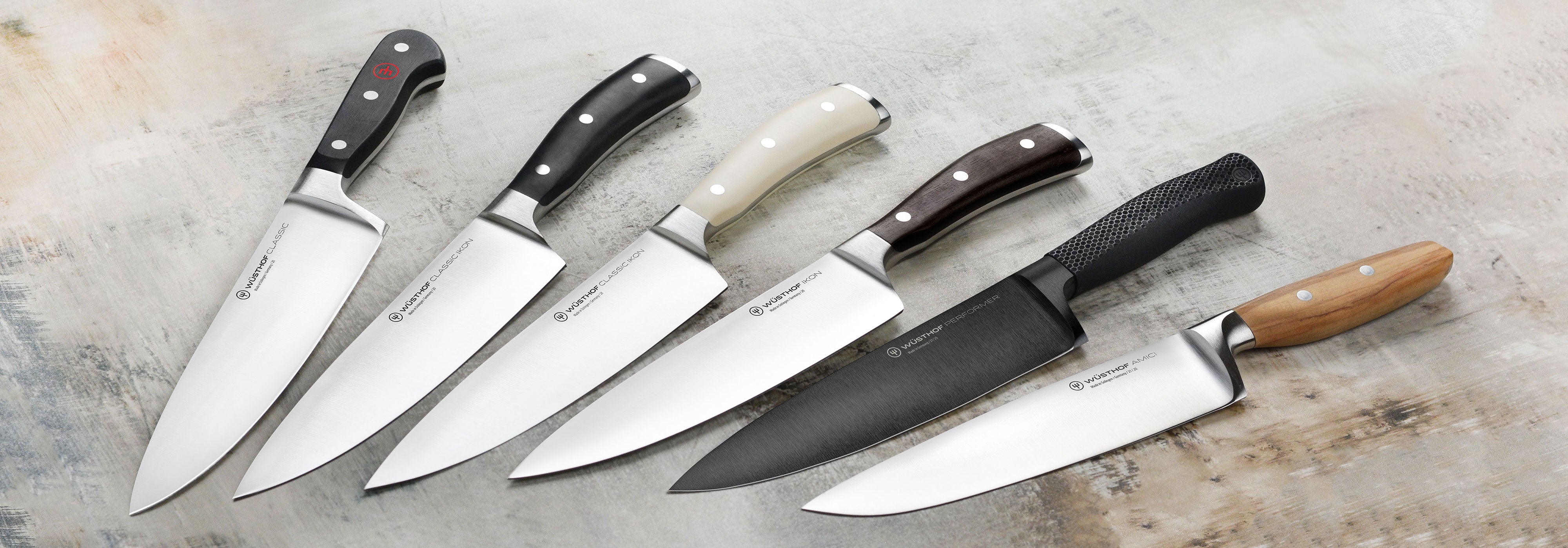
Credit: cutleryandmore.com
Wüsthof Brand Overview: Heritage And Reputation
History Of Wüsthof
Founded in 1814 in Solingen, Germany, the Wüsthof brand has remained family-owned for over two centuries. Known as the “City of Blades,” Solingen is synonymous with high-quality knife manufacturing, and Wüsthof’s dedication to precision and innovation has cemented its reputation globally. Over 400 skilled workers and seven generations of expertise contribute to a brand trusted by culinary professionals and home cooks alike.
Commitment To Quality
Wüsthof’s blades are crafted from high-carbon stainless steel (X50CrMoV15), renowned for its balance of hardness, corrosion resistance, and ease of maintenance. The company’s proprietary PEtec (Precision Edge Technology) ensures each blade is sharpened to a 14-degree angle per side, resulting in exceptional sharpness out of the box.
Industry Recognition
Chefs such as Gordon Ramsay and Martha Stewart have endorsed Wüsthof knives, and the brand is a staple in culinary schools and Michelin-starred restaurants worldwide. According to America’s Test Kitchen, Wüsthof consistently ranks among the top knife brands for sharpness, durability, and comfort (America’s Test Kitchen).
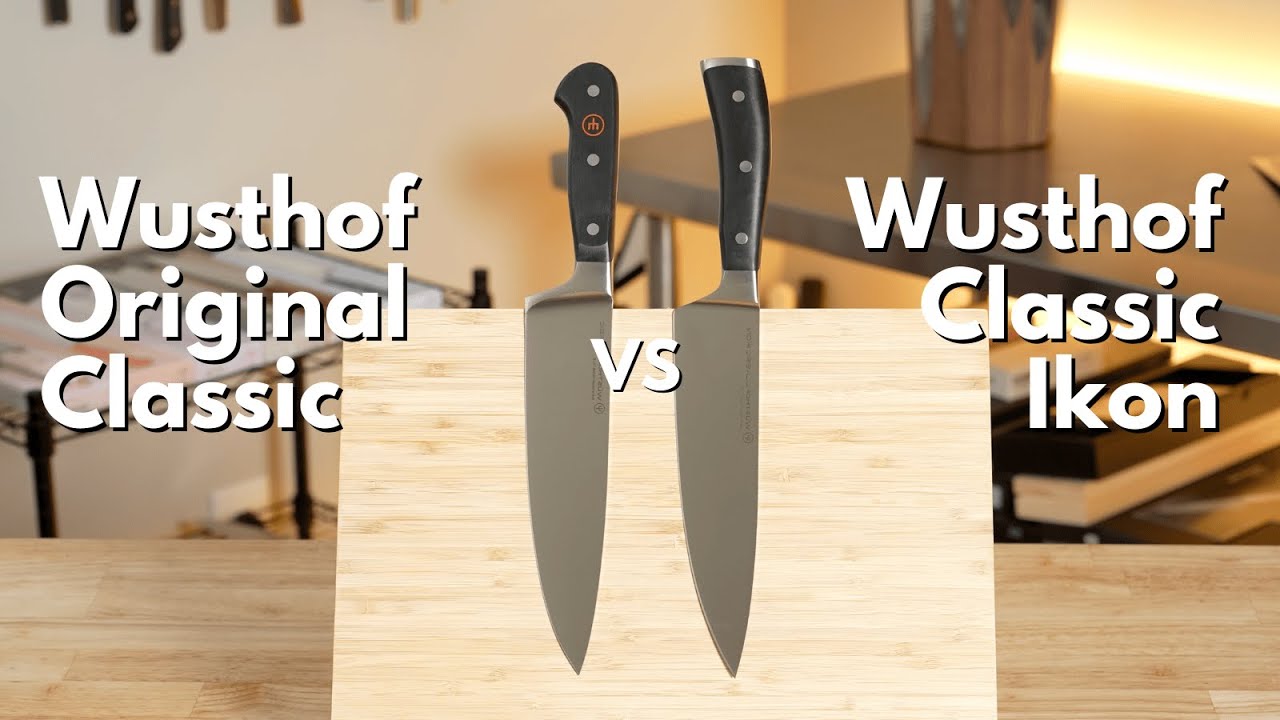
Credit: www.youtube.com
Design And Construction: Classic Vs Classic Ikon
Blade Material And Forging Process
Both the Classic and Classic Ikon lines are forged from the same high-carbon stainless steel using a single piece of metal. This forging process delivers a robust structure, excellent edge retention, and resistance to stains and corrosion.
Handle Design And Ergonomics
Classic: Traditional Triple-riveted Handle
- Material: Polyoxymethylene (POM) for resistance to fading and discoloration
- Shape: Straight, contoured with a pronounced curve at the butt
- Feel: Heavier in hand, with a squared-off grip
- Bolster: Full bolster for finger protection and weight
Classic Ikon: Modern Ergonomic Handle
- Material: Also POM, but with a sleeker, more rounded design
- Shape: Curved, double-bolster for balance and comfort
- Feel: Lighter, fits naturally in the hand for extended use
- Bolster: Half bolster, allowing full use and easy sharpening of the blade edge
Bolster Differences
The bolster, the thick junction between blade and handle, affects both safety and balance.
- Classic: Full bolster protects fingers but can make sharpening more difficult.
- Classic Ikon: Half bolster reduces weight, improves balance, and allows sharpening the entire blade edge.
Tang And Balance
Both lines feature a full tang, the metal of the blade extends through the handle, which enhances strength and balance. However, Classic Ikon’s double-bolster design shifts the balance point slightly rearward, favoring a more agile feel.
Comparison Table: Key Construction Differences
| Feature | Wüsthof Classic | Wüsthof Classic Ikon |
|---|---|---|
| Handle Design | Straight, triple-riveted | Curved, ergonomic, double-bolster |
| Bolster | Full bolster | Half bolster |
| Blade Material | High-carbon stainless steel | High-carbon stainless steel |
| Tang | Full tang | Full tang |
| Edge Angle | 14° per side | 14° per side |
Performance And User Experience
Sharpness And Edge Retention
Both Classic and Classic Ikon knives are lauded for their razor-sharp edges. Thanks to PEtec, they arrive with a 14-degree angle on each side, outperforming many competitors which offer 20-degree angles. This results in cleaner cuts and less effort.
In my experience, both lines maintain their edge impressively well after weeks of daily use. The Classic Ikon may feel slightly sharper during intricate tasks due to its thinner half-bolster, which allows for more precise blade maneuverability.
Comfort And Ergonomics
Classic: Secure, Substantial Grip
Cooks with larger hands or those who prefer a traditional, weightier knife often gravitate toward the Classic. The squared-off handle provides a secure grip, and the full bolster gives confidence when chopping dense foods.
Classic Ikon: Modern Comfort For Extended Use
If you spend hours prepping vegetables or proteins, the Classic Ikon’s contoured handle reduces hand fatigue. The curved shape nestles into the palm, and the lighter weight offers better agility, especially for repetitive slicing or mincing.
Maneuverability And Balance
- Classic: Balanced more toward the bolster, providing stability for heavy chopping.
- Classic Ikon: Balance is closer to the handle’s center, favoring nimble movements and rocking cuts.
Safety And Control
The Classic’s full bolster acts as a finger guard, ideal for beginners or those prioritizing safety. The Classic Ikon’s half bolster exposes more of the blade, so proper grip technique becomes more important, but it allows for better blade control.
Real-world Example: Dicing An Onion
When dicing an onion for a large batch of soup, the Classic Ikon’s ergonomic handle and lighter balance made it easier to maintain a steady rhythm and reduced wrist fatigue. The Classic, while equally sharp, offered a more anchored feel, which some may prefer for precision work.
Data Table: Performance Attributes
| Attribute | Classic | Classic Ikon |
|---|---|---|
| Sharpness (initial) | Excellent | Excellent |
| Edge Retention | High | High |
| Comfort for Small Hands | Good | Excellent |
| Comfort for Large Hands | Excellent | Very Good |
| Ease of Sharpening | Moderate | Easy |

Credit: www.katom.com
Durability And Maintenance
Blade Longevity
Both Wüsthof Classic and Classic Ikon knives are engineered for decades of use. The X50CrMoV15 steel resists corrosion and chipping, provided proper care is taken.
Handle Material Durability
The POM handles are impervious to moisture and resistant to impact, heat, and most household chemicals. Over years of use, neither line is prone to warping or discoloration.
Sharpening And Honing
- Classic: The full bolster complicates sharpening with some whetstones and honing rods, as part of the blade closest to the handle is obstructed.
- Classic Ikon: The half bolster design simplifies the process, allowing the entire edge to be honed and sharpened with ease.
Dishwasher Safety
Although both lines are technically dishwasher-safe, hand washing is strongly recommended to maintain the edge and luster of the blades and handles.
Pro Tip:
Always dry your Wüsthof knives immediately after washing to prevent water spots and preserve the edge.
Example: Professional Kitchen Use
In a busy restaurant, a chef using a Classic Ikon chef’s knife reported that after two years of daily use and weekly professional sharpening, the knife retained both its edge and aesthetic appeal, while the handle showed no signs of wear.
Aesthetic Differences And Style Preferences
Visual Appeal
Classic: Timeless Tradition
The Classic line’s straight handle, triple rivets, and thick bolster evoke the look of traditional German chef’s knives. For many, this symbolizes heritage and reliability.
Classic Ikon: Sleek Modernity
Classic Ikon knives feature a more fluid, rounded handle and a slimmer bolster, delivering a contemporary appearance. The polished endcap and double-bolster design catch the light, making them a showpiece in any kitchen.
Available Colors And Variations
- Classic: Multiple handle colors (black, white, cream) and a vast selection of blade shapes and sizes.
- Classic Ikon: Primarily black or cream handles, with fewer specialty shapes but all major styles represented.
Case Study: Home Cook’s Choice
A home cook seeking to match their kitchen’s modern aesthetic chose the Classic Ikon in cream, citing its elegant curves and subtle branding as a perfect complement to a minimalist décor.
Brand Markings
Both lines prominently display the Wüsthof trident logo, but the Classic Ikon’s branding is slightly more understated, with a smaller logo etched near the bolster.
Knife Selection And Product Lineup
Core Knife Types Offered
Both lines feature essential kitchen knives:
- Chef’s knife (6”, 8”, 10”)
- Paring knife
- Bread knife
- Santoku
- Utility knife
- Carving/slicing knife
The Classic line, with its longer history, offers a broader range, including specialty knives like the nakiri, cleaver, and fillet knives.
Set Options And Gift Packs
- Classic: Extensive set options, from 2-piece starter sets to 36-piece professional blocks.
- Classic Ikon: Fewer but carefully curated sets, focused on core essentials.
Price Comparison Table: Popular Models
| Knife | Classic MSRP | Classic Ikon MSRP |
|---|---|---|
| 8” Chef’s Knife | $170 | $200 |
| 7” Santoku | $150 | $180 |
| 3.5” Paring Knife | $70 | $90 |
| Knife Block Set (7-piece) | $350 | $400 |
*Prices are indicative and may vary by retailer and region. *
Pro Tip:
When considering a set, prioritize knives you’ll use daily. It’s often better to invest in a few high-quality essentials than a large block of seldom-used pieces.
Value, Warranty, And Customer Support
Warranty Coverage
Both Wüsthof Classic and Classic Ikon knives are backed by a limited lifetime warranty against defects in materials and workmanship. This does not cover normal wear, misuse, or improper sharpening.
Repair And Sharpening Services
Wüsthof offers professional sharpening and repair services through authorized dealers. Many specialty retailers provide in-store sharpening for Wüsthof owners, ensuring your investment stays in peak condition.
Resale And Longevity
Because of their reputation, Wüsthof knives hold value on the secondary market. Well-maintained Classic and Classic Ikon models often fetch 60-70% of their original price on resale platforms.
Customer Service Reputation
Wüsthof’s customer service is consistently rated highly in independent reviews, with prompt responses and helpful support. According to a 2026 survey by Consumer Reports, Wüsthof scored above average for satisfaction and warranty fulfillment (Consumer Reports).
Example: Warranty Experience
One user reported a cracked handle after five years of use. After submitting photos and a receipt, Wüsthof replaced the knife free of charge within three weeks.
Which Should You Choose? Factors To Consider
Cooking Style And Frequency
- Classic: Ideal for cooks who value tradition, stability, and finger protection, or those with larger hands.
- Classic Ikon: Best for users seeking modern ergonomics, easier sharpening, and comfort during long prep sessions.
Budget And Value
While Classic Ikon knives generally command a modest premium, both lines offer lasting value. Investing in a chef’s knife or starter set from either range is a choice that pays dividends over time.
Personal Aesthetics
If your kitchen style leans classic or rustic, the Classic line’s traditional look may appeal more. Contemporary or minimalist kitchens often pair beautifully with the Classic Ikon’s sleek curves.
Hand Size And Grip Preference
- Large hands: Classic’s substantial handle may feel more secure.
- Small/medium hands: Classic Ikon’s contoured grip reduces strain and increases control.
Sharpening Preferences
If you prefer using whetstones or professional sharpeners, the Classic Ikon’s half bolster makes the process simpler and more effective.
Frequently Asked Questions
What Is The Main Difference Between Wüsthof Classic And Classic Ikon Knives?
The primary difference lies in the handle design and bolster. Classic knives feature a straight, triple-riveted handle with a full bolster, while Classic Ikon knives have a curved, ergonomic handle and a half bolster. This affects comfort, balance, and ease of sharpening.
Are Wüsthof Classic And Classic Ikon Knives Made From The Same Steel?
Yes, both lines use high-carbon stainless steel (X50CrMoV15), renowned for sharpness, edge retention, and corrosion resistance. The forging process and blade composition are identical, ensuring similar cutting performance.
Can I Sharpen Wüsthof Classic And Classic Ikon Knives At Home?
Both lines can be sharpened at home using whetstones, honing rods, or guided sharpening systems. The Classic Ikon’s half bolster allows for full-edge sharpening, while the Classic’s full bolster may require more advanced technique or professional service for the heel area.
Which Line Is Better For Professional Chefs?
Both are widely used by professionals, but those working long shifts often prefer the Classic Ikon for its ergonomic handle and reduced weight. Chefs who value tradition and finger protection may opt for the Classic. Ultimately, it’s a matter of personal preference and workflow.
Are These Knives Dishwasher Safe?
While both lines are technically dishwasher safe, hand washing is strongly recommended to prevent dulling, discoloration, and potential handle damage. Immediate drying after washing preserves the knife’s longevity and appearance.
When investing in a premium kitchen knife, the choice between Wüsthof Classic and Classic Ikon is deeply personal. Both lines represent the pinnacle of German cutlery, offering unmatched sharpness, durability, and heritage. The Classic appeals to traditionalists and those seeking stability, while the Classic Ikon is tailored for modern cooks valuing comfort and ease of maintenance. Whichever you choose, you’ll gain a kitchen companion engineered for a lifetime of exceptional performance.