
When you start searching for quality kitchen knives, you might see the name Miyabi again and again. Some chefs call Miyabi knives a favorite, while others debate their price and performance. If you’re wondering, “Is Miyabi a good knife brand?” you’re not alone. Choosing the right knife can change how you cook, how you feel in the kitchen, and even how safe you are. This article breaks down everything you need to know about Miyabi: how their knives are made, what sets them apart, how they compare with other brands, and what real users experience. By the end, you’ll know if Miyabi is the right fit for your kitchen.
The Story Behind Miyabi Knives
Miyabi is a brand owned by the German company Zwilling J.A. Henckels, one of the world’s most respected knife makers. Miyabi knives are crafted in Seki, Japan, a city famous for sword and blade making for centuries. The idea behind Miyabi is to combine Japanese craftsmanship with German engineering.
Every Miyabi knife is made with traditional Japanese techniques. This includes hand-honing, ice-hardening, and multi-step polishing. These methods make the blades sharper, harder, and more beautiful than many standard knives. Miyabi also uses high-quality steel, which is key for durability and edge retention.
What Makes Miyabi Knives Unique
Japanese Style, German Reliability
Miyabi knives stand out because they bring together two worlds:
- Japanese design means slimmer, sharper blades with a harder steel core. This lets you slice food with precision.
- German manufacturing ensures strict quality control and consistency.
This mix creates knives that are not only sharp and beautiful, but also reliable for everyday use.
Blade Materials And Hardness
Most Miyabi knives use high-carbon stainless steel. Some models use advanced steels like SG2 powder steel or MC63 micro-carbide steel. These steels are known for being:
- Extremely hard (often 60, 66 HRC on the Rockwell scale)
- Stain-resistant
- Able to hold a sharp edge for a long time
A harder blade stays sharp longer but can be more brittle. Miyabi balances hardness with toughness by using techniques like ice-hardening, which makes the steel both strong and flexible.
Traditional Japanese Edge
Miyabi knives usually have a 9, 12 degree edge angle per side. This is much sharper than Western knives, which often have 15, 20 degree edges. A sharper edge means cleaner cuts, but it also needs careful handling.
Pro Tip: If you’re used to heavier, thicker Western knives, Miyabi’s lighter, sharper blades might take some practice. They reward careful technique and make prep work feel easier.
Beautiful Handles And Designs
Miyabi pays attention to aesthetics. Many knives feature D-shaped handles (for right-handed users), made from materials like:
- Pakka wood
- Micarta
- Birchwood
- Polymer
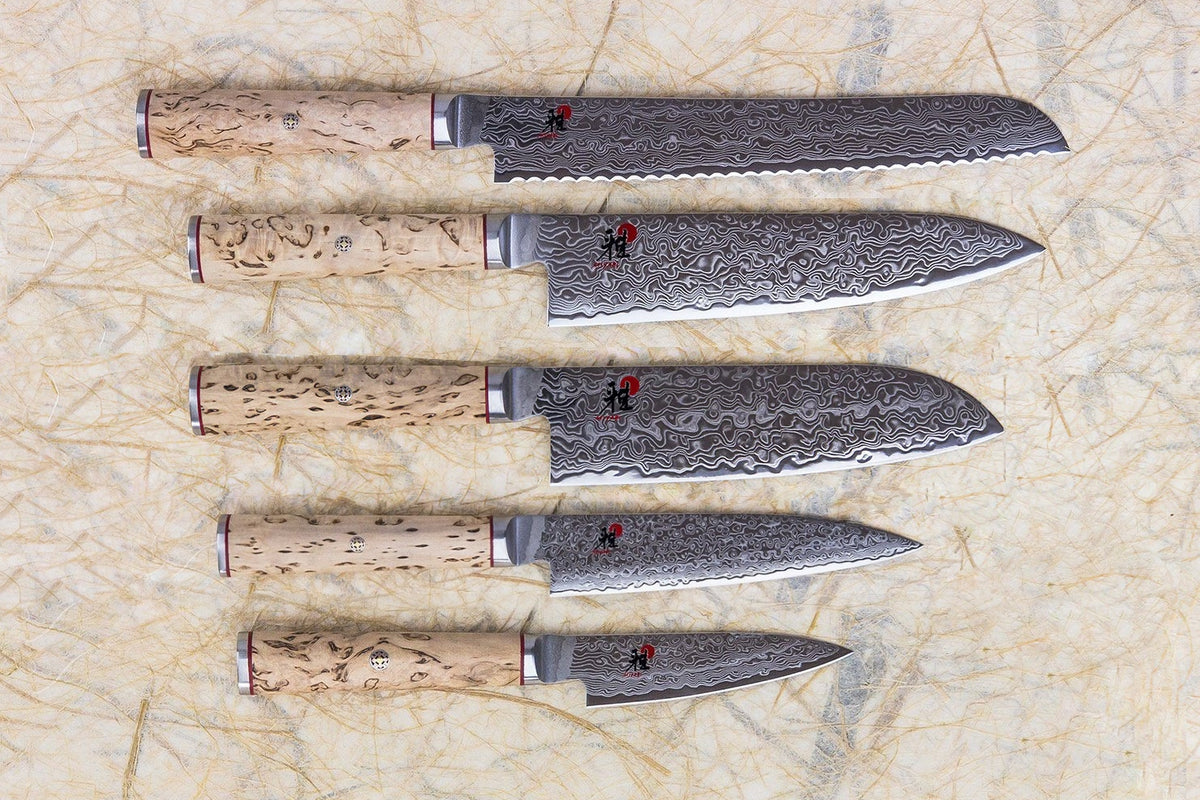
The handles are polished, ergonomic, and often decorated with mosaic pins or intricate patterns. This makes Miyabi knives not just tools, but pieces of art.
Credit: knifewear.com
Miyabi Knife Collections Explained
Miyabi offers several collections, each with unique features. Let’s look at the main ones:
Miyabi Kaizen
Kaizen knives use VG10 steel and have a classic Japanese look. They’re popular for their balance and affordability within Miyabi’s range.
Miyabi Birchwood
This collection uses SG2 steel and features handles made from natural birchwood. They’re known for their beauty and sharpness. The blades are layered with a Damascus pattern, over 100 layers for strength and style.
Miyabi Black
Black series knives use SG2 steel, hardened to 66 HRC (one of the hardest in the industry). They have a striking black handle and blade pattern. These are premium knives for those who want the best edge retention.
Miyabi Artisan
Artisan knives use SG2 steel, but the handles are made from cocobolo wood. The blades have a hammered finish, which helps food release easily.
Miyabi Mizu
Mizu knives have a high-gloss finish and use SG2 steel. The handle is made from durable black pakkawood.
Here’s a simple comparison:
| Collection | Blade Steel | Handle Material | Blade Hardness (HRC) |
|---|---|---|---|
| Kaizen | VG10 | Pakkawood | 60 |
| Birchwood | SG2 | Birchwood | 63 |
| Black | SG2 | Black Ash | 66 |
| Artisan | SG2 | Cocobolo | 63 |
| Mizu | SG2 | Pakkawood | 63 |
Miyabi Vs Other Knife Brands
Many cooks compare Miyabi to other premium brands. How does Miyabi stack up against competition like Shun, Global, and Wüsthof?
Japanese Rivals: Shun And Global
Shun is another popular Japanese knife brand. Shun knives also use high-quality steel and traditional techniques. However, Miyabi often uses harder steels and sharper edge angles. Shun knives may have a softer feel and are sometimes easier for beginners.
Global knives are famous for their all-metal design and lightweight feel. They use a slightly softer steel, which can be easier to sharpen but doesn’t hold an edge as long as Miyabi.
German Rivals: Wüsthof And Zwilling
Wüsthof is a top German brand. Their knives are heavier, thicker, and use softer steel (usually 58, 60 HRC). Wüsthof knives are tough and forgiving, but not as sharp as Miyabi.
Zwilling (Miyabi’s parent company) makes both German and Japanese-style knives. Their German knives focus on durability, while Miyabi delivers sharpness and style.
Here’s a comparison of Miyabi with its main rivals:
| Brand | Blade Type | Average Hardness (HRC) | Edge Angle | Price Range |
|---|---|---|---|---|
| Miyabi | Japanese | 60-66 | 9-12° | Medium-High |
| Shun | Japanese | 60-62 | 16° | Medium-High |
| Global | Japanese | 56-58 | 15° | Medium |
| Wüsthof | German | 58-60 | 14° | Medium |
Non-obvious Insight
Miyabi’s harder blades mean they stay sharp much longer, but they can chip if used on bones or frozen foods. If you need a knife for heavy-duty work, softer steel might be safer. For precise slicing, Miyabi is hard to beat.
How Miyabi Knives Perform In Real Kitchens
When I tested a Miyabi Birchwood chef’s knife, the first thing I noticed was the weight. It was lighter than my old German knives, which made it easier to handle for delicate work like slicing herbs or filleting fish. The blade sliced paper-thin tomatoes with almost no resistance.
Edge retention was impressive. After several weeks of daily use (chopping veggies, slicing meat, and mincing garlic), the knife stayed razor-sharp. Only a quick hone was needed to keep it at peak performance.
Comfort and balance: The birchwood handle felt smooth and didn’t slip, even when wet. The knife’s balance made it easy to control, reducing fatigue during long prep sessions.
Example: If you cook several meals a week and want a knife that stays sharp, Miyabi is a strong choice. But if you often chop through bones or frozen food, you might want to keep a heavier, softer knife as a backup.
Care And Maintenance Tips
Miyabi knives are precision tools. To keep them sharp and beautiful:
- Hand wash only: Never put Miyabi knives in the dishwasher. The harsh detergents and heat can damage the blade and handle.
- Dry immediately: Water can stain or rust high-carbon blades.
- Use soft cutting boards: Wood or plastic is best. Avoid glass or stone, which can dull or chip the edge.
- Sharpen with care: Use a fine Japanese whetstone or have a professional sharpen the knife. Avoid rough, Western-style sharpeners.
Common Mistakes
- Using the knife to cut bones or frozen foods can chip the blade.
- Storing the knife loose in a drawer risks damage. Use a sheath or knife block.
- Forgetting to hone the edge regularly means you’ll need to sharpen more often.
Price And Value
Miyabi knives are not cheap. Most chef’s knives cost between $150 and $350. Sets and special editions can be much more. Is this price worth it?
The value comes from:
- Long-lasting sharpness
- Unique design
- Comfortable, ergonomic handles
- Prestige and craftsmanship
If you cook often and care about precision, the investment pays off. For occasional cooks, a less expensive brand might be more practical.
Who Should (and Shouldn’t) Buy Miyabi
Ideal Users
- Professional chefs: Need sharpness and reliability every day.
- Home cooks: Who enjoy cooking and want a tool that feels special.
- Knife collectors: Appreciate the beauty and craftsmanship.
Not Ideal For
- Beginners who want a forgiving, tough knife.
- People who mainly cut hard foods (bones, frozen meat).
- Those who prefer heavy, thick Western knives.

Credit: www.nothingbutknives.com
Miyabi Knife Pros And Cons
Let’s sum up the strengths and weaknesses:
Pros
- Extremely sharp, stays sharp for a long time.
- Beautiful, artistic designs.
- Comfortable, ergonomic handles.
- Excellent balance and control.
Cons
- Price is high compared to many brands.
- Hard blades can chip if misused.
- Not ideal for heavy-duty cutting.
Miyabi Knife User Reviews
Many users praise Miyabi knives for their sharpness and beauty. On forums and review sites, common feedback includes:
- “Cuts like nothing I’ve used before.”
- “The handle feels amazing, fits my hand perfectly.”
- “It’s expensive, but worth it if you cook a lot.”
Some users mention the need for special care:
- “Chipped when I tried to cut through chicken bones.”
- “Handle needs drying after washing.”
Most reviews are positive, especially from those who value performance and style.

Credit: www.nothingbutknives.com
How To Choose The Right Miyabi Knife
When picking a Miyabi knife, consider:
- Blade shape: Chef’s knife, santoku, or petty? Each has a different use.
- Steel type: SG2 holds an edge longer but is more expensive. VG10 is a bit softer and easier to sharpen.
- Handle material: Wood feels warmer, but polymer is tougher.
- Your cooking style: If you chop lots of veggies, a santoku might be perfect. If you need versatility, a chef’s knife is best.
Pro Tip: If you’re unsure, start with a Miyabi chef’s knife. It’s the most versatile and shows off Miyabi’s strengths.
Miyabi Knife Care Compared To Other Brands
Miyabi knives need more careful handling than softer-steel knives. If you’re used to tossing knives in the dishwasher or cutting anything and everything, Miyabi may require a change in habits.
Here’s a care comparison:
| Brand | Dishwasher Safe? | Edge Maintenance | Handle Care |
|---|---|---|---|
| Miyabi | No | Hone regularly; sharpen with whetstone | Dry after washing; avoid soaking |
| Wüsthof | Not recommended | Easy to sharpen; hone regularly | Dry after washing |
| Global | No | Sharpen with ceramic rod | Minimal care needed |
| Shun | No | Sharpen with whetstone | Dry after washing; avoid soaking |
Expert Opinions And Industry Recognition
Many chefs, food writers, and knife experts rank Miyabi among the top Japanese knife brands. The brand often appears in “Best Chef Knife” lists on respected sites and magazines. In professional kitchens, Miyabi is seen as a reliable choice for cooks who value sharpness and style.
According to Serious Eats, Miyabi knives excel in sharpness and edge retention, but require more maintenance than German knives. The review notes that Miyabi’s craftsmanship and materials justify the higher price for serious cooks.
Non-obvious Insights For Buyers
- Miyabi knives work best in kitchens where precision matters. If you mostly need rough chopping, you’ll get more value from a softer, cheaper knife.
- Handle shape can affect comfort. Miyabi’s D-shaped handle is great for right-handed users, but left-handed cooks may need to seek special models.
- Not all Miyabi knives are equal. Some collections (like Black or Birchwood) are much sharper and more expensive than basic lines. Know what you’re paying for.
Frequently Asked Questions
What Makes Miyabi Knives Different From Other Japanese Brands?
Miyabi knives are made with Japanese techniques but managed by a German company, Zwilling. This mix means stricter quality control and unique designs. Miyabi also uses harder steels and sharper angles than many competitors, offering a sharper edge but requiring more care.
Are Miyabi Knives Suitable For Beginners?
Miyabi knives are sharp and precise, but their hard blades can chip if misused. Beginners who learn proper technique will enjoy them, but those who want a forgiving knife for rough tasks might prefer softer-steel brands.
How Often Should I Sharpen A Miyabi Knife?
With regular honing, a Miyabi knife will stay sharp for months with home use. Actual sharpening is needed only when the edge