
Choosing the right knife can elevate your kitchen experience, streamline meal prep, and enhance your dining moments. But when it comes to comparing the utility knife and the steak knife, confusion often arises, even among seasoned cooks. Both knives play crucial roles, but their features, uses, and value in everyday tasks are markedly different. Understanding these distinctions is essential, whether you’re outfitting a home kitchen, managing a restaurant, or simply trying to make each meal easier and more enjoyable.
This comprehensive guide digs into the unique characteristics, best uses, pros, and cons of utility knives versus steak knives. We’ll examine real-world scenarios, data-driven comparisons, and expert insights to empower you to make informed decisions. Whether you’re slicing vegetables, prepping sandwiches, or savoring a perfectly cooked ribeye, the right knife can make all the difference.
Key Takeaways
- Utility knives offer versatility for a wide range of kitchen tasks, while steak knives are specialized for cutting cooked meats at the table.
- Material, blade shape, and handle design greatly influence performance and comfort.
- Proper maintenance extends the lifespan of both knife types, but care routines differ.
- Investing in the right knife for the right task improves safety, efficiency, and dining experience.
- Case studies and expert recommendations highlight when to choose each knife type for optimal results.

Credit: www.kansascitysteaks.com
Understanding Utility Knives
Utility knives are the unsung workhorses of the kitchen, bridging the gap between bulky chef’s knives and delicate paring knives. Their adaptability makes them a staple in both professional and home kitchens.
Features And Design
Utility knives typically measure 4 to 7 inches in blade length. Their blades are usually straight-edged, though serrated options exist. The blade is narrower than a chef’s knife, enabling precise control for slicing, trimming, and peeling. Handles are designed for a comfortable grip, allowing for extended use without fatigue.
Most utility knives are crafted from stainless steel, balancing sharpness retention and corrosion resistance. Some premium options use high-carbon steel, known for superior edge sharpness but requiring more maintenance to prevent rust.
Common Uses
- Slicing mid-sized fruits and vegetables (e.g., cucumbers, apples)
- Trimming fat from meats or poultry
- Cutting sandwiches and bagels
- Portioning cheese blocks
- Chopping herbs
Their multi-purpose nature makes them ideal for cooks who value efficiency and minimalism. In my experience, a well-maintained utility knife can replace multiple specialized tools for daily prep work.
Pros And Cons
Pros:
- Highly versatile for various kitchen tasks
- Maneuverable and easy to control
- Suitable for both soft and firm foods
Cons:
- Not ideal for heavy-duty chopping or bone cutting
- Lacks the specialized edge of a steak knife for cooked meats
Utility Knife Materials
Different materials influence performance and durability:
- Stainless Steel: Corrosion-resistant, easy to maintain, common in most utility knives.
- High-Carbon Steel: Holds a sharper edge, but prone to rust if not cared for.
- Ceramic: Lightweight and extremely sharp, but can chip or break if dropped.
Pro Tip: For most home kitchens, a stainless steel utility knife offers the best balance of performance and maintenance.
Credit: wasgermany.com
Steak Knives: Purpose And Features
Steak knives are a familiar sight at the dinner table, prized for their ability to cut cooked meats cleanly without tearing or crushing fibers. Their design is all about delivering a satisfying dining experience.
Anatomy Of A Steak Knife
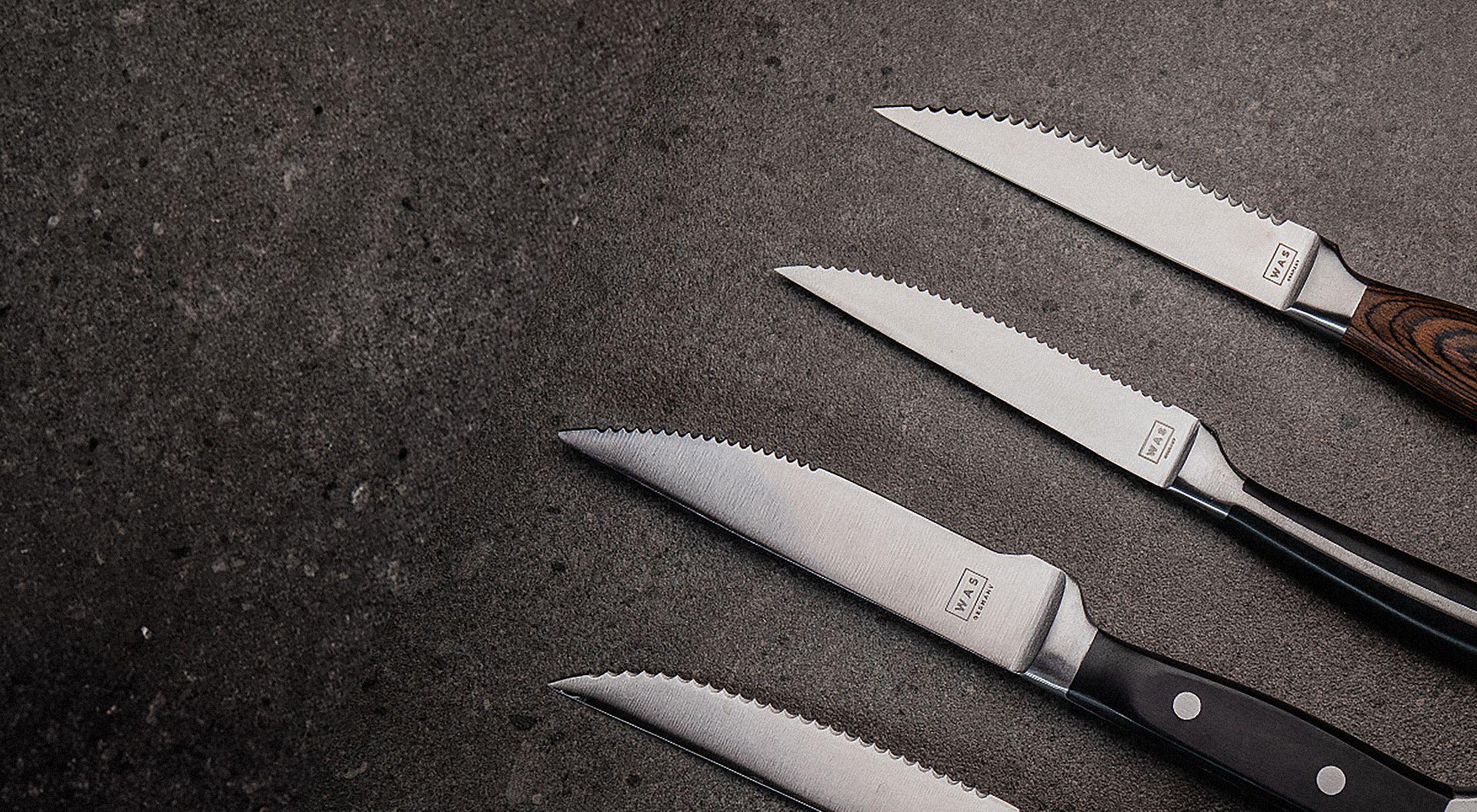
Steak knives are usually 4 to 5 inches long, with either a serrated or straight edge. Serrated blades are more common in Western markets, prized for their ability to saw through crusty exteriors and tender interiors alike.
Handles are often crafted for table aesthetics as well as grip, using materials like polished wood, stainless steel, or synthetic composites. The focus is as much on comfort as on presentation.
Core Uses
- Slicing cooked steak, pork chops, or lamb
- Cutting grilled chicken or fish at the table
- Serving as a table knife for hearty meals
A steak knife’s role is not in the kitchen prep phase, but rather at the dining table, enhancing the enjoyment of properly cooked meat.
Pros And Cons
Pros:
- Cleanly cuts through cooked meats with ease
- Serrated edges require less frequent sharpening
- Enhances table presentation
Cons:
- Not suitable for general kitchen prep
- Straight-edged steak knives need frequent honing to maintain performance
- Serrated knives can be harder to sharpen
Steak Knife Materials
- Stainless Steel: The most popular for both blade and handle, ensuring hygiene and durability.
- High-Carbon Steel: Less common but extremely sharp when straight-edged.
- Wooden Handles: Add a classic touch but require special care to avoid cracking.
Example: High-end steakhouses often invest in premium, full-tang steak knives to impress diners and ensure effortless cutting.
Direct Comparison: Utility Knife Vs Steak Knife
A side-by-side comparison makes the differences and similarities between these knives clear.
| Feature | Utility Knife | Steak Knife |
|---|---|---|
| Primary Use | Food preparation (slicing, trimming, chopping) | Cutting cooked meats at the table |
| Blade Length | 4, 7 inches | 4, 5 inches |
| Edge Type | Straight or serrated | Serrated or straight |
| Handle Design | Ergonomic, practical | Aesthetic, comfortable |
| Maintenance | Requires regular sharpening/honing | Serrated edges need less frequent sharpening |
| Price Range | $10, $100+ | $5, $80+ (per knife or set) |
Key Differences
- Function: Utility knives are kitchen prep tools; steak knives are dining utensils.
- Blade Design: Utility knives favor precision and control, while steak knives prioritize effortless meat slicing.
- Edge Maintenance: Straight utility knives are easy to sharpen at home, but serrated steak knives often require professional tools.
- Aesthetics: Steak knives are often designed for visual appeal, complementing table settings.
Overlapping Uses
While a utility knife can cut cooked meat in a pinch, it won’t deliver the clean slices of a dedicated steak knife. Conversely, a steak knife lacks the versatility needed for prep work like peeling or dicing.
Pro Tip: For hosts who frequently serve steak or grilled meats, investing in a quality steak knife set will impress guests and improve meal enjoyment.

Credit: www.foodandwine.com
Performance And Handling: Real-world Scenarios
Selecting the right knife isn’t just a matter of specs, it’s about performance in everyday tasks. Here, we analyze common kitchen and dining scenarios to illustrate the value of each knife.
Meal Preparation
Imagine prepping a salad with tomatoes, cucumbers, and avocados. A utility knife excels at slicing through firm vegetables and delicate produce without bruising or squashing. Its nimble blade glides through soft-skinned fruits and can even handle small sandwich prep.
A steak knife, on the other hand, tends to tear or crush softer produce due to its serrated edge. The lack of control and precision can make food prep more frustrating.
At The Dinner Table
Consider serving a medium-rare ribeye. A steak knife with a sharp, serrated edge slices through the seared crust and tender interior effortlessly, preserving the meat’s juices and texture. In my experience, using a utility knife at the table can result in ragged edges, requiring more force and diminishing the presentation.
Entertaining And Presentation
Fine dining establishments pay close attention to the knives they provide guests. A mismatched or dull steak knife detracts from the meal, while a balanced, sharp steak knife adds sophistication and enhances the eating experience.
Safety And Efficiency
Utility knives are designed with safety in mind, featuring ergonomic handles and balanced weight for repetitive tasks. Steak knives, while sharp, are typically used in a more controlled dining environment, where the risk of kitchen accidents is lower.
Pro Tip: Always select the knife best suited for the task, not just for performance, but for safety.
Materials, Maintenance, And Longevity
The materials and upkeep required for each knife type have a major impact on performance, safety, and lifespan.
Blade Materials
- Stainless Steel: Widely used for both types due to corrosion resistance and ease of cleaning.
- High-Carbon Steel: Preferred for sharper edges but requires more care to avoid rust.
- Ceramic: Found in some utility knives, offering extreme sharpness but brittle if dropped.
Steak knives are nearly always made from stainless steel for hygiene and ease of table service.
Handle Materials
| Handle Material | Utility Knife | Steak Knife |
|---|---|---|
| Plastic/Composite | Common, dishwasher safe | Less common, sometimes used for budget sets |
| Wood | Classic look, requires oiling | Very common, enhances aesthetics |
| Metal (Stainless/Aluminum) | Durable, modern, easy to clean | Popular in contemporary steak knives |
Maintenance Tips
- Sharpening: Utility knives (straight-edged) should be honed regularly and sharpened as needed. Steak knives with serrated edges require professional sharpening less often.
- Cleaning: Handwashing is recommended, especially for knives with wooden handles.
- Storage: Use knife blocks, magnetic strips, or sheaths to protect blades and prevent accidents.
Warning: Putting high-quality knives in the dishwasher can dull the edge and damage handles, always wash by hand for best results.
Longevity
With proper care, both utility and steak knives can last for many years. Regular honing and immediate drying after washing will prevent rust and maintain sharpness.
Cost, Value, And Buying Advice
Investing in kitchen knives can be daunting given the range of prices and brands. Here’s what to consider when buying utility or steak knives.
Price Ranges
- Utility Knives: Entry-level models start around $10, while premium brands (e.g., Wüsthof, Shun) can exceed $100.
- Steak Knives: Sets of four can range from $20 to $200+, with single knives from $5 to $80.
Value Factors
- Blade Material: High-carbon steel costs more but offers superior sharpness.
- Handle Quality: Full-tang construction (blade extends through the handle) is a sign of durability.
- Brand Reputation: Established brands often provide better warranties and customer service.
- Intended Use: Don’t overinvest in features you won’t use, match the knife to your primary needs.
Where To Buy
- Specialty kitchen stores often offer knowledgeable staff and demo opportunities.
- Online retailers provide extensive reviews and competitive pricing.
- Restaurant supply stores are a great source for durable, no-frills options.
Example: When outfitting a small catering business, I prioritized mid-range utility knives for prep and invested in visually striking steak knives for client-facing events.
Warranty And Support
Look for knives with lifetime warranties against defects. This is common among reputable brands and signals confidence in product quality.
Consumer Reports offers additional guidance on evaluating knife quality and value.
Case Studies And Real-world Examples
Understanding how utility and steak knives are used in real settings can offer valuable insights for buyers.
Example 1: Home Kitchen Efficiency
A busy family kitchen with limited space benefited from investing in a high-quality utility knife. The tool handled everything from prepping vegetables to slicing sandwiches, reducing the need for multiple specialized knives. The family opted for affordable steak knife sets for occasional steak nights, finding that specialized steak knives improved meal enjoyment without straining the budget.
Example 2: Restaurant Table Service
A mid-tier steakhouse upgraded its steak knives to a full-tang, serrated set. Customer satisfaction scores improved, with diners noting the ease of cutting through thick cuts of meat. The restaurant also standardized utility knives for back-of-house prep, streamlining training and maintenance routines.
Example 3: Outdoor Grilling And Entertaining
For summer BBQs, one host invested in dishwasher-safe steak knives with brightly colored handles to prevent mix-ups and loss. Utility knives were reserved for slicing vegetables and prepping garnishes, showcasing how each knife type excels in its specific role.
Expert Opinions And Recommendations
Culinary professionals and knife experts offer valuable perspectives when choosing between utility and steak knives.
Chef Insights
Professional chefs recommend keeping at least one utility knife in any kitchen. Its versatility for prep work is unmatched, and it’s often the “go-to” knife for tasks too small for a chef’s knife but too large for a paring knife.
Steak knives, meanwhile, are a must-have for anyone who regularly serves meats at the table. According to the Culinary Institute of America, using a sharp steak knife improves texture and presentation, enhancing the diner’s experience.
Knife Care Specialists
Knife sharpeners note that many home cooks neglect steak knife maintenance, leading to dull blades and poor performance. They recommend periodic professional sharpening, especially for serrated models, to maintain cutting efficiency.
Consumer Advocates
Consumer organizations, such as Wirecutter, stress the importance of trying knives in person when possible. Comfort, balance, and handle fit are highly subjective and can impact long-term satisfaction.
Frequently Asked Questions
What’s The Main Difference Between A Utility Knife And A Steak Knife?
A utility knife is designed for food preparation in the kitchen, capable of slicing, chopping, and trimming a wide variety of foods. A steak knife is specifically intended for cutting cooked meats at the dining table, with a blade shape and edge tailored for that purpose.
Can I Use A Steak Knife For Kitchen Prep Tasks?
While a steak knife can technically cut some foods, it’s not ideal for kitchen prep. The serrated edge of most steak knives may tear or crush softer produce and lacks the precision of a utility knife. For best results and safety, use each knife for its intended purpose.
How Often Should Steak Knives Be Sharpened?
Serrated steak knives require sharpening less frequently than straight-edged knives. However, once dull, they’re harder to sharpen and may need professional attention. For straight-edged steak knives, hone regularly and sharpen as needed, much like a utility knife.
Are Ceramic Utility Knives Better Than Steel Ones?
Ceramic utility knives offer extreme sharpness and light weight, making them excellent for slicing fruits and vegetables. However, they are more brittle than steel and can chip or break if dropped or used on hard items. Steel knives are more versatile and durable for general kitchen tasks.
What’s The Best Way To Care For Knives With Wooden Handles?
Knives with wooden handles should always be washed by hand and dried immediately. Periodically oiling the handle with food-safe mineral oil prevents drying and cracking. Avoid soaking or exposing wooden handles to dishwashers or prolonged moisture.
Selecting the right knife for each task can elevate both your cooking efficiency and dining pleasure. Utility knives and steak knives are not interchangeable, but each brings unique strengths to the kitchen and table. By understanding their differences, investing wisely, and caring for your tools, you can enjoy safer, more satisfying food preparation and dining experiences for years to come.