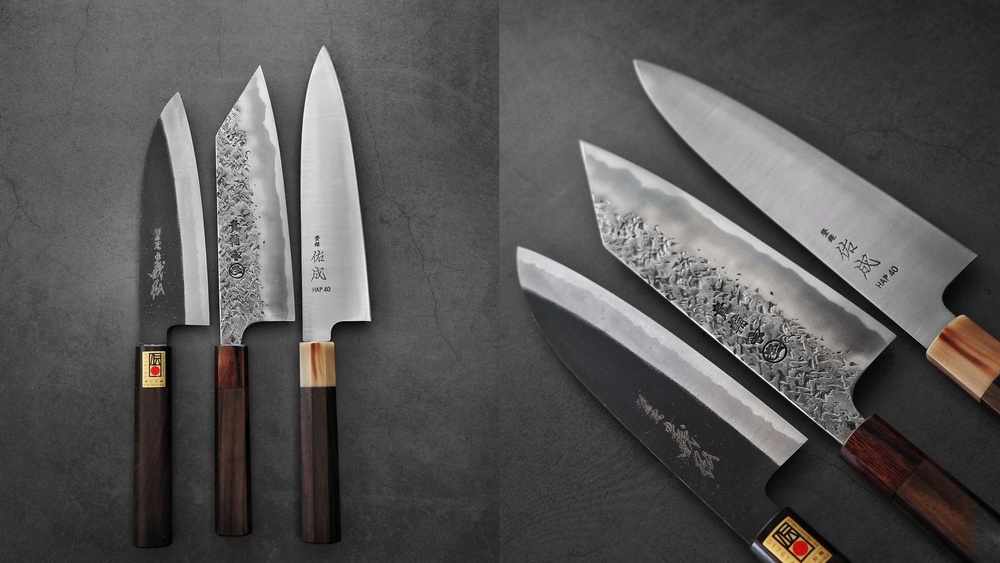
When it comes to Japanese kitchen knives, two names consistently dominate discussions among professional chefs and culinary enthusiasts alike: the Gyuto knife and the Santoku knife. Both blades are highly regarded for their versatility, precision, and craftsmanship, but each brings distinct advantages to the cutting board. The choice between these two powerhouses can significantly impact your kitchen experience, shaping how you approach everything from delicate herbs to dense root vegetables and robust proteins.
Understanding the nuanced differences between the Gyuto and Santoku knives is crucial for anyone seeking to invest in a quality knife that matches their cooking style. While both knives excel in general-purpose tasks, their unique designs, blade geometry, and historical context influence their performance, maintenance, and suitability for different users.
In this comprehensive comparison, we’ll break down their origins, design features, practical uses, and buying considerations to help you make an informed decision.
Key Takeaways
- The Gyuto knife is the Japanese equivalent of a Western chef’s knife, excelling in versatility and suitable for both push-cutting and rocking motions.
- The Santoku knife is shorter, has a flatter edge profile, and is optimized for chopping, slicing, and dicing, especially vegetables and boneless meats.
- Design differences, such as blade length, tip shape, and edge geometry, make each knife uniquely suited to specific kitchen tasks.
- Both knives are available in a wide range of materials and price points, with maintenance requirements varying based on steel type.
- Professional chefs often prefer the Gyuto for all-purpose use, while home cooks may find the Santoku’s compact size and control more appealing.
- Choosing the right knife depends on your cutting techniques, types of food prepared, and comfort with knife maintenance.
Credit: hasuseizo.com
The Origins And Cultural Significance
Japanese Knife-making Traditions
The art of Japanese knife-making dates back centuries, with roots in samurai sword craftsmanship. Japanese bladesmiths have long been celebrated for their meticulous forging techniques, attention to detail, and innovative steel treatments. The Gyuto and Santoku knives are both products of this heritage, yet each reflects a different culinary philosophy.
Evolution Of The Gyuto
The Gyuto, meaning “beef sword” in Japanese, was developed in the late 19th and early 20th centuries as a response to the Westernization of Japanese cuisine. As beef and Western-style cooking became more popular in Japan, a need arose for a knife that could handle a wider variety of proteins and cutting techniques. The Gyuto’s design borrowed elements from the French chef’s knife, but incorporated Japanese steel and craftsmanship.
Development Of The Santoku
The Santoku, which translates to “three virtues” or “three uses,” emerged in the mid-20th century as a multipurpose solution for home cooks. Its name refers to its proficiency in slicing, dicing, and mincing. The Santoku was designed to be a compact, easy-to-handle alternative to the longer Gyuto, ideal for preparing vegetables, fish, and boneless meats in the Japanese home kitchen.
Cultural Impact
Both knives now hold iconic status in Japanese and international kitchens. The Gyuto is favored by many professional chefs for its adaptability, while the Santoku has become a household staple, praised for its approachable size and efficiency.
Anatomy And Design Differences
Blade Shape And Length
The most immediately noticeable difference between the two knives lies in their blade shape and length.
- Gyuto: Typically ranges from 180mm to 300mm (7”, 12”) in length, with an average home-use size of 210mm (8.2”). The blade features a pronounced curve (belly) towards the tip, which facilitates rocking cuts.
- Santoku: Generally measures 165mm to 180mm (6.5”, 7”) in length. The blade has a flatter edge profile and a rounded sheepsfoot tip, making it ideal for up-and-down chopping motions.
Blade Geometry And Grind
- Gyuto: Has a double-bevel edge, with a thinner spine and a pointed tip. This geometry allows for precise slicing, fine detail work, and easy penetration of tougher ingredients.
- Santoku: Also double-beveled, but the blade is typically wider and more uniform in thickness along its length. The flatter edge excels at straight chopping and push-cutting.
Handle Design
Japanese knives are available with both Western-style (yo) and traditional Japanese (wa) handles:
- Gyuto: Commonly found in both wa and yo handle styles, offering options for balance, grip, and weight preferences.
- Santoku: More frequently comes with a Western-style handle, though traditional wa handles are also available.
Weight And Balance
- Gyuto: Generally heavier and longer, providing more leverage for larger cuts of meat and robust vegetables.
- Santoku: Lighter and shorter, offering greater control and agility, especially for users with smaller hands.
Material And Finish
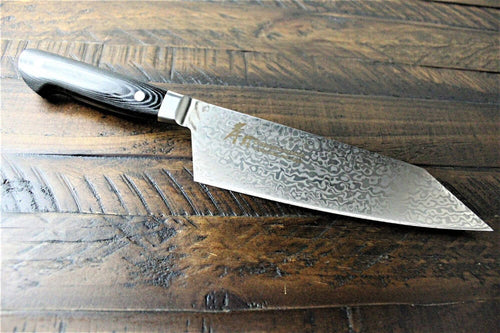
Both knives are produced in a variety of steels, from high-carbon to stainless alloys. Some feature distinctive patterns such as Damascus or hammered finishes, which enhance both aesthetics and food release.
Comparison Table: Gyuto Vs Santoku Anatomy
| Feature | Gyuto | Santoku |
|---|---|---|
| Blade Length | 180, 300mm (7, 12″) | 165, 180mm (6.5, 7″) |
| Blade Shape | Curved (belly), pointed tip | Flat edge, sheepsfoot tip |
| Handle Style | Wa (Japanese) or Yo (Western) | Primarily Yo (Western) |
| Weight | Medium to heavy | Light to medium |
| Edge Geometry | Double bevel, thin spine | Double bevel, wider blade |

Credit: www.youtube.com
Performance And Practical Application
Versatility In The Kitchen
Both the Gyuto and Santoku are considered all-purpose knives, but their performance varies based on the task.
- Gyuto: Excels in slicing, dicing, mincing, and carving large cuts of meat, fish, and vegetables. Its length and pointed tip make it ideal for precision tasks and working with larger ingredients.
- Santoku: Best suited for chopping, slicing, and dicing vegetables, fruits, and boneless meats. Its compact size makes it easy to handle, particularly for repetitive chopping tasks.
Cutting Techniques
The blade curvature and length influence which cutting techniques each knife supports.
- Gyuto: The curved belly is designed for rocking motions, allowing users to perform a continuous chopping rhythm.
- Santoku: The flatter edge profile encourages up-and-down push cutting, offering clean, straight cuts with minimal effort.
Food Release And Stickiness
Santoku knives often feature granton edges (scalloped indentations along the blade) that help reduce food sticking, especially when slicing starchy or wet ingredients like potatoes and cucumbers.
Gyuto knives, while sometimes offered with similar features, typically rely on blade finish and thinness for food release.
Real-world Example: Vegetable Prep
When preparing a stir-fry with a high volume of vegetables, the Santoku shines due to its straight edge, allowing rapid, precise chopping. The compact design reduces wrist fatigue during extended prep sessions. In my experience, the Santoku’s flat profile lets you cut through carrots, celery, and bell peppers with minimal rocking, speeding up the process.
Conversely, when breaking down a whole chicken or slicing roast beef, the Gyuto‘s longer, sharper tip and curved edge provide the necessary leverage and control, making it the superior choice for proteins.
Table: Recommended Uses
| Task | Gyuto | Santoku |
|---|---|---|
| Chopping Vegetables | Excellent | Excellent |
| Slicing Meat | Excellent | Good |
| Mincing Herbs | Excellent (rocking) | Good |
| Carving Roasts | Excellent | Fair |
| Precision Tasks | Excellent | Good |
| Small Kitchen Spaces | Good | Excellent |

Credit: prudentreviews.com
User Experience: Professional Chefs Vs Home Cooks
Preferences In Professional Kitchens
Professional chefs often gravitate toward the Gyuto for its length, versatility, and ability to handle a variety of proteins and large produce. The added control from the pointed tip allows for intricate work, such as segmenting citrus or filleting fish. Many chefs appreciate the Gyuto’s adaptability to both Western and Japanese cutting techniques.
Case Study: Sushi Chef’s Toolkit
In high-end sushi restaurants, the Gyuto is a staple for preparing fish and slicing vegetables for garnishes. Its sharp edge and long blade support precise, delicate cuts essential for sashimi and nigiri. Some chefs supplement their Gyuto with specialty knives, but the Gyuto remains the backbone of their toolkit.
Preferences Among Home Cooks
The Santoku has become increasingly popular in home kitchens due to its approachable size and ease of use. Home cooks with limited counter space or less experience handling longer knives often find the Santoku more comfortable. Its shorter blade reduces the intimidation factor and increases safety for those new to Japanese knives.
Example: Family Meal Prep
A home cook preparing weeknight dinners might favor the Santoku for chopping onions, slicing mushrooms, and dicing chicken breast. The lighter weight and balanced feel reduce fatigue during repetitive tasks, making meal prep more enjoyable and efficient.
Ergonomics And Safety
- Gyuto: Requires some skill to manage the length and maintain control, especially in tight spaces.
- Santoku: Easier to maneuver, particularly for those with smaller hands or less knife experience.
Pro Tip:
When selecting a knife, always hold it in your hand before purchasing. The balance and grip should feel natural, with the weight distributed comfortably between the blade and handle.
Sharpening, Maintenance, And Durability
Sharpening Requirements
Both the Gyuto and Santoku require regular sharpening to maintain peak performance. The type of steel used influences sharpening frequency and technique.
- High-carbon steels: Offer superior sharpness but are prone to rust and require more frequent maintenance.
- Stainless steels: More resistant to corrosion and easier to maintain, though they may not hold an edge as long as high-carbon options.
Sharpening Angles
- Gyuto: Typically sharpened to a 15, 16 degree angle per side, resulting in a razor-sharp edge ideal for fine slicing.
- Santoku: Often sharpened to a slightly steeper 12, 15 degree angle, enhancing its vegetable-chopping prowess.
Honing And Sharpening Tools
A whetstone is the preferred tool for sharpening Japanese knives, as it allows for precise control over the edge angle. Honing rods can be used for regular maintenance between sharpenings.
Durability Considerations
- Gyuto: The longer, thinner blade may be more susceptible to chipping if used on hard surfaces (e.g., bones, frozen foods). Careful handling and proper cutting boards (preferably wood or rubber) extend its lifespan.
- Santoku: The shorter, wider blade is generally more robust and forgiving, making it suitable for daily use in busy kitchens.
Care And Cleaning
- Always hand-wash and dry immediately after use to prevent corrosion.
- Store in a knife block, sheath, or on a magnetic strip to avoid edge damage.
Example: Home Sharpening Routine
A home cook who prepares meals daily may need to sharpen their Santoku or Gyuto every 1, 2 months, depending on usage and steel type. Regular honing with a ceramic rod can extend the time between full sharpenings.
Price, Accessibility, And Popular Brands
Price Range
Both knives are available across a broad price spectrum, from entry-level models under $50 to handcrafted, artisanal blades costing several hundred dollars. Factors affecting price include:
- Steel quality (VG-10, AUS-8, Blue/White carbon steel)
- Craftsmanship (mass-produced vs hand-forged)
- Brand reputation
Accessibility
- Santoku knives are widely available at department stores, kitchenware retailers, and online platforms.
- Gyuto knives, especially high-end models, may require specialty retailers or direct import from Japan.
Popular Brands
Some reputable brands offering both Gyuto and Santoku knives include:
- Shun
- Global
- MAC
- Tojiro
- Misono
- Yoshihiro
These brands are known for quality materials and consistent performance. For more on Japanese knife brands, visit the Wikipedia entry on Japanese cutlery.
Example: Budget Vs Premium Knives
A beginner might start with a $60 Tojiro Santoku, which offers excellent value and performance. In contrast, a professional chef may invest in a $300 hand-forged Gyuto made from high-carbon steel, appreciating the superior edge retention and craftsmanship.
Choosing The Right Knife For Your Needs
Assessing Your Cooking Style
Consider the types of food you most frequently prepare:
- Meat-heavy diets: A longer Gyuto provides better leverage and slicing ability.
- Vegetable-focused cooking: The Santoku’s flat edge and compact size offer precision and speed.
Kitchen Space And Storage
If you have limited counter space or a small cutting board, the shorter Santoku may be more practical.
Experience Level
- Beginners: The Santoku’s manageable size and safety profile make it an excellent first Japanese knife.
- Experienced cooks: The Gyuto’s versatility and advanced cutting techniques may be more rewarding.
Hand Size And Grip Preference
Test both knives in person to determine which feels more comfortable and balanced in your hand. Some users find the Gyuto unwieldy, while others appreciate the extra length and weight.
Maintenance Commitment
If you prefer minimal maintenance, opt for stainless steel variants of either knife. For those willing to invest time in sharpening and care, high-carbon steel offers unmatched sharpness.
Table: Decision-making Factors
| Factor | Best Knife Choice |
|---|---|
| Mainly meat/protein preparation | Gyuto |
| Vegetarian/vegetable prep | Santoku |
| Small hands/kitchen space | Santoku |
| All-purpose professional use | Gyuto |
| Beginner-friendly | Santoku |
| Willing to maintain blade | Either (prefer high-carbon) |
Real-world Examples And Case Studies
Example 1: Professional Chef’s Perspective
Chef Maria Lopez, who heads a contemporary Japanese restaurant in Los Angeles, relies on her 240mm Gyuto for nearly every task in the kitchen. She values the length and agility, which allow her to move seamlessly from prepping large cuts of fish to finely mincing herbs. According to Chef Lopez, the Gyuto’s adaptability reduces the need to switch knives, saving time during busy dinner services.
Example 2: Home Cook’s Experience
Sarah, a home cook with limited kitchen space, switched from a Western chef’s knife to a Santoku. She noticed immediate improvements in her ability to chop and dice vegetables efficiently, with fewer hand cramps and less fatigue. The Santoku’s compact design fit her smaller cutting board perfectly, and she felt more in control during meal prep.
Example 3: Hybrid Approach
Some cooks keep both knives on hand, using the Gyuto for larger tasks and proteins, and the Santoku for vegetables and quick prep. This hybrid approach provides maximum flexibility without sacrificing the specialized strengths of each knife.
Expert Opinions And Industry Insights
Chef Recommendations
- Gyuto: Favored by chefs who value versatility, especially those working in high-volume kitchens or with a variety of proteins and produce.
- Santoku: Recommended for home cooks, vegetarians, or anyone seeking a nimble, easy-to-maintain multipurpose knife.
Culinary Educators
Culinary schools often introduce students to both knives, encouraging experimentation to determine which best suits individual technique and comfort.
Industry Trends
According to Statista, the global kitchen knife market continues to grow, with Japanese-style knives seeing increased adoption among both professionals and home cooks. The rise in home cooking since 2020 has driven demand for user-friendly, versatile blades like the Santoku.
For further insights into knife trends, see this Statista report on kitchen knives.
Frequently Asked Questions
What Is The Main Difference Between Gyuto And Santoku Knives?
The Gyuto is longer, has a curved blade, and a pointed tip, making it more versatile for cutting proteins and using rocking motions. The Santoku is shorter, with a flat edge and rounded tip, optimized for chopping and slicing vegetables with an up-and-down motion.
Can I Use A Santoku Knife For Cutting Meat?
Yes, a Santoku can handle boneless meats well, though it may struggle with larger cuts or bones. For frequent meat preparation, especially with larger or tougher cuts, the longer blade and pointed tip of a Gyuto offer better performance.
Which Knife Is Easier To Maintain For Beginners?
Both knives require regular sharpening, but stainless steel versions of either are easier to maintain. Santoku knives, being shorter and often made with more forgiving steels, may be slightly easier for beginners to care for.
Is It Necessary To Own Both Gyuto And Santoku Knives?
It is not strictly necessary, but many cooks appreciate having both for maximum flexibility. The Gyuto covers a wider range of tasks, while the Santoku is ideal for fast, efficient vegetable prep. Owning both is a matter of personal preference and cooking habits.
Are Japanese Knives Suitable For Left-handed Users?
Yes, most Gyuto and Santoku knives are double-beveled and symmetrical, making them suitable for both left- and right-handed users. Some single-bevel Japanese knives, however, are right-hand specific, so always check the knife’s specifications before purchase.
Selecting between the Gyuto and Santoku is a deeply personal choice, influenced by your cooking style, kitchen environment, and preferences. Both knives offer exceptional performance, craftsmanship, and value for their respective roles. Whether you favor the Gyuto’s versatility or the Santoku’s precision, investing in a quality Japanese knife can elevate your culinary experience and inspire confidence at every meal.