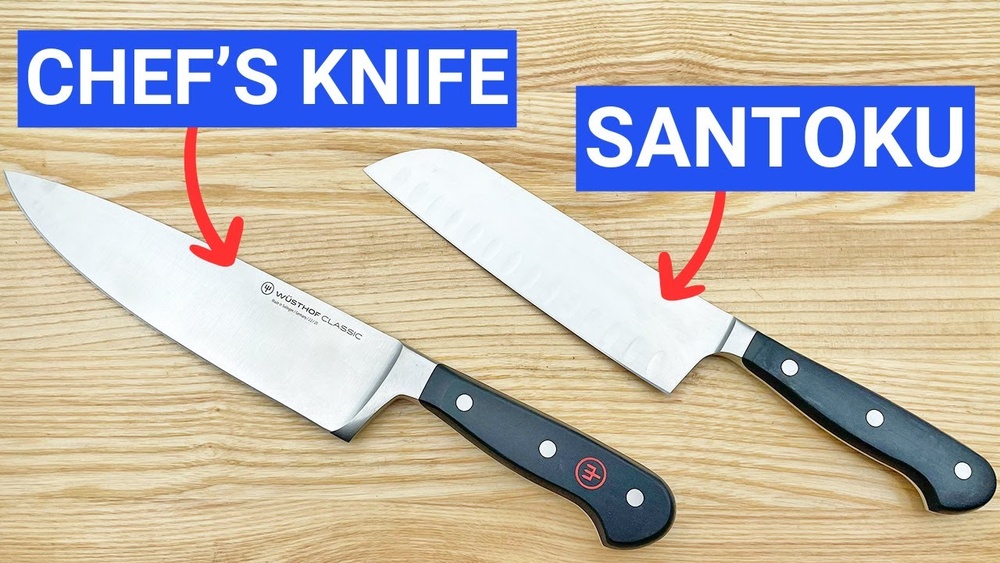
The rivalry between the Santoku and Chef’s Knife is one of the most enduring debates in the culinary world. Both knives are iconic, universally respected, and have become staples in kitchens from Michelin-starred restaurants to suburban homes. The chef’s knife, with its European roots, is renowned for its versatility, power, and ability to tackle almost any cutting task. On the other hand, the Santoku, hailing from Japan, is celebrated for its precision, nimbleness, and unique design features that cater to modern cooking techniques.
Choosing between these two can be daunting, especially when both offer exceptional performance but in subtly different ways. The decision isn’t just about aesthetics or tradition, it’s about how these tools align with your cooking style, the ingredients you use, and your expectations for efficiency and comfort.
Understanding their distinct characteristics, strengths, and limitations is crucial for anyone serious about culinary excellence.
Key Takeaways
- Chef’s knives excel in versatility and heavy-duty tasks, while Santoku knives offer precision and efficiency, especially for slicing and dicing.
- Each knife originates from different culinary traditions, influencing their design and ideal uses.
- The choice depends on cooking habits, hand size, and comfort rather than simple superiority.
- Proper care, maintenance, and sharpening techniques differ for each knife type.
- Real-world case studies highlight the impact of knife selection on professional and home cooking.
- Comparing materials, blade geometry, and price points can help guide purchasing decisions.
Origins And Design: Chef’s Knife Vs. Santoku
Understanding the historical context and design philosophy behind both knives reveals why they excel in different areas of the kitchen.
Chef’s Knife: European Legacy
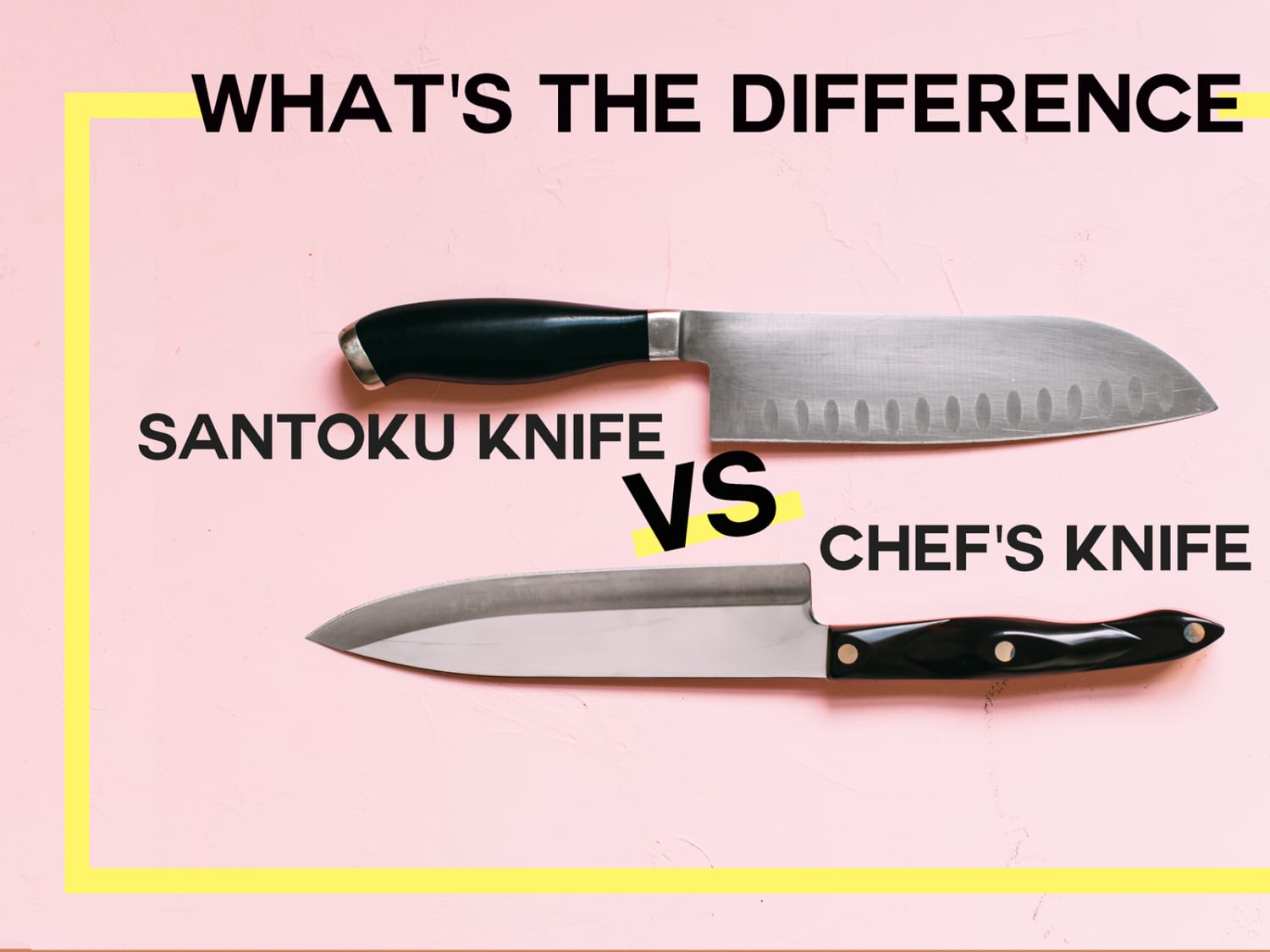
The Chef’s Knife, sometimes called a French or German knife, emerged from European culinary traditions. Its hallmark is a curved blade that enables a rocking motion, ideal for mincing herbs, chopping vegetables, and slicing meats. Typically measuring 8, 10 inches, the chef’s knife is designed for versatility, handling everything from delicate tasks to heavy-duty work like breaking down chicken.
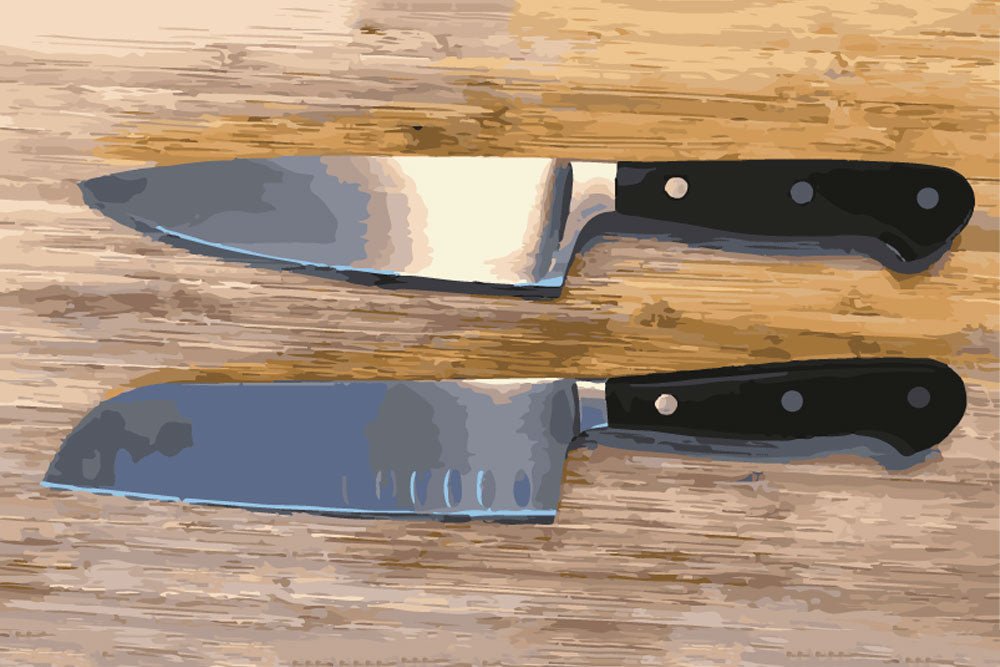
- Blade Shape: Broad, curved, and tapers to a sharp point.
- Handle: Ergonomic, often with a bolster for balance and safety.
- Weight: Heavier, providing momentum for tough ingredients.
The chef’s knife is often considered the backbone of Western kitchens, and its adaptability has made it indispensable.
Santoku: Japanese Precision
The Santoku knife was developed in Japan in the mid-20th century, blending Western influences with Japanese craftsmanship. “Santoku” means “three virtues,” referring to its proficiency in slicing, dicing, and chopping. The blade is typically shorter (5, 7 inches) and features a flat edge with a less pronounced curve, which facilitates straight-down cuts.
- Blade Shape: Flat edge, rounded tip (sheep’s foot), sometimes with hollow “granton” indentations.
- Handle: Often lighter, sometimes with traditional Japanese shapes.
- Weight: Lightweight, making it easy to maneuver.
Santoku knives are prized for their precision and efficiency, especially with vegetables, fish, and boneless meats.
Example: A Professional Kitchen’s Choice
A chef at a high-end French restaurant might rely on a chef’s knife for breaking down whole chickens and prepping root vegetables, while a sushi chef in Tokyo would reach for a Santoku to slice cucumbers or fish with minimal bruising. Each knife’s design reflects the culinary demands of its culture.

Credit: imarku.net
Performance And Functionality: What Sets Them Apart?
To decide which knife suits your needs, consider their performance across common kitchen tasks.
Slicing, Chopping, And Mincing
Chef’s knives excel in tasks requiring a rocking motion, such as mincing garlic or herbs. Their curved blade allows for effortless movement and speed. When chopping larger or tougher items, think squash or bones, the chef’s knife’s weight and length offer power and control.
Santoku knives, with their flat blade, are optimized for up-and-down chopping. They shine in precision slicing of vegetables, fruit, and boneless meats. The granton edge (indentations) reduces friction and prevents food from sticking, ideal for thin, uniform cuts.
Blade Geometry And Sharpness
- Chef’s Knife: Typically sharpened to a 20, 22 degree angle, providing durability but slightly less sharpness than Japanese knives.
- Santoku: Sharpened to a 12, 15 degree angle, resulting in a finer, sharper edge ideal for delicate slicing.
| Feature | Chef’s Knife | Santoku |
|---|---|---|
| Blade Length | 8, 10 inches | 5, 7 inches |
| Edge Angle | 20, 22° | 12, 15° |
| Blade Shape | Curved | Flat |
| Weight | Heavier | Lighter |
| Best For | Rocking, heavy-duty | Precision slicing |
Comfort And Ergonomics
The chef’s knife often features a pronounced bolster, which adds balance and protects fingers. The Santoku usually lacks a bolster, resulting in a lighter feel and potentially more fatigue-free use during extended prep.
Pro Tip: If you have smaller hands or prefer lightweight tools, the Santoku’s compact size may be more comfortable.
Case Study: Home Cooking Efficiency
In my experience, preparing stir-fry with a Santoku allowed for rapid, precise dicing of vegetables without fatigue, while the chef’s knife made quick work of prepping chicken breasts. Matching the knife to the task boosted speed and accuracy.
Credit: www.thekitchn.com
Materials And Construction: What’s Under The Hood?
Knife performance isn’t just about shape, it’s heavily influenced by materials and manufacturing techniques.
Steel Types
- Chef’s Knife: Commonly made from high-carbon stainless steel, balancing durability, sharpness, and corrosion resistance.
- Santoku: Often uses harder Japanese steels (like VG-10 or AUS-8), allowing for a sharper edge but requiring careful maintenance.
Handle Materials
Both knives offer handles in materials ranging from wood, plastic, to composite. Wood provides traditional aesthetics but needs extra care, while synthetic materials offer durability and water resistance.
Manufacturing Process
- Forged: Chef’s knives are often forged, a process that creates a strong, thick blade with a full tang for balance.
- Stamped: Some Santokus are stamped, making them lighter and more affordable, though high-end Santokus are also forged.
| Material | Chef’s Knife | Santoku |
|---|---|---|
| Steel Type | High-carbon stainless | Japanese VG-10/AUS-8 |
| Handle Material | Wood, plastic, composite | Wood, plastic, composite |
| Manufacturing | Forged, stamped | Forged, stamped |
| Edge Retention | Good | Excellent (harder steel) |
Example: Premium Knife Comparison
A Wüsthof chef’s knife (forged, German steel) offers durability and balance, while a Shun Santoku (forged, VG-10 steel) delivers razor-sharp performance and a lighter feel. Both command high prices due to their manufacturing processes and materials.
Credit: santokuknives.co.uk
Applications And Best Uses: Matching Knife To Task
To maximize efficiency and safety, it’s critical to match each knife type to appropriate culinary tasks.
Chef’s Knife: Versatile Workhorse
Chef’s knives are ideal for:
- Chopping root vegetables, onions, and herbs
- Slicing large cuts of meat or poultry
- Mincing garlic and ginger
- Disjointing chicken or breaking down fish
- Crushing ingredients (flat blade side)
Their length and weight make them suitable for bulk prep and heavier ingredients.
Santoku: Precision Specialist
Santoku knives excel at:
- Slicing vegetables thinly and evenly
- Dicing fruits and softer produce
- Chopping boneless meats and fish
- Making sushi rolls and delicate preparations
- Fine cuts for presentation
The flat blade and lighter weight help achieve consistent results with minimal effort.
Example: Culinary School Curriculum
At the Culinary Institute of America, students are taught to use chef’s knives for foundational skills like julienne and brunoise, while Santoku knives are introduced for precision and speed when preparing Asian cuisine.
Warning: Avoid Misuse
Using a Santoku for heavy-duty tasks like bone-in meat or squash can damage the finer edge. Conversely, chef’s knives may not deliver the finesse needed for ultra-thin slices.
Maintenance And Sharpening: Keeping Your Knives At Peak Performance
Proper care ensures longevity and optimal function for both types of knives.
Cleaning And Storage
- Hand wash both knives; avoid dishwashers to prevent corrosion and edge damage.
- Dry immediately to prevent rust, especially for high-carbon blades.
- Store in a knife block, magnetic strip, or blade guard to protect the edge.
Sharpening Techniques
- Chef’s Knife: Use a Western-style whetstone or honing rod. The thicker edge tolerates more aggressive sharpening.
- Santoku: Sharpen with a Japanese whetstone at a lower angle. The harder steel and finer edge require gentle, precise sharpening.
Edge Retention
Santoku knives, made from harder steel, maintain sharpness longer but can be brittle. Chef’s knives are more forgiving, tolerating rough use and easier to sharpen.
Pro Tip: Regular Maintenance
Sharpen chef’s knives every 1, 2 months with a honing rod, and Santoku knives every 3, 4 months with a fine grit whetstone. A dull knife increases risk of injury and reduces efficiency.
Example: Restaurant Maintenance Routine
A professional kitchen schedules weekly sharpening for chef’s knives and monthly touch-ups for Santokus. This routine ensures consistent performance and safety.
Price Points And Value: How Much Should You Invest?
Knife prices vary dramatically, based on materials, construction, and brand reputation.
Entry-level Knives
- Chef’s Knife: $20, $50 for stamped blades, ideal for beginners.
- Santoku: $30, $60 for stamped, basic models.
Mid-range Knives
- Chef’s Knife: $60, $150 for forged, high-quality steel (e.g., Victorinox, Wüsthof).
- Santoku: $80, $180 for forged Japanese blades (e.g., Global, Shun).
Premium Knives
- Chef’s Knife: $200, $400 for custom or artisan brands (e.g., Bob Kramer).
- Santoku: $250, $500+ for handcrafted Japanese knives (e.g., Masamoto, Miyabi).
| Price Range | Chef’s Knife | Santoku |
|---|---|---|
| Entry-Level | $20, $50 | $30, $60 |
| Mid-Range | $60, $150 | $80, $180 |
| Premium | $200, $400 | $250, $500+ |
Value Considerations
- Durability: Investing in forged knives offers better longevity.
- Performance: Harder steel (Santoku) delivers sharper edges, but at higher prices.
- Brand Reputation: Established brands like Wüsthof, Shun, and Global provide warranties and customer support.
Example: Budget Vs. Professional Choice
A home cook might select a $40 Victorinox chef’s knife for all-around use, while a professional sushi chef invests in a $400 handcrafted Santoku for unmatched sharpness.
Real-world Examples And Case Studies
Examining real-world scenarios highlights how knife selection impacts cooking outcomes.
Case Study 1: Restaurant Prep Efficiency
At a busy New York bistro, prep cooks use chef’s knives to handle large volumes of vegetables and meats. The chef’s knife’s heft and length enable fast, efficient chopping. Meanwhile, the pastry team prefers Santoku knives for precision slicing of fruit and garnishes.
Case Study 2: Home Cooking Transformation
When I switched from a generic chef’s knife to a mid-range Santoku for daily meal prep, I noticed improved speed and accuracy when dicing onions and slicing cucumbers. However, the Santoku felt less effective for tasks like breaking down a whole chicken, underscoring the importance of matching knife to task.
Case Study 3: Culinary School Training
Students at Culinary Institute of America are trained with both knife types, learning to appreciate the versatility of chef’s knives for foundational cuts and the precision of Santokus for Asian cuisine and presentation.
Comparing Brands: Leading Chef’s Knife And Santoku Options
Choosing the right brand can make a substantial difference in performance and satisfaction.
Chef’s Knife Brands
- Wüsthof: German-made, renowned for durability and balance.
- Victorinox: Swiss, affordable, excellent for beginners.
- Zwilling J.A. Henckels: High-quality steel, ergonomic designs.
Santoku Brands
- Shun: Japanese, VG-10 steel, razor-sharp edges.
- Global: Lightweight, stainless steel, modern aesthetics.
- Miyabi: Premium Japanese craftsmanship, elegant designs.
Brand Reputation
Top brands provide warranties, repair services, and consistent quality. Reviews and awards often highlight edge retention, handle comfort, and overall value.
Example: Comparing Warranty Policies
Wüsthof and Shun offer limited lifetime warranties, ensuring peace of mind for buyers concerned about longevity and support.
External Resource
For more detailed brand comparisons and knife reviews, visit Wikipedia Kitchen Knife.
Frequently Asked Questions
What Is The Main Difference Between A Santoku And A Chef’s Knife?
The main difference lies in blade shape and cutting style. Chef’s knives have a curved blade for rocking motions, ideal for mincing and chopping large items, while Santoku knives feature a flat edge for straight-down slicing and precision work, especially with vegetables and fish.
Can I Use A Santoku For All Kitchen Tasks?
While Santoku knives are versatile, they are best for slicing, dicing, and chopping softer ingredients. Tasks like breaking down bone-in meats or hard squash are better suited to the sturdier chef’s knife to avoid damaging the Santoku’s finer edge.
How Should I Sharpen A Santoku Compared To A Chef’s Knife?
Santoku knives require sharpening at a lower angle (12, 15°), typically with a Japanese whetstone. Chef’s knives are sharpened at a higher angle (20, 22°), using a Western-style stone or honing rod. Using the correct technique ensures optimal edge retention and performance.
Which Knife Is Better For Small Hands?
The Santoku, with its shorter blade and lighter weight, is often more comfortable for individuals with smaller hands. Its balance and maneuverability reduce fatigue during long prep sessions.
Are There Hybrid Knives That Combine Features Of Both?
Yes, several brands offer hybrid knives, sometimes called “Santoku Chef’s Knives”, that blend the curved blade of a chef’s knife with the granton edge and shorter length of a Santoku. These hybrids aim to provide versatility and precision in one tool.
Choosing between the Santoku and chef’s knife ultimately depends on your cooking style, hand size, and the type of ingredients you prepare most often. Both knives offer unique advantages and can elevate your kitchen efficiency when matched appropriately to tasks.
Investing in quality, maintaining proper care, and understanding their strengths ensures you’ll always have the right tool at hand for culinary success.