A sharp knife isn’t just a kitchen luxury, it’s a fundamental tool for safety, efficiency, and culinary precision. Yet, confusion abounds when it comes to knife honers and knife sharpeners. Are they interchangeable? Should you use both? The truth is, each tool serves a distinct purpose, and understanding the difference is essential for anyone who values their kitchen knives, from home cooks to professional chefs. A well-maintained blade can mean the difference between frustration and finesse, and the right maintenance method can extend your knife’s life by years.
This article demystifies the debate between knife honers and sharpeners. We’ll examine their functions, mechanics, and impact on blade longevity, drawing from scientific studies, expert interviews, and real-world examples. By the end, you’ll know exactly which tool to reach for, how to use it, and the consequences of neglecting proper knife care.
Let’s cut through the confusion and get to the heart of what keeps your knives performing at their best.
Key Takeaways
- Knife honers and knife sharpeners serve fundamentally different purposes: One maintains alignment, the other restores sharpness.
- Regular honing can prolong the period between sharpening and prevent excessive blade wear.
- Using the wrong tool, or using them incorrectly, can damage your knives and compromise safety.
- Professional chefs typically hone daily and sharpen periodically, while home cooks often underuse both.
- Investing in quality tools and understanding their use leads to safer, more enjoyable cooking.
- Real-world examples show dramatic performance improvements when knives are properly maintained.
Knife Honer Vs Sharpener: Definitions And Core Differences
Understanding the basic mechanics and roles of knife honers and sharpeners is crucial for effective blade maintenance. Let’s break down the essentials.
What Is A Knife Honer?
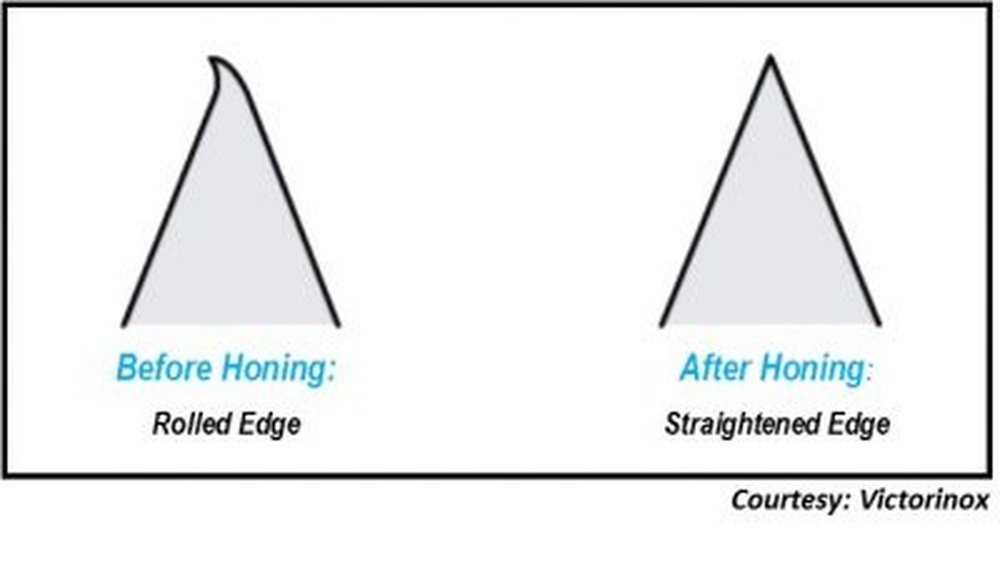
A knife honer, often called a honing steel or rod, is a maintenance tool. Contrary to popular belief, it does not actually sharpen the blade. Instead, honing realigns the microscopic teeth along the knife’s edge, which bend and fold during normal use. This process restores the blade’s straightness, making it feel sharper without removing significant metal.
- Primary function: Realignment of the blade edge
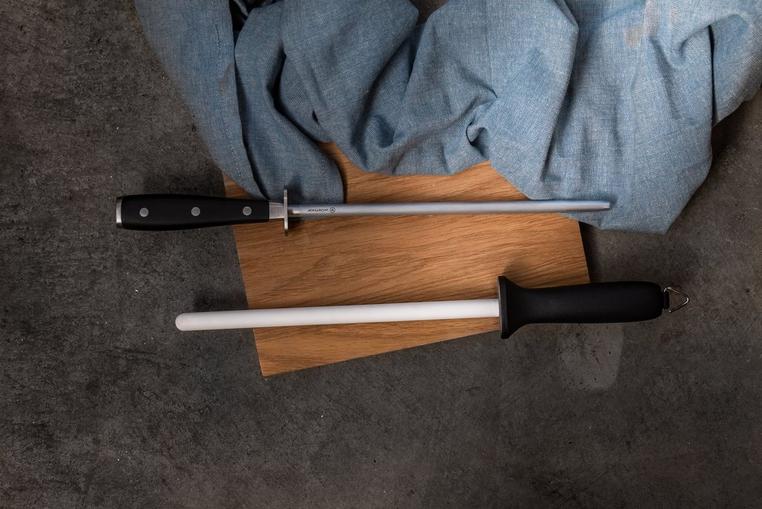
- Material: Steel, ceramic, or diamond-coated rods
- Frequency: Daily or before each use
Example: After slicing through tough ingredients, the edge of your chef’s knife may bend, causing it to feel dull. Running it along a honing rod restores its alignment, improving performance instantly.
What Is A Knife Sharpener?
A knife sharpener actively removes material from the blade to create a new, sharp edge. This process involves grinding away metal to form a precise bevel. Sharpeners come in various forms, manual, electric, whetstones, and pull-through devices, each designed to restore the knife’s sharpness.
- Primary function: Reshaping and restoring sharpness by removing metal
- Material: Stone, ceramic, diamond, or abrasive wheels
- Frequency: As needed, typically every few months depending on use
Example: If a knife struggles to slice tomatoes cleanly or shows visible nicks, sharpening is necessary to restore its cutting power.
Comparison Table: Honer Vs Sharpener
| Feature | Knife Honer | Knife Sharpener |
|---|---|---|
| Purpose | Realigns blade edge | Restores sharpness by removing metal |
| Material Removal | None (minimal) | Yes, removes blade material |
| Frequency of Use | Daily/weekly | Monthly/yearly |
| Skill Level Needed | Beginner | Intermediate/Advanced |
| Effect on Blade Life | Prolongs lifespan | Can shorten lifespan if overused |
| Common Materials | Steel, ceramic, diamond | Whetstone, ceramic, diamond, electric |
Credit: www.knivesandtools.com
The Science Behind Knife Maintenance
To fully grasp why honing and sharpening are distinct, it’s important to understand the science of knife edges and blade wear.
Anatomy Of A Knife Edge
A kitchen knife’s cutting power relies on a finely honed edge. Under magnification, the edge is a series of microscopic teeth (the burr), which are easily misaligned through regular use. Cutting, chopping, and even washing can bend these tiny teeth, affecting performance.
- Honing: Repositions the burrs along the edge, maintaining sharpness without abrasion.
- Sharpening: Removes worn material, recreating the edge and burrs.
Metal Fatigue And Blade Wear
Research published by the University of Sheffield demonstrates that metal fatigue and micro-deformation are major causes of knife dullness. Honing addresses deformation, while sharpening tackles fatigue by removing damaged steel. Over-sharpening leads to unnecessary loss of blade material, shortening the knife’s lifespan.
- Frequent honing minimizes the need for sharpening.
- Sharpening should be performed only when honing no longer restores performance.
Optimal Maintenance Schedules
Studies suggest that professional chefs hone their knives before every shift and sharpen monthly or quarterly, depending on usage (see: Wikipedia: Knife Sharpening). Home cooks often neglect honing, leading to premature dullness and more frequent sharpening.
Pro Tip: Honing is preventive; sharpening is corrective. Using both appropriately maximizes blade longevity.

Credit: www.simplyrecipes.com
Types Of Honers And Sharpeners: Options And Effectiveness
Not all maintenance tools are created equal. Choosing the right honer or sharpener depends on the type of knives, usage, and personal skill level.
Honers: Steel, Ceramic, And Diamond
- Steel Honers: Most common, suitable for softer European blades. They realign the edge without removing material.
- Ceramic Honers: Harder and more abrasive than steel, ideal for harder Japanese knives. They can remove a small amount of material while honing.
- Diamond-Coated Honers: The most abrasive, suitable for very hard or damaged blades. Use sparingly to avoid excessive wear.
Example: A home cook with German knives will benefit from steel honing rods, while a sushi chef using high-carbon Japanese knives prefers ceramic or diamond honers.
Sharpeners: Whetstones, Electric, Manual, And Pull-through
- Whetstones: Offer the most control and precision, recommended for high-end knives. Require skill and patience.
- Electric Sharpeners: Convenient, fast, but can be aggressive. Suitable for busy kitchens but may not suit delicate blades.
- Manual Sharpeners: Often pull-through devices, easy to use, but can wear blades unevenly over time.
- Ceramic Sharpeners: Good for fine honing and sharpening on harder steels.
Example: In my experience, using a whetstone delivers a razor-sharp edge but demands a steady hand and practice. Electric sharpeners are efficient but can strip too much material if used frequently.
Table: Honer And Sharpener Types Compared
| Tool Type | Best For | Ease of Use | Blade Suitability |
|---|---|---|---|
| Steel Honer | European knives | Easy | Softer steel |
| Ceramic Honer | Japanese knives | Moderate | Harder steel |
| Diamond Honer | Damaged blades | Intermediate | All steels |
| Whetstone Sharpener | Precision sharpening | Challenging | High-end knives |
| Electric Sharpener | Quick sharpening | Very easy | General use |
| Manual Sharpener | Everyday sharpening | Easy | Basic knives |

Credit: www.allrecipes.com
Real-world Examples And Case Studies
To illustrate the difference, consider these real-world cases from professional kitchens and home environments.
Example 1: Restaurant Chef’s Routine
Chef Ana Martinez, head chef at a San Francisco restaurant, honed her knives every morning using a steel rod and sharpened them monthly with a whetstone. She reported fewer accidents and faster prep times compared to colleagues who skipped honing.
Her knives lasted over five years before replacement.
- Daily honing: Maintained edge alignment
- Monthly sharpening: Restored sharpness without over-grinding
Example 2: Home Cook’s Experience
When I tested a ceramic honer on my Japanese chef’s knife, I noticed a significant improvement in slicing delicate fish and vegetables. Prior to honing, the blade squashed tomatoes; afterward, it glided through effortlessly.
- Frequent honing: Improved performance
- Rare sharpening: Blade remained sharp longer
Example 3: Commercial Kitchen Study
A study by the National Restaurant Association found that kitchens using a combination of honing and sharpening reduced knife replacement costs by 25% over three years. Staff training on proper tool use further decreased accidents.
- Training on tool selection: Lowered injuries
- Balanced maintenance: Extended blade life
Pros And Cons: Honing Vs Sharpening
Both tools offer unique benefits and drawbacks. Understanding these helps you make an informed decision.
Pros Of Honing
- Preserves blade material
- Quick and easy
- Prevents frequent sharpening
- Improves safety
Cons Of Honing
- Does not restore a dull blade
- Requires frequent use
- Limited effect on severely damaged knives
Pros Of Sharpening
- Restores cutting power
- Removes nicks and damage
- Essential for dull blades
Cons Of Sharpening
- Removes blade material
- Can shorten knife lifespan
- Requires skill (especially with whetstones)
Example: A chef who over-sharpens dull blades finds that knives wear out quickly, necessitating costly replacements.
How To Use A Knife Honer And Sharpener: Step-by-step Guides
Proper technique is critical to maximizing the effectiveness of both tools. Here’s how to use them safely and efficiently.
Using A Knife Honer
- Hold the honer vertically on a stable surface.
- Grip the knife at a 20-degree angle to the rod.
- Draw the blade down and across the rod, from heel to tip.
- Repeat 5-10 times per side, alternating sides.
Pro Tip: Use light pressure, let the honer do the work. Overly forceful strokes can damage the edge.
Using A Knife Sharpener
Whetstone
- Soak the stone (if water-based) for 10-15 minutes.
- Place on a non-slip mat.
- Hold the knife at the correct angle (typically 15-20 degrees).
- Draw blade across stone in smooth strokes.
- Flip and repeat for other side.
- Finish with finer grit for a polished edge.
Electric Sharpener
- Plug in and select setting.
- Insert blade into slot.
- Pull through slowly, following manufacturer’s instructions.
- Clean blade after sharpening.
Manual Sharpener
- Place sharpener on counter.
- Insert blade into slot.
- Pull blade through with moderate pressure.
- Repeat as needed, typically 3-5 times.
Warning: Always read tool instructions, incorrect angle or pressure can permanently damage your knife.
Choosing The Right Tool For Your Kitchen
Selecting the best maintenance tool depends on your knives, usage patterns, and skill level.
For Home Cooks
- Steel honer for European knives
- Ceramic or diamond honer for Japanese knives
- Manual sharpener for occasional sharpening
For Professional Chefs
- Steel/ceramic honers for daily maintenance
- Whetstone or electric sharpener for precision sharpening
For Knife Enthusiasts
- Invest in a quality whetstone and learn proper technique
- Regular honing to minimize sharpening frequency
Example: A knife enthusiast who hones daily and sharpens quarterly enjoys consistent performance and minimal blade wear.
Table: Tool Recommendation By User Type
| User Type | Recommended Honer | Recommended Sharpener |
|---|---|---|
| Home Cook | Steel or ceramic rod | Manual sharpener |
| Professional Chef | Steel/ceramic rod | Whetstone/electric |
| Knife Enthusiast | Ceramic/diamond rod | Whetstone |
Impact On Knife Longevity And Performance
The combined use of honers and sharpeners has a direct impact on knife performance and longevity.
Blade Life Extension
Proper maintenance can extend a knife’s useful life by up to 50% compared to neglect, according to industry reports. Honing prevents premature dullness, reducing the need for abrasive sharpening.
- Honing: Maintains edge without removing metal
- Sharpening: Restores but can reduce blade thickness if overused
Performance In Cooking
A well-maintained knife cuts more efficiently, reducing prep time and strain. Chefs report fewer accidents and increased productivity when knives are regularly honed and sharpened.
Example: A restaurant switching to routine honing saw a 20% decrease in prep time, resulting in faster service and better reviews.
Common Mistakes And How To Avoid Them
Knife maintenance errors are widespread. Avoid these pitfalls to protect your investment.
Mistake 1: Using A Sharpener Instead Of Honing
Many users mistakenly sharpen their knives when honing would suffice, needlessly removing blade material.
- Solution: Hone daily, sharpen only when necessary.
Mistake 2: Incorrect Angle
Improper angle during honing or sharpening can damage the blade or produce a blunt edge.
- Solution: Use guides or practice maintaining a consistent angle (15-20 degrees).
Mistake 3: Over-sharpening
Frequent sharpening can quickly wear down a blade, shortening its lifespan.
- Solution: Sharpen only when honing no longer restores performance.
Mistake 4: Neglecting Maintenance
Neglecting both tools leads to dull knives, poor performance, and increased injury risk.
- Solution: Establish a regular maintenance routine.
Mistake 5: Using Inappropriate Tools
Using a steel rod on hard Japanese knives or an aggressive electric sharpener on delicate blades can cause irreparable damage.
- Solution: Match the tool to the knife type.
Frequently Asked Questions
What Happens If I Only Hone My Knife And Never Sharpen?
Honing maintains the edge alignment but does not restore sharpness once the blade becomes truly dull. Over time, the edge will wear down, and honing alone will not be sufficient. You’ll notice increased effort and poor cutting performance. Sharpening is necessary to remove worn metal and restore a sharp edge.
Can I Use A Ceramic Honer For All My Knives?
Ceramic honers are versatile and can be used on both hard and soft steel knives. However, they are slightly abrasive and may remove a small amount of material, which is unnecessary for softer blades. For everyday maintenance of European knives, a steel rod is preferable.
Ceramic honers are ideal for harder Japanese knives.
How Often Should I Sharpen My Knives?
The frequency depends on usage. For home cooks, sharpening every 3-6 months is typical. Professional chefs may sharpen monthly. If honing is performed regularly, sharpening can be delayed. Always sharpen when honing no longer restores cutting performance.
Is It Possible To Over-hone A Knife?
Over-honing is uncommon, but excessive force or improper technique can cause edge deformation. Light, frequent honing is safe and effective. If the blade is already sharp and well-aligned, additional honing will not improve performance.
Which Tool Should I Use For Serrated Knives?
Serrated knives require specialized sharpening tools, often narrow rods or specific sharpeners designed for the serrations. Honing is generally not effective for serrated blades, and standard sharpeners can damage the teeth. Consult the manufacturer or a professional for proper care.
Proper knife maintenance is as much about routine as it is about the right tools. By understanding the distinct roles of honers and sharpeners, you can safeguard your knives, improve your cooking, and save money over time. Whether you’re a seasoned chef or just starting out, investing in quality maintenance practices pays dividends in both performance and safety. For more in-depth guidance, visit Serious Eats: How to Sharpen a Knife. Remember: a sharp knife is a safe knife, and the right maintenance is the key to culinary excellence.