Few kitchen debates are as enduring, or as passionately fought, as the one between the Chinese cleaver and the chef knife. Step into any bustling restaurant or home kitchen, and you’ll spot these two titans at work: the broad, imposing Chinese cleaver gliding through vegetables and meat, and the versatile, curved chef knife mincing, slicing, and dicing with ease. Each blade carries a rich history and a unique design, influencing how chefs across the world approach their craft.
For home cooks, aspiring chefs, and seasoned professionals alike, choosing between these knives isn’t just about aesthetics. It’s about efficiency, comfort, culture, and culinary identity. Whether you’re prepping stir-fry in a family kitchen or running a high-paced prep station, understanding the strengths and limitations of both the Chinese cleaver and chef knife can elevate your cooking, and help you find the right tool for your hand and your menu.
Key Takeaways
- Chinese cleavers and chef knives offer distinct advantages; choosing the right one depends on your cooking style and needs.
- Chinese cleavers are highly versatile, handling everything from mincing garlic to breaking down proteins, while chef knives excel at precision tasks and Western techniques.
- Blade geometry, weight, and handle design greatly impact comfort and efficiency.
- Material and maintenance requirements differ, affecting edge retention and sharpening frequency.
- Professional chefs often keep both knives in their arsenal, using each for specific tasks.
- Understanding cultural context and real-world use cases helps inform the best choice for your kitchen.
Design And Construction: Anatomy Of Each Knife
Blade Shape And Geometry
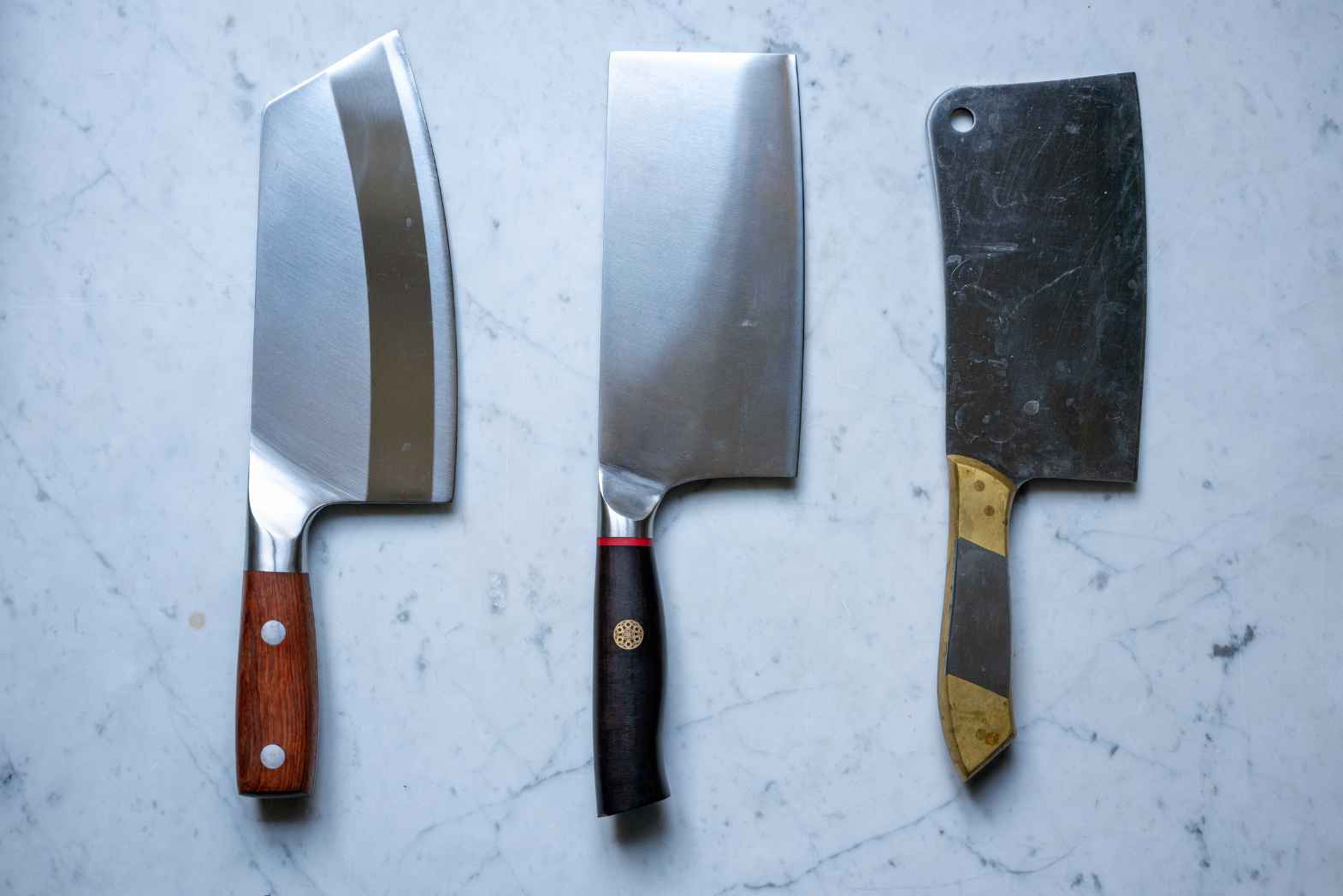
The Chinese cleaver, often called a Chinese chef’s knife or Cai Dao, features a broad, rectangular blade typically 7-8 inches long and 3-4 inches tall. Its flat edge and sheer size set it apart visually from Western knives. In contrast, the Western chef knife sports a triangular, curved blade, usually between 8 and 10 inches long, with a pointed tip and a sweeping belly that enables rocking motions.
The cleaver’s straight edge excels at push-cutting and scooping, while the chef knife’s curved belly allows for rapid mincing and slicing. This difference in geometry fundamentally influences technique: cleaver users often rely on vertical motion, while chef knife users employ rocking and slicing strokes.
Weight And Balance
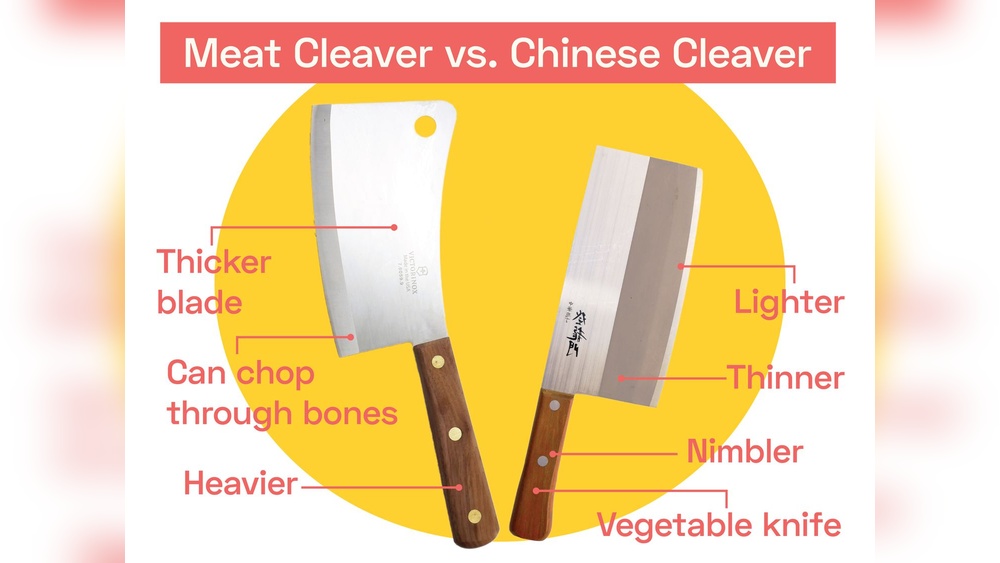
Chinese cleavers come in a range of weights. Most home-use models are relatively thin and lightweight (around 300-400 grams), optimized for slicing, mincing, and chopping. Heavier, thicker “bone cleavers” do exist but are a separate category; the typical Chinese kitchen cleaver is not intended for hacking through bones.
Chef knives are lighter overall (180-250 grams on average) and balance their weight between the blade and handle, offering agility for prolonged use. The balance point on a chef knife is often at the bolster, giving it a nimble, responsive feel.
Handle Design And Materials
The Chinese cleaver frequently features a simple, cylindrical wooden handle, sometimes with a partial or full tang. Handles are designed for a secure grip during repetitive chopping, but may feel less ergonomic to those used to Western designs.
The chef knife usually sports a contoured handle, crafted from wood, plastic, or composite materials, with a pronounced bolster for grip security. This ergonomic focus can reduce fatigue, especially during lengthy prep sessions.
Comparative Table: Core Design Features
| Feature | Chinese Cleaver | Chef Knife |
|---|---|---|
| Blade Shape | Rectangular, flat edge | Triangular, curved belly |
| Typical Length | 7, 8 inches | 8, 10 inches |
| Weight | 300, 400 grams (vegetable) | 180, 250 grams |
| Handle Type | Straight, cylindrical | Contoured, ergonomic |
| Edge Angle | 15, 18 degrees per side | 15, 20 degrees per side |
| Balance Point | Forward (blade-heavy) | At bolster (neutral) |
Credit: www.souschef.co.uk
Functionality And Versatility In The Kitchen
Task Range And Efficiency
One of the Chinese cleaver’s most celebrated qualities is its all-in-one utility. Despite its imposing look, the standard Chinese cleaver isn’t a bone-smashing tool; it’s a multi-purpose blade designed for slicing vegetables, mincing garlic, portioning meat, and even crushing ginger or garlic cloves with the flat side. Its broad blade doubles as a scoop, efficiently transferring chopped ingredients from board to pan.
The chef knife, meanwhile, is the workhorse of Western kitchens. Its pointed tip allows for intricate work, like deveining shrimp or trimming fat, and its curved belly excels at rock-chopping herbs, onions, and other fine ingredients. While not as wide as a cleaver, it handles the vast majority of slicing, dicing, and chopping tasks with precision.
Strengths And Weaknesses
Chinese Cleaver Strengths:
- Excellent for high-volume vegetable prep.
- Broad blade makes transferring chopped food easy.
- Flat edge excels at creating uniform slices.
- Can be used to gently crush garlic, ginger, or spices.
Chinese Cleaver Weaknesses:
- Less suitable for tasks requiring a pointed tip (e.g., paring, hulling strawberries).
- May feel unwieldy for users with smaller hands.
- Not designed for heavy-duty butchery (separate bone cleaver needed).
Chef Knife Strengths:
- Superior for precision tasks and detailed cutting.
- Rocking motion is ideal for mincing herbs, onions.
- Ergonomic handle reduces fatigue.
- Adaptable to a broad range of Western and fusion techniques.
Chef Knife Weaknesses:
- Narrow blade makes scooping difficult.
- May require additional specialty knives for some tasks (cleaver, boning knife).
- Can struggle with large, dense vegetables (e.g., squash, watermelon).
Case Study: Home Cook’s Stir-fry Preparation
When preparing a classic stir-fry, Chinese cleaver users can slice scallions, mince garlic, julienne carrots, and portion chicken, all with the same blade, scooping ingredients directly into the wok. In my experience, this “one knife” approach speeds up prep and reduces cleanup.
A chef knife user may reach for a paring knife for garlic, a chef knife for slicing, and a spatula for transferring ingredients. While each tool is optimized for its task, the process involves more steps and utensils.
Real-world Example: Professional Kitchen Workflow
In many Chinese restaurants, every station features a cleaver as the primary knife, with cooks using practiced, rapid strokes for nearly every prep job. In contrast, Western fine dining kitchens often assign a chef knife for general prep, with specialists using boning knives, parers, and fillet knives as needed.

Credit: sharpedgeshop.com
Materials, Edge Retention, And Maintenance
Blade Materials
Both knife types are made from a range of steels, but there are key differences in tradition and market offerings.
- Chinese cleavers are often made from high-carbon steel for ease of sharpening and razor-sharp edges. Modern versions may use stainless steel for rust resistance.
- Chef knives are widely available in high-carbon stainless steel, with premium options in powder metallurgy or Damascus steel for improved toughness and edge retention.
Edge Retention And Sharpness
High-carbon steel blades tend to hold a keener edge but require more frequent maintenance to prevent rust. Stainless steel offers longer intervals between sharpenings but may lack the same razor finish.
Chef knives with modern steels (like VG-10 or German X50CrMoV15) can maintain working sharpness longer, which is critical in high-volume environments.
Maintenance And Sharpening
- Chinese cleavers are easy to sharpen using a whetstone or honing rod, thanks to their relatively soft steel and flat blade profile. However, they demand regular attention to prevent dulling, especially if used on hard cutting boards.
- Chef knives require less frequent sharpening but should still be honed before each use. Sharpening angle (typically 15-20 degrees per side) is important to maintain the original edge geometry.
Pro Tip: Always wash and dry high-carbon steel knives immediately after use to prevent rusting.
Comparative Table: Blade Material And Maintenance
| Aspect | Chinese Cleaver | Chef Knife |
|---|---|---|
| Common Materials | High-carbon steel, stainless steel | High-carbon stainless steel, powder steel |
| Edge Retention | Good, but requires frequent honing | Very good, less frequent sharpening |
| Sharpening Difficulty | Easy (flat edge) | Moderate (curved edge) |
| Rust Resistance | Moderate to low (if high-carbon) | High (if stainless) |
Real-world Example: Maintenance In A High-volume Restaurant
In a busy dim sum kitchen, cleavers are honed several times a day to maintain their edge, while chef knives in French bistros are often sent out for professional sharpening once a week. This difference reflects both the steel type and the intensity of use.

Credit: www.youtube.com
Ergonomics, Comfort, And Learning Curve
Handling And Fatigue
The Chinese cleaver’s weight-forward design can make repetitive chopping easier by letting gravity assist each stroke, but users unused to the size may find it cumbersome. The broad blade requires a firm grip and can lead to hand fatigue during extended use, especially for those with smaller hands.
The chef knife’s neutral balance and ergonomic handle are optimized for prolonged use. Its lighter weight and contoured grip help reduce wrist and finger fatigue, making it a favorite in Western culinary schools and professional kitchens.
Learning Curve
Mastering a Chinese cleaver demands practice, especially for Western-trained cooks. Proper technique involves using the whole blade, with precise control to avoid over-chopping or “slapping” ingredients. For beginners, the lack of a pointed tip can be a challenge when tackling fine work.
Chef knives are often the first knife taught in Western culinary education. Their familiar shape and forgiving curve make them approachable for most users, accelerating skill development.
Case Study: Novice Vs. Professional User Experience
A home cook new to Asian cuisine might struggle with the cleaver’s size, but with practice, gains speed and efficiency. In contrast, a professional chef trained on Western knives can transition smoothly between different tasks without retraining muscle memory.
Bullet List: Key Ergonomic Considerations
- Hand size: Cleavers can feel large for those with smaller hands.
- Grip style: Chef knives accommodate pinch grips; cleavers support both pinch and hammer grips.
- Fatigue: Chef knives typically cause less fatigue over long sessions.
- Control: Chef knives offer more tip control; cleavers excel at push-cutting.
Cultural And Culinary Context
Historical Roots
The Chinese cleaver traces its lineage to ancient Chinese kitchens, where a single versatile knife was prized for economy and efficiency. It became a symbol of “one blade, all tasks,” reflecting the resourcefulness of Chinese home cooking.
The chef knife evolved in 19th-century France and Germany, tailored to the demands of Western haute cuisine. Its shape and balance were designed to excel in kitchens where division of labor and specialized knives were common.
Iconic Dishes And Regional Techniques
In Cantonese cuisine, the cleaver is indispensable for prepping vegetables, slicing roast meats, and delicate knife work for dumpling fillings. In Sichuan cooking, it’s used for fine julienne cuts and uniform slices essential to stir-fry.
The chef knife reigns in French and Italian kitchens, where precision is key for julienne, brunoise, chiffonade, and other classical cuts. Its pointed tip is crucial for tasks like scoring meats or filleting fish.
Bullet List: Regional Knife Preferences
- China: Cleaver for nearly all prep (except bone).
- France/Germany: Chef knife for general prep; specialists for filleting, boning.
- Japan: Santoku and Gyuto as counterparts, blending features of both.
Example: Fusion Cooking In Modern Kitchens
Chefs in fusion restaurants often keep both knives on hand. For example, a chef preparing a pan-Asian menu may use a Chinese cleaver for vegetable stir-fry prep and a chef knife for butchering Western proteins, reflecting the global nature of contemporary cuisine.
Price, Availability, And Buying Considerations
Price Range And Quality Tiers
Chinese cleavers are widely available and range from budget-friendly ($20, $50 for stainless steel models) to premium hand-forged options ($100, $300+ for high-carbon steel). The price reflects materials, craftsmanship, and brand reputation.
Chef knives span a similar spectrum, from affordable stamped steel ($30, $60) to premium forged brands like Wüsthof or Shun ($100, $300+). Japanese-style chef knives (Gyuto) can reach $500+ for artisan-forged blades.
Availability And Sourcing
Chef knives are ubiquitous in Western markets, available at nearly every kitchenware retailer, department store, and online marketplace. Chinese cleavers are common in Asian supermarkets, specialty stores, and increasingly online, but may offer fewer choices in Western regions.
What To Look For When Buying
- Blade thickness: Thinner cleavers are better for vegetables; thicker for meat.
- Steel quality: Opt for high-carbon or reputable stainless steels for edge retention.
- Balance and feel: Test grip comfort and balance before purchase.
- Brand reputation: Stick to known brands or well-reviewed artisan makers.
Comparative Table: Price And Availability
| Aspect | Chinese Cleaver | Chef Knife |
|---|---|---|
| Price Range | $20, $300+ | $30, $300+ |
| Availability | Asian markets, specialty shops, online | Universal (kitchenware, online) |
| Premium Brands | Shibazi, CCK, Dexter-Russell | Wüsthof, Shun, Victorinox |
| Maintenance Tools | Whetstone, honing rod | Whetstone, honing steel |
Example: Cost Vs. Value In A Professional Setting
A line cook may choose a mid-tier chef knife for durability and comfort, investing in regular sharpening. A dim sum chef might prefer a hand-forged cleaver that holds an edge well, justifying the higher cost with daily use and performance.
Which Knife Should You Choose? Decision Guide
Assessing Your Cooking Style
- If you cook a lot of Asian cuisine and value all-in-one utility, the Chinese cleaver is likely the best fit.
- If you prepare Western dishes and need precision for a variety of cuts, the chef knife is more versatile.
- For those who enjoy fusion cooking or want to expand their repertoire, owning both provides maximum flexibility.
Hand Size And Comfort
If you have smaller hands or prefer lightweight tools, a chef knife’s ergonomic handle and lighter build may be preferable. If you appreciate a solid, balanced feel and don’t mind a learning curve, the cleaver offers unmatched efficiency for high-volume prep.
Space And Budget Constraints
Cleavers can replace multiple knives (chopper, slicer, scooper), streamlining your toolkit. Chef knives may require additional specialty blades but offer more control for detail work.
Bullet List: Quick Selection Checklist
- Cook mostly Asian dishes: Chinese cleaver
- Cook mostly Western dishes: Chef knife
- Need one knife for all tasks: Chinese cleaver
- Prioritize precision and comfort: Chef knife
- Budget for only one premium knife: Chef knife (more universal)
Pro Tip: Try Before You Buy
Whenever possible, handle both knives in person. The right tool should feel balanced, comfortable, and natural in your hand. Many kitchenware shops allow for test grips and even sample chopping.
Frequently Asked Questions
What Are The Main Differences Between A Chinese Cleaver And A Bone Cleaver?
The Chinese cleaver (also known as a vegetable cleaver or Cai Dao) is designed for slicing, mincing, and general prep, its thin blade excels at delicate tasks. A bone cleaver is much thicker and heavier, intended for chopping through bones and joints. Using a vegetable cleaver on bones can damage the blade, so always choose the right cleaver type for your intended task.
Can I Use A Chinese Cleaver For All Western Recipes?
While a Chinese cleaver is extremely versatile, it may not excel at every Western technique. Tasks requiring a pointed tip, such as coring tomatoes, trimming fat, or making decorative cuts, can be difficult. However, many home cooks and professionals adapt by using the sides or corners of the cleaver, compensating for the missing tip with practice.
How Should I Care For High-carbon Steel Knives To Prevent Rust?
High-carbon steel knives are prone to rust if not maintained properly. Always wash and dry your knife immediately after use. Store it in a dry place, and consider applying a thin layer of food-safe mineral oil if the knife will be unused for extended periods.
Avoid cutting acidic foods (like lemons) unless you plan to clean the knife promptly.
Are There Any Alternatives That Combine The Features Of Both Knives?
Yes, the Santoku knife, a Japanese design, blends characteristics of both the chef knife and the Chinese cleaver. It has a flat edge and a sheepsfoot tip, making it suitable for push-cutting and some precision work. While not as broad as a cleaver, it offers a versatile middle ground for cooks seeking a hybrid tool. For more on Santoku knives, see Wikipedia: Santoku.
What’s The Best Way To Sharpen And Maintain A Chinese Cleaver At Home?
The most effective method is using a whetstone. Start with a coarse grit (1000) to set the edge, then finish with a finer grit (3000-6000) for polishing. Maintain a consistent angle (15, 18 degrees per side), and use gentle, even strokes. Honing rods can be used for daily maintenance, but regular whetstone sharpening ensures optimal performance. For more sharpening tips, check resources like Chef Knives To Go.
Choosing between a Chinese cleaver and a chef knife comes down to your kitchen needs, cooking style, and personal comfort. Both are proven, time-tested tools with loyal followings around the world. In my experience, mastering each blade’s unique strengths can transform your prep routine, making cooking more efficient and enjoyable.
Whether you opt for the broad utility of the Chinese cleaver or the precision of the chef knife, investing in quality and learning proper technique will reward you with years of culinary satisfaction.