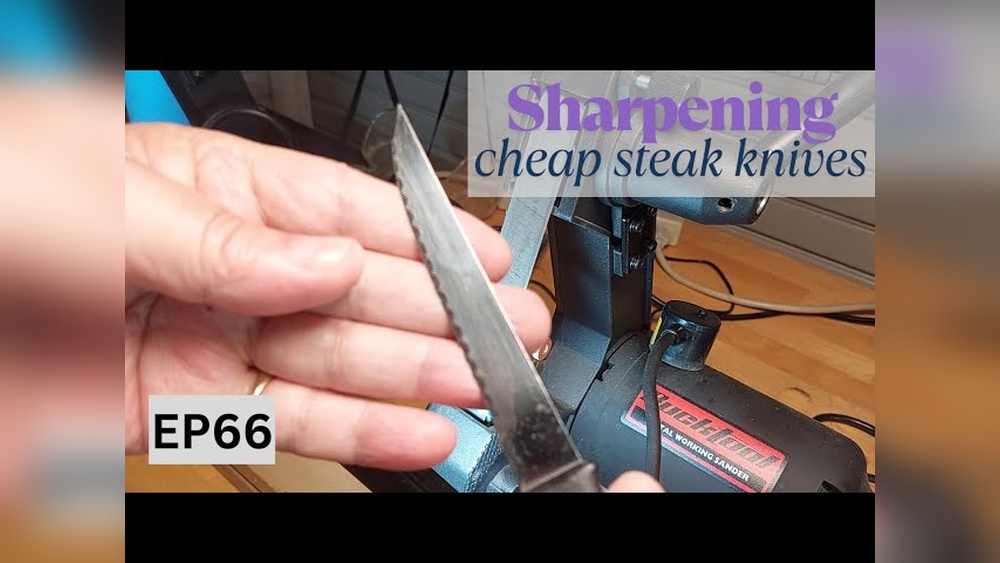
Sharpening a steak knife might seem simple, but doing it well takes more than just running a blade over a stone. If you want your steak knives to slice through meat smoothly and safely, you need the right tools, technique, and a bit of care.
A sharp steak knife not only makes eating more enjoyable, but it also protects your fingers from slips caused by dull blades. In my experience, learning to sharpen a steak knife properly is one of the most satisfying kitchen skills you can develop, and it saves money in the long run.
Many people use steak knives regularly but rarely sharpen them correctly. They might use the wrong sharpener, angle, or method, and sometimes they even damage the blade. This article will show you how to sharpen a steak knife step by step, explain the different tools you can use, and share tips to get the best results.
Whether you’re a home cook or someone who values a good meal, you’ll find the guidance here easy to follow, even if English isn’t your first language.
Why Sharp Steak Knives Matter
A sharp steak knife isn’t just about presentation or tradition, it’s about function and safety. Dull knives tear meat instead of slicing it, making your food look and taste worse. They also require more force, which increases the risk of the knife slipping and causing injury. Studies from the National Institutes of Health show that most kitchen knife accidents happen with dull blades because they’re harder to control.
Sharp steak knives also help preserve the texture of the meat. When you slice with a keen edge, you keep the juices inside the steak, making every bite tender and flavorful. In restaurants, chefs regularly sharpen their steak knives to give guests the best experience.
At home, keeping your knives sharp means less frustration and better results at the dinner table.
Understanding Steak Knife Types
Before you sharpen, you need to know what kind of steak knife you have. Not all steak knives are the same, and the sharpening method you use will depend on the blade’s edge style.
There are two main types:
- Straight-edge steak knives: These have a smooth, non-serrated blade, similar to a small chef’s knife. They are the easiest to sharpen and give the cleanest cut.
- Serrated steak knives: These have a jagged, saw-like edge. Serrated knives stay sharp longer because their points do most of the cutting, but they require a special technique to sharpen.
Some steak knives use a combination of both, with a partially serrated and partially straight edge. Check your knives before starting.
| Knife Type | Edge Style | Sharpening Difficulty |
|---|---|---|
| Straight-edge | Smooth | Easy |
| Serrated | Saw-like | Moderate |
| Combination | Serrated + Smooth | Varies |
If you’re not sure, look closely at your knife. Smooth edges are straight, while serrated edges have small teeth.
Tools For Sharpening Steak Knives
Different tools are designed for different types of steak knives. Choosing the right one is the first step toward getting a sharp edge.
Whetstone (sharpening Stone)
A whetstone is a flat, rectangular stone that comes in different grits. It’s the most traditional and precise tool for sharpening straight-edge steak knives. Lower grit numbers (like 400, 800) remove material quickly for dull or damaged blades, while higher numbers (1000, 6000) make the edge finer.
Pull-through Knife Sharpener
Pull-through sharpeners have pre-set angles and abrasive wheels inside. You pull your knife through a slot a few times to sharpen it. These work best for straight-edge knives and are easy to use, though they remove more metal than a whetstone.
Sharpening Rod (honing Rod)
A honing rod or steel is a long, round tool. It doesn’t sharpen the knife in the traditional sense, but it straightens the blade’s edge between uses. Use this for regular maintenance to keep your knife sharp longer.
Serrated Knife Sharpener
For serrated steak knives, you need a tapered rod sharpener or a small sharpening rod. These are thin, round rods that fit into the serrations, allowing you to sharpen each gullet (the space between the teeth).
Electric Knife Sharpener
An electric sharpener can save time but may be too aggressive for delicate steak knives. Some models have slots for serrated blades, but always check the instructions to see if they’re suitable for your knives.
| Tool | Best For | Skill Level | Notes |
|---|---|---|---|
| Whetstone | Straight-edge | Moderate | Precise, gentle on knives |
| Pull-through Sharpener | Straight-edge | Beginner | Quick, removes more steel |
| Honing Rod | All types | Beginner | For edge maintenance |
| Serrated Rod | Serrated | Moderate | Fits into knife teeth |
| Electric Sharpener | Straight-edge (some serrated) | Beginner | Fast, can remove too much steel |
Pro Tip: Always check your knife manufacturer’s recommendations before using a sharpener, especially electric ones.
Step-by-step: How To Sharpen A Straight-edge Steak Knife
The method below uses a whetstone, which works for almost all straight-edge steak knives. This process can be adjusted for pull-through sharpeners or electric sharpeners.
1. Prepare The Whetstone
First, soak your whetstone in water for 10, 15 minutes. If you’re using an oil stone, add honing oil instead. This helps prevent metal shavings from clogging the stone and gives you a smoother sharpening surface.
2. Find The Right Angle
Most steak knives have a bevel angle of 15, 20 degrees. Hold the blade so it meets the stone at this angle. If you’re unsure, use a coin as a guide, placing it under the knife helps you hold a consistent angle.
3. Sharpen The Blade
Place the heel of the knife at the top of the stone. With gentle pressure, slide the blade down and across the stone, moving from heel to tip. Repeat this motion 8, 10 times on one side, then switch to the other side.
Keep the angle steady. A wobbling angle can create an uneven edge, making the knife less sharp.
4. Use Both Sides Of The Stone
If your stone has two sides (coarse and fine), start with the coarse side for dull blades, then finish with the fine side for a polished edge.
5. Check Your Progress
Wipe the blade clean and test the sharpness by slicing a piece of paper or a tomato. If the knife cuts easily, you’re done. If not, repeat the process.
6. Rinse And Dry
Wash the knife with warm water and dry it fully. Never store a wet knife, as moisture can cause rust.
Pro Tip: Always move the knife away from your body to avoid injury.
Sharpening Serrated Steak Knives
Serrated steak knives need a different approach. Their teeth help them stay sharp longer, but when they dull, you need a tool that fits into the serrations.
1. Choose The Right Rod
Use a ceramic sharpening rod or a small, tapered diamond rod that matches the size of your knife’s serrations. Most serrated knives have gullets about 2, 4 mm wide.
2. Sharpen Each Gullet
Insert the rod into each gullet and gently move it back and forth. Match the angle of the original edge (usually about 20 degrees). Repeat this for every serration along the blade.
3. Remove Burrs
After sharpening, turn the knife over and lightly run the flat side of the blade against the rod to remove any burrs (tiny bits of metal that stick out).
4. Clean And Test
Wipe the knife clean and test it on a piece of bread or meat. Serrated knives won’t slice paper cleanly, but they should cut food easily.
Pro Tip: Sharpening serrated knives is slow work. Don’t rush, focus on each tooth for best results.
Using A Pull-through Sharpener
Pull-through sharpeners are popular for their ease of use, especially for beginners. They are best for straight-edge steak knives.
- Place the sharpener on a stable surface.
- Insert the knife blade into the slot at the heel.
- Pull the knife through the slot, applying light, even pressure.
- Repeat 3, 6 times, or until the blade feels sharp.
- Wipe off any metal shavings before using the knife.
Warning: These sharpeners remove more metal than a whetstone, so overuse can shorten the life of your knife.

Credit: imarku.net
Honing: Maintaining Your Edge
Sharpening removes metal to create a new edge, but honing realigns the edge without removing much material. Using a honing rod once a week can keep your steak knives performing well between sharpenings.
- Hold the honing rod vertically, with the tip on a cutting board.
- Hold the knife at a 15, 20 degree angle to the rod.
- Starting at the heel, sweep the blade down the rod toward the tip.
- Repeat 5, 6 times per side.
- Clean the knife before use.
Pro Tip: Honing is fast and easy. It’s better to hone frequently and sharpen only when the knife feels dull.
How Often Should You Sharpen Steak Knives?
How often you sharpen depends on how much you use your steak knives. For most home cooks, sharpening every 4, 6 months is enough if you hone regularly. If you use them often or cut on hard surfaces, you might need to sharpen more frequently.
| Usage Level | Sharpening Frequency | Honing Frequency |
|---|---|---|
| Occasional (once a week) | Every 6, 12 months | Monthly |
| Regular (2, 3 times a week) | Every 4, 6 months | Bi-weekly |
| Heavy (daily use) | Every 2, 3 months | Weekly |
| Restaurant use | Monthly | Daily |
Pro Tip: If your steak knife starts tearing instead of slicing, it’s time to sharpen.

Credit: thedaringkitchen.com
Common Mistakes When Sharpening Steak Knives
Many beginners make the same errors that can damage knives or leave them dull. Here’s what to avoid:
- Wrong angle: Using an angle that’s too steep or too shallow can ruin your edge. Stick to 15, 20 degrees for most steak knives.
- Too much pressure: Pressing too hard can remove too much metal and create a rough edge.
- Skipping steps: Not using both coarse and fine grits (on a stone) means you won’t get a truly sharp edge.
- Ignoring burrs: Failing to remove burrs can make your knife feel sharp but perform poorly.
- Using the wrong tool: Not all sharpeners work for all knife types. Always check before starting.
- Not cleaning after sharpening: Tiny metal shavings can end up in your food if you don’t clean the knife well.
Example: I once tried sharpening a serrated steak knife with a flat stone. The result was a ruined blade. Using the right tool makes all the difference.
Extra Tips For Sharpening Success
- Always use a stable surface to avoid slips.
- Wear cut-resistant gloves if you’re new to sharpening.
- Use light oil or water on your stone to keep the process smooth.
- Store steak knives in a knife block or on a magnetic strip to protect the edge.
- Never put sharp steak knives in the dishwasher; the motion can dull the blades quickly.
- For a razor-sharp edge, finish sharpening with a leather strop (if you have one).
- If you’re not confident, practice on an old knife before sharpening your best steak knives.
When To Replace A Steak Knife
No knife lasts forever. If your steak knife is heavily chipped, rusted, or the blade is too thin from repeated sharpening, it’s safer to replace it. Even the best knives can only be sharpened a certain number of times before they lose their shape or strength.
If a knife never gets sharp no matter how carefully you sharpen, it’s a sign the blade has worn out. Investing in a new set can be more cost-effective (and safer) than trying to rescue an old one.
Professional Sharpening Services
If you’re not comfortable sharpening your own steak knives, professional services are available. Many kitchen stores and specialty shops offer sharpening, and some even use water-cooled grinders to avoid damaging the blade.
Professional sharpening usually costs a few dollars per knife and is often worth it for expensive or high-quality steak knives. Some mail-in services are also available for convenience. For more information on knife care and professional sharpening, see the Wikipedia page on knife sharpening.

Credit: thedaringkitchen.com
Frequently Asked Questions
Can You Sharpen A Serrated Steak Knife With A Regular Stone?
No, a regular flat stone will not fit into the teeth of a serrated knife. You need a tapered rod sharpener or a ceramic rod that matches the size of the serrations. Using the wrong tool can damage the blade and remove the serr