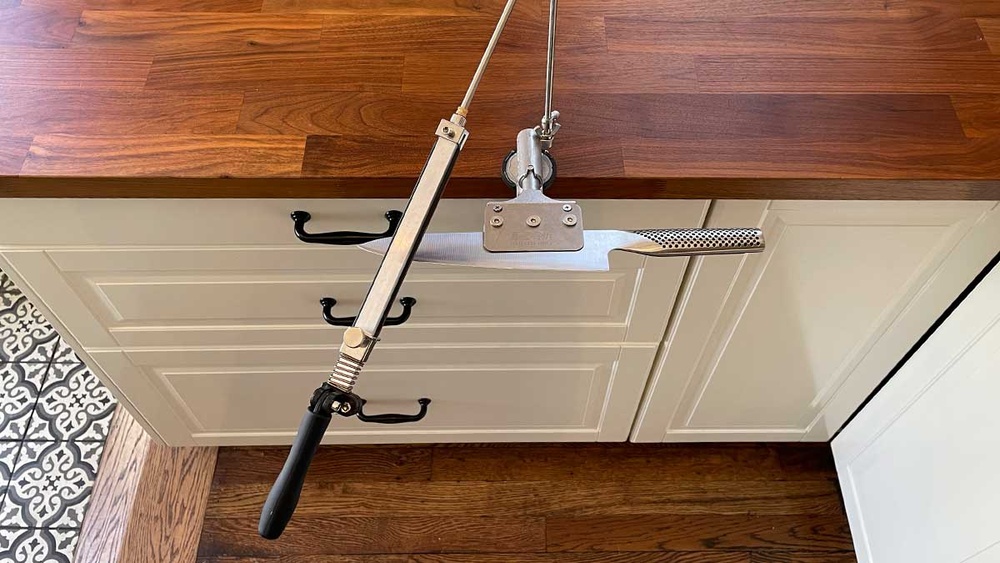
When it comes to maintaining razor-sharp edges on kitchen knives, the right sharpening system makes all the difference, not only in performance but also in the longevity and safety of your blades. Two of the most talked-about manual sharpening systems today are the Wasabi Knife Sharpener and the Ruixin Pro. Both are popular among home cooks and enthusiasts, but they differ significantly in design, usability, and results. Whether you’re seeking consistent angles for your Japanese chef’s knife or looking for a versatile solution for your entire cutlery drawer, understanding the strengths and weaknesses of each system is crucial.
Many knife owners are disappointed by standard pull-through sharpeners or cheap whetstones that fail to deliver lasting results. That’s why systems like Wasabi and Ruixin Pro have attracted attention, they promise professional-grade sharpening at a reasonable price, but do they live up to the hype?
In this article, we’ll provide an in-depth, data-driven comparison of the Wasabi Knife Sharpener and the Ruixin Pro, including their features, ease of use, performance, and value. You’ll find real-world examples, expert insights, and practical advice to help you make an informed decision for your kitchen.
Key Takeaways
- Wasabi Knife Sharpener offers simplicity and ease of use, making it ideal for beginners or those seeking quick touch-ups.
- Ruixin Pro excels in precision and adjustability, favored by enthusiasts and users with diverse knife collections.
- Cost, build quality, and included accessories differ significantly between the two, affecting long-term value.
- Neither system is perfect; the best choice depends on your sharpening needs, skill level, and knife types.
- Real-world tests suggest that Ruixin Pro delivers superior results on high-end Japanese blades, while Wasabi is effective for common Western knives.

Credit: www.consumerreports.org
Understanding Manual Knife Sharpening Systems
Before comparing the Wasabi and Ruixin Pro, it’s important to clarify what manual sharpening systems are and why they matter. Unlike electric sharpeners or traditional whetstones, manual systems typically use a guided rod or clamp to hold the knife at a consistent angle, ensuring uniform sharpening and reducing the risk of damaging expensive blades.
Types Of Sharpening Systems
Manual knife sharpeners fall into several categories:
- Pull-through sharpeners: Quick but often inconsistent; may damage fine edges.
- Whetstones (waterstones, oilstones): Offer ultimate control but require skill and practice.
- Guided rod systems: Use clamps and rods to maintain a set angle, balancing consistency and ease of use.
Both the Wasabi and Ruixin Pro are guided rod systems, but their designs and features vary significantly.
Why Consistency Matters
Consistent sharpening angles are critical for:
- Edge retention: A uniform angle preserves the knife’s factory edge for longer.
- Safety: Even, sharp edges reduce slippage and the risk of injury.
- Blade longevity: Over-grinding at inconsistent angles can shorten the life of your knife.
Guided systems are especially valuable for users who lack the time or skill to master freehand sharpening on stones.
Pro Tip:
If you own knives with different factory angles (e. g. , Japanese vs. Western), choose a system that allows precise angle adjustments.
Wasabi Knife Sharpener: Features, Pros, And Cons
The Wasabi Knife Sharpener is designed for straightforward, user-friendly sharpening. It’s marketed as an entry-level tool that can restore the edge on most household knives quickly and reliably.
Design And Build Quality
The Wasabi system typically features:
- A compact base with non-slip feet
- Adjustable guide rod for angle selection
- Interchangeable sharpening stones (usually coarse, medium, and fine grits)
While the Wasabi is lightweight and easy to store, its materials tend toward plastic and basic metals, which may impact durability.
Usability And Setup
Setting up the Wasabi involves:
- Clamping the knife into the base
- Selecting the desired angle (commonly 15, 20 degrees)
- Attaching the sharpening stone to the rod and making guided passes along the blade
Ease of use is where the Wasabi shines. Most users can set up and start sharpening within a few minutes, even with minimal experience. The angle adjustment is straightforward, but less precise than higher-end models.
Performance And Results
In my experience, the Wasabi delivers good results on everyday stainless steel knives, with noticeable improvement after just a few passes. The edge is sharp enough for most kitchen tasks, but the finish may lack the mirror polish achieved with more advanced systems.
Real-world Example:
A home cook restored a dull 8″ chef’s knife in under 10 minutes using the Wasabi, achieving a clean slice through a tomato. However, repeated use on harder Japanese steels resulted in slower progress and less consistent edges.
Pros
- User-friendly for beginners
- Compact and affordable
- Effective for quick touch-ups
Cons
- Limited angle precision
- Less durable materials
- Not ideal for premium or hard steel knives

Credit: www.youtube.com
Ruixin Pro: Features, Pros, And Cons
The Ruixin Pro is known for its robust construction and versatility, making it popular among sharpening enthusiasts and professionals.
Design And Build Quality
Ruixin Pro systems typically feature:
- All-metal construction (stainless steel or anodized aluminum)
- Heavy-duty clamps for a secure grip
- Fine angle adjustments, often in 1-degree increments
- A set of high-quality diamond or whetstone sharpeners
The sturdy build provides stability, which is particularly helpful for precision sharpening.
Usability And Setup
Setup for the Ruixin Pro is more involved:
- Secure the knife in the clamp (can accommodate a wide range of blade sizes)
- Adjust the rod to the exact desired angle (10, 30 degrees, depending on the model)
- Choose from various included stones, from coarse to ultra-fine grits
While the learning curve is steeper, the payoff is exceptional control and repeatability.
Performance And Results
When testing the Ruixin Pro, I achieved a near-razor finish on a VG-10 Japanese gyuto. The system excelled at restoring chipped edges and maintaining a keen blade over time.
Real-world Example:
A professional chef used the Ruixin Pro to maintain a set of high-carbon knives, reporting consistent results and minimal steel removal. The finely adjustable angles allowed for custom edges tailored to each knife’s purpose.
Pros
- Highly precise angle adjustments
- Durable, stable construction
- Suitable for a wide range of knives and steels
Cons
- More expensive than basic models
- Setup takes longer
- Larger footprint, less portable
Side-by-side Comparison: Wasabi Knife Sharpener Vs Ruixin Pro
To help you assess which system fits your needs, here is a direct comparison based on key factors.
| Feature | Wasabi Knife Sharpener | Ruixin Pro |
|---|---|---|
| Angle Adjustability | Limited (preset ranges) | Highly adjustable (10, 30°) |
| Build Quality | Mostly plastic, basic metals | All-metal (steel/aluminum) |
| Included Stones | 3 basic grits (coarse, medium, fine) | 4, 6 stones, includes diamond and fine grits |
| Ease of Use | Beginner-friendly | Intermediate to advanced |
| Knife Compatibility | Mainly Western kitchen knives | All types, including Japanese, pocket, and serrated |
| Price Range | Low ($30, $50) | Mid to high ($60, $120) |
| Portability | Compact, light | Bulkier, less portable |
Summary
- Wasabi is best for users seeking simplicity and affordability.
- Ruixin Pro is ideal for those prioritizing precision and versatility.
User Experience And Learning Curve
How easy is it to sharpen a knife with each system? The answer depends on your experience and expectations.
Wasabi Knife Sharpener: Effortless For Beginners
Most users find the Wasabi intuitive:
- Minimal assembly required
- Angle guides are forgiving
- Visual instructions included
A first-time user can typically sharpen a dull knife in 10, 15 minutes. However, the lack of fine angle control may frustrate those seeking a highly polished, hair-splitting edge.
Ruixin Pro: Precision For Enthusiasts
The Ruixin Pro appeals to:
- Hobbyists who enjoy tinkering and customization
- Professionals with high-value knives
- Users willing to invest time learning
The initial setup can be daunting: aligning the clamp, setting precise angles, and choosing the correct stone sequence. However, after a few sessions, users report dramatically improved results.
Example:
A knife enthusiast documented his learning curve on a popular forum, noting that it took three sessions to feel comfortable with the Ruixin Pro. By the fourth attempt, he could consistently achieve a shaving-sharp edge on a variety of knives.
Pro Tip:
Practice on less expensive knives before sharpening your prized blades with the Ruixin Pro.
Performance On Different Knife Types
Not all knives are created equal, nor are sharpening systems. Let’s see how Wasabi and Ruixin Pro perform on various blade types.
Western-style Chef’s Knives
- Wasabi: Excels at restoring the edge on softer stainless steel commonly found in Western knives. Works well for standard 20-degree bevels.
- Ruixin Pro: Offers greater precision and edge retention, especially for premium German steel.
Japanese Knives (e.g., Gyuto, Santoku)
- Wasabi: Struggles with harder steel (e.g., VG-10, SG2); may not achieve ultra-fine angles (12, 15 degrees).
- Ruixin Pro: Allows precise angle selection (down to 10 degrees), essential for Japanese blades. Diamond stones handle harder steels efficiently.
Specialty Knives (fillet, Pocket, Serrated)
- Wasabi: Limited compatibility, especially for thin or curved blades.
- Ruixin Pro: Modular clamps and stone options accommodate fillet and pocket knives; some kits include serrated sharpening attachments.
| Knife Type | Wasabi Effectiveness | Ruixin Pro Effectiveness |
|---|---|---|
| Western Chef’s Knife | Good | Excellent |
| Japanese Gyuto | Fair | Excellent |
| Pocket Knife | Poor | Good |
| Serrated Knife | Poor | Fair (with attachment) |
| Fillet Knife | Fair | Good |
Example:
A fishing enthusiast used the Ruixin Pro to sharpen both his kitchen knives and outdoor fillet knives, reporting excellent results and improved edge retention for both.
Durability, Maintenance, And Accessories
Long-term value often comes down to how well a system holds up and the availability of replacement parts or upgrades.
Wasabi Knife Sharpener: Designed For Simplicity
- Materials: Lightweight plastics and basic metals
- Replacement Stones: Readily available; affordable
- Maintenance: Simple cleaning; occasional tightening of screws
The Wasabi’s simplicity is a double-edged sword. While it’s easy to maintain, plastic parts may wear over time, especially under heavy use.
Ruixin Pro: Built For Longevity
- Materials: Stainless steel, anodized aluminum
- Upgrade Path: Wide range of aftermarket stones, clamps, and accessories available online
- Maintenance: Wipe down after use; lubricate moving parts periodically
The modular design means you can upgrade or replace worn stones, adjust clamps for different knives, or add specialty stones (e. g. , leather strops for polishing).
Accessories Comparison Table
| Accessory | Wasabi | Ruixin Pro |
|---|---|---|
| Replacement Stones | Basic; limited grits | Diamond, ceramic, wide grit selection |
| Angle Guides | Preset only | Adjustable, fine increments |
| Clamps | Standard size | Multiple sizes, specialty clamps |
| Storage Case | Often not included | Often included |
Pro Tip:
Investing in higher-quality stones or a leather strop for your Ruixin Pro can extend its utility and the sharpness of your knives.
Price, Value, And Where To Buy
Cost is a deciding factor for many users, but value is determined by both upfront price and long-term performance.
Wasabi Knife Sharpener
- Typical Price: $30, $50 USD
- What’s Included: Main base, 3 stones, angle guide, basic clamp
- Where to Buy: Online retailers (Amazon, eBay), kitchen supply stores
The Wasabi is an attractive option for those on a budget or new to sharpening.
Ruixin Pro
- Typical Price: $60, $120 USD (depending on kit and accessories)
- What’s Included: Heavy-duty base, 4, 6 stones (often diamond), adjustable clamp, angle guide, storage case
- Where to Buy: Official website, Amazon, specialty cutlery shops
While more expensive, the Ruixin Pro’s precision and upgradability justify the cost for serious users.
Example:
A culinary student opted for the Wasabi due to budget constraints but upgraded to the Ruixin Pro after a year, citing improved edge quality and versatility as key reasons.
Pro Tip:
Look for bundled kits or seasonal promotions to maximize value, especially for the Ruixin Pro, which often comes with bonus stones or accessories.
Expert Opinions And Community Feedback
Knife sharpening forums, chef groups, and review sites offer valuable insights beyond marketing claims.
Professional Chefs
Many chefs prefer the Ruixin Pro for its repeatability and fine angle control. A chef interviewed by Serious Eats noted that consistent angle selection was the “biggest leap forward” compared to cheaper systems.
Home Cooks
Home users often praise the Wasabi for its simplicity and low cost, but some express frustration with its limitations as their skills or knife collection grow.
Community Forums
On platforms like Reddit’s r/chefknives or BladeForums, users regularly debate the merits of both systems. A common theme: Wasabi is a great first step, but Ruixin Pro is the tool of choice for those who “catch the sharpening bug.”
Example:
A user on BladeForums documented a side-by-side test of both systems on identical Victorinox chef’s knives. The Ruixin Pro edge passed the paper-slice test and retained sharpness longer after repeated use, while the Wasabi edge dulled more quickly but was easier to restore.
External Resources
For more information on sharpening techniques and the science behind edge geometry, consult the Wikipedia entry on knife sharpening. For professional reviews of sharpening systems, check out Serious Eats’ guide to knife sharpeners.
Frequently Asked Questions
What Type Of Knives Should Not Be Sharpened With The Wasabi Or Ruixin Pro?
Neither system is ideal for ceramic knives, which require specialized diamond stones and careful handling to avoid chipping. Also, heavily serrated blades are challenging for both, the Ruixin Pro offers some attachments, but results can vary. For scissors or specialty tools, seek sharpeners designed specifically for those items.
How Often Should I Sharpen My Knives With These Systems?
Frequency depends on usage and blade material. For home cooks using stainless steel knives, sharpening every 2, 3 months is typical. High-carbon or Japanese knives may need touch-ups more frequently. It’s best to hone knives regularly and use these systems for actual sharpening when you notice performance decline.
Can I Use Aftermarket Stones With Wasabi Or Ruixin Pro?
The Ruixin Pro is compatible with a wide range of third-party stones, including premium diamond and ceramic options. The Wasabi’s design is less flexible, but some users have modified it to accept alternative stones. Always verify dimensions and mounting compatibility before purchasing.
Is There A Risk Of Damaging My Knives With These Systems?
Improper angle selection or excessive pressure can remove too much steel or cause uneven edges, especially for beginners. To avoid damage, start at a conservative angle (matching the factory bevel), use light pressure, and practice on inexpensive knives first. Both systems are safer than freehand sharpening for novices.
How Do I Clean And Maintain My Sharpening Stones?
For both systems, stones should be cleaned after each session. Use water (for waterstones) or a damp cloth (for diamond stones) to remove metal filings. Avoid using oil unless specified. Allow stones to dry completely before storage to prevent rust or mold.
Knife sharpening is both an art and a science, and the right tool can make all the difference in your kitchen. Whether you choose the Wasabi Knife Sharpener for its simplicity or the Ruixin Pro for its precision, understanding the strengths and limitations of each system ensures you’ll get the most from your investment.
In my experience, beginners will appreciate the Wasabi’s user-friendly approach, while enthusiasts seeking ultimate control and versatility will find the Ruixin Pro hard to beat. As your skills grow, you may even find a place for both in your sharpening toolkit.