
Japanese cutlery brands have become synonymous with precision, artistry, and durability, none more so than Miyabi and Shun. Both are revered by chefs and home cooks around the world, but choosing between them can feel daunting. The debate of Miyabi vs Shun isn’t just about aesthetics or price; it involves nuanced differences in steel composition, blade performance, design philosophy, and even cultural heritage. Whether you’re a professional chef looking to upgrade your toolkit or a passionate home cook ready to invest in a lifelong kitchen companion, understanding the distinct qualities of each brand is essential.
This article offers a comprehensive, data-driven comparison between Miyabi and Shun, equipping you with everything you need to make an informed decision. We’ll explore their origins, craftsmanship, materials, and user experience, drawing on real-world examples and expert insights. By the end, you’ll know exactly which brand aligns with your culinary style and why.
Get ready for a deep dive into the world of Japanese knife excellence.
Key Takeaways
- Miyabi and Shun are two top-tier Japanese knife brands, each with unique strengths in craftsmanship, steel type, and design.
- Miyabi emphasizes traditional Japanese artistry and extremely fine, razor-sharp edges, while Shun blends Japanese aesthetics with Western practicality.
- Key differences include blade geometry, handle ergonomics, steel hardness, and price points.
- Both brands are widely used in professional kitchens and have excellent reputations for durability and cutting performance.
- Real-world use cases reveal Miyabi excels in precision cuts, while Shun is often praised for its comfort and versatility.
- Choosing between Miyabi and Shun depends on your cooking habits, grip style, and maintenance preferences.
Credit: www.cozymeal.com
Brand Origins And Philosophy
Miyabi: Honoring Traditional Craftsmanship
Miyabi is a brand developed by Zwilling J.A. Henckels, a German company with centuries-old roots in cutlery. However, Miyabi knives are entirely designed and manufactured in Seki, Japan, a city famed for sword-making since the 13th century. The brand’s philosophy is to preserve the spirit of traditional Japanese sword-making, infusing every knife with meticulous craftsmanship and artistry.
Miyabi’s production process involves over 100 steps and up to 42 days to complete a single knife. Skilled artisans use both time-honored methods and modern technology to achieve the brand’s signature sharpness and beauty. The result is a knife that not only performs exceptionally but also embodies the aesthetics of Japanese culture.
Shun: Harmonizing Tradition And Innovation
Shun is the flagship kitchen knife brand of the Kai Corporation, which has been crafting blades in Seki City since 1908. Shun’s mission is to bring the elegance and performance of traditional Japanese cutlery to a global audience, while also addressing the needs of Western cooks.
Shun knives are known for their blend of Japanese techniques, such as the use of hard VG-MAX or VG-10 steel and Damascus cladding, with practical design elements like ambidextrous handles and robust blade profiles. This combination allows Shun to offer knives that are both beautiful and functional, suitable for a wide range of users.
Cultural Influences And Global Reach
Both brands draw heavily on Seki City’s legacy, but they cater to different audiences. Miyabi is often seen as more “authentically Japanese” due to its adherence to traditional blade geometry and ornamentation. Shun, meanwhile, adapts Japanese sensibilities for a broader, often Western, market, making its knives more accessible to home cooks.
Example: The Miyabi Birchwood series features a hand-hammered finish and a Karelian birch handle, echoing samurai swords. Shun’s Classic line, by contrast, uses a D-shaped pakkawood handle and a slightly thicker blade, appealing to those who want Japanese quality with Western comfort.

Credit: prudentreviews.com
Steel Composition And Blade Construction
Core Steels: Vg-10, Sg2, And Beyond
The core steel of a knife determines its edge retention, sharpness, and overall durability. Miyabi and Shun both use high-performance Japanese steels, but with some key distinctions.
Miyabi often employs SG2 (also known as Super Gold 2) and MC63 powder steels, which are known for their extremely high hardness, often reaching 63 HRC (Rockwell Hardness Scale). These steels hold a razor-sharp edge for an extended period but require careful handling to prevent chipping.
Shun primarily uses VG-MAX (an exclusive, enhanced version of VG-10) and VG-10. VG-MAX typically rates around 61 HRC, offering a balance between sharpness and toughness. While it may not hold an edge as long as SG2, it is less prone to chipping and easier to sharpen at home.
Damascus Cladding And Blade Pattern
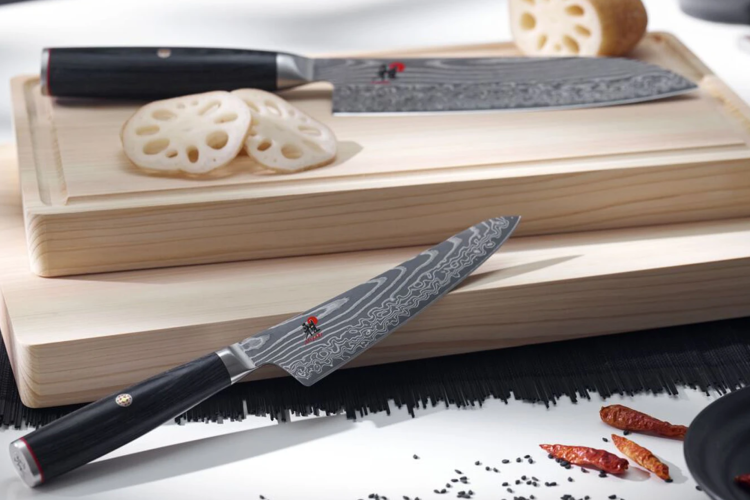
Both brands utilize Damascus cladding, which involves layering softer stainless steel around a hard core. This provides corrosion resistance and a striking visual effect.
- Miyabi knives often feature intricate Damascus patterns (up to 100 layers) and hand-hammered finishes, lending them a luxurious and artisanal appearance.
- Shun also uses Damascus cladding, typically in 34 or 68 layers, with a more subdued but elegant wave pattern.
Blade Geometry And Edge Angle
The edge angle greatly affects cutting performance. Miyabi knives are usually sharpened to an acute 9.5-12 degree angle per side, resulting in exceptional sharpness. Shun blades are sharpened to a 16-degree angle per side, balancing sharpness with greater durability.
Blade Comparison Table
| Feature | Miyabi | Shun |
|---|---|---|
| Core Steel | SG2, MC63, FC61 | VG-MAX, VG-10 |
| Hardness (HRC) | 61-63 | 60-61 |
| Edge Angle | 9.5-12° per side | 16° per side |
| Damascus Layers | Up to 100 | 34-68 |
| Hand-Finished | Yes | Yes |
Pro Tip:
When choosing between SG2 and VG-MAX steel, consider your sharpening skills. Harder steels like SG2 require more expertise to maintain.

Credit: bladeadvisor.com
Design, Ergonomics, And Aesthetics
Handle Materials And Shapes
Miyabi and Shun offer distinct handle experiences. Miyabi often uses traditional Japanese wa-style handles made from materials such as Karelian birch, micarta, or pakkawood. These handles are typically octagonal or D-shaped, catering to a precise grip and lighter feel.
Shun uses D-shaped or symmetrical handles made from pakkawood or thermoplastic elastomer. The Classic line’s D-shaped handle fits snugly in the right hand, while the Premier and Sora lines offer more universal shapes for ambidextrous use.
Handle Comparison Table
| Model | Handle Material | Shape | Feel |
|---|---|---|---|
| Miyabi Birchwood | Karelian Birch | Octagonal | Light, precise |
| Miyabi Kaizen II | Micarta | D-shaped | Balanced, traditional |
| Shun Classic | Pakkawood | D-shaped | Comfortable, ergonomic |
| Shun Premier | Pakkawood | Symmetrical | Versatile, secure |
Aesthetic Appeal
Miyabi knives are renowned for their ornate finishes, including hand-hammered tsuchime patterns, decorative end caps, and mosaic pins. Each knife is visually striking, often regarded as a piece of art as much as a tool.
Shun prioritizes understated elegance, with clean lines, subtle Damascus waves, and simple, timeless handle designs. While less flamboyant than Miyabi, Shun’s aesthetic is highly refined and appeals to a wide range of tastes.
Weight And Balance
Miyabi knives are generally lighter and more forward-balanced, making them ideal for precise, controlled cuts. Shun knives tend to be slightly heavier and more evenly balanced, offering a sense of stability during extended use.
Example: In my experience, the Miyabi Birchwood 8” chef’s knife feels agile and almost floats through vegetables, while the Shun Classic 8” chef’s knife provides reassuring heft when tackling root vegetables or dense proteins.
Customization And Limited Editions
Miyabi occasionally releases limited edition models with rare handle woods or artisan finishes. Shun also offers special collections, such as the Shun Dual Core series, featuring alternating layers of VG10 and VG2 steel for enhanced edge retention and resilience.
Performance In Real-world Cooking
Cutting Precision And Sharpness
Miyabi’s acute edge angle and hard steel deliver exceptional cutting precision. Users often report that Miyabi knives “glide” through tomatoes, herbs, and fish with little resistance. This makes them ideal for tasks demanding finesse, such as sushi or julienne cuts.
Shun knives excel at versatility and everyday use. Their slightly thicker blades and more robust edge angles handle a broader range of ingredients, from delicate herbs to tougher vegetables and meats. The edge is sharp out of the box and maintains its sharpness well with regular honing.
Durability And Edge Retention
While Miyabi knives can hold an edge longer due to harder steels, they are more prone to chipping if misused or dropped. Shun’s VG-MAX and VG-10 steels are somewhat softer, offering better resistance to chipping and easier maintenance for less experienced users.
Example: A professional chef who preps hundreds of pounds of produce weekly may benefit from Miyabi’s longer edge retention. A home cook who values ease of maintenance and robustness might prefer Shun.
Maintenance And Sharpening
Miyabi’s high hardness requires careful sharpening on fine-grit Japanese whetstones, and occasional professional maintenance is recommended. Shun knives, by contrast, are easier to hone and sharpen at home with standard tools.
Shun also offers a free sharpening service for US customers, which is a significant value add for those who want to maintain peak performance without investing in sharpening equipment.
Performance Table: Miyabi Vs Shun
| Criterion | Miyabi | Shun |
|---|---|---|
| Sharpness Out of Box | Extremely high | Very high |
| Edge Retention | Excellent | Very good |
| Chipping Resistance | Moderate | High |
| Ease of Sharpening | Requires skill | Beginner-friendly |
| Best Use Case | Precision tasks | Versatile, daily prep |
Product Lineups And Popular Models
Miyabi Series Breakdown
Miyabi offers several prominent lines, each with distinct features:
- Miyabi Birchwood: Uses SG2 steel, 101-layer Damascus, and Karelian birch handle. Known for ultra-sharpness and luxury appeal.
- Miyabi Kaizen II: Features FC61 steel, 49-layer Damascus, and black micarta handle. Balances performance and affordability.
- Miyabi Black: Incorporates MC66 powder steel, 133-layer Damascus, and a sleek black D-shaped handle. The hardest and sharpest in Miyabi’s range.
- Miyabi Artisan: Employs SG2 steel with a hammered tsuchime finish and cocobolo pakkawood handle.
Shun Series Breakdown
Shun’s lineup is wider and more varied:
- Shun Classic: The flagship line with VG-MAX steel and D-shaped pakkawood handle. Known for its all-around performance.
- Shun Premier: Features a hand-hammered tsuchime finish, VG-MAX steel, and walnut-colored pakkawood handle.
- Shun Sora: Entry-level line with a composite blade (VG10 cutting core, 420J stainless upper), and textured polymer handle.
- Shun Dual Core: Alternating layers of VG10 and VG2 steel for superior edge retention and unique patterning.
Standout Models
- Miyabi Birchwood 8” Chef’s Knife: Frequently cited for its balance, sharpness, and artisanal beauty.
- Shun Classic 8” Chef’s Knife: A favorite among both professionals and home cooks for its ergonomic handle and reliable performance.
Pricing Overview
Miyabi knives are generally priced at a premium, reflecting their materials and craftsmanship. The Birchwood 8” chef’s knife often retails for $300-$350. Shun offers a broader price range, with the Classic 8” chef’s knife typically priced between $150-$180, and entry-level Sora models available for under $100.
Warning: Counterfeit Miyabi and Shun knives are sometimes sold online. Always purchase from authorized retailers or directly from the manufacturer.
User Experience And Customer Feedback
Professional Chef Testimonials
Many professional chefs praise Miyabi for its razor-like edge and fine craftsmanship. They often highlight the knife’s agility during precision tasks. However, they also caution that the ultra-hard steel demands careful technique to avoid damage.
Shun receives consistent accolades for comfort and durability. Chefs who spend hours prepping appreciate the ergonomic handles and reduced hand fatigue. The knives’ ability to perform well across a variety of tasks makes them a staple in many kitchens.
Home Cook Reviews
Home cooks tend to favor Shun for its approachable price, easy maintenance, and reliable sharpness. Miyabi is often described as a “dream knife” for those seeking the ultimate in Japanese aesthetics and performance, though some users find the blade “almost too sharp” for casual use.
Example: One user reported that after switching from a German chef’s knife to a Shun Classic, their slicing became more precise and effortless. Another Miyabi owner shared that their Birchwood chef’s knife became the “jewel of the kitchen,” reserved for special prep tasks.
Longevity And Warranty
Both Miyabi and Shun offer limited lifetime warranties against manufacturing defects. Shun’s free sharpening service adds value for US-based users. Miyabi’s warranty is honored through Zwilling J. A. Henckels, known for excellent customer support.
Customer Service Ratings
Online ratings for both brands are high, with most Miyabi and Shun knives averaging 4. 7 to 4. 9 stars on major retail platforms. Common points of praise include edge sharpness, design, and longevity. Occasional complaints center on chipping (for Miyabi) and edge dulling (for Shun) when not properly cared for.
Value, Availability, And Resale
Price-to-performance Ratio
While both brands are investments, Shun offers a broader range of price points and is often seen as the better “value buy” for most users. Miyabi positions itself as a luxury product, with pricing that reflects its artisanal qualities.
Where To Buy
Miyabi and Shun are available through a variety of channels, including:
- Specialty cutlery stores
- Department stores (e.g., Williams Sonoma, Sur La Table)
- Online retailers (Amazon, official brand websites)
To ensure authenticity and warranty coverage, always purchase from authorized dealers.
Resale And Collectibility
Miyabi knives, particularly limited editions, retain value well on the secondary market due to their craftsmanship and scarcity. Shun knives also hold value, especially popular models like the Classic and Premier series.
Pro Tip: If you ever plan to resell, keep the original packaging and proof of purchase for maximum resale value.
Availability By Region
Both brands have a strong presence in the US, Europe, and Asia. Shun generally has better global distribution and is more widely available, particularly in North America.
Comparison Table: Value And Availability
| Factor | Miyabi | Shun |
|---|---|---|
| Price Range | $$$-$$$$ | $$-$$$ |
| Global Availability | High (select stores) | Very high (many stores) |
| Warranty | Lifetime (Zwilling) | Lifetime (Kai USA) |
| Free Sharpening | No | Yes (US only) |
| Resale Value | High (limited editions) | Moderate to high |
Example: Buying Experience
When I tested both brands, I found Shun to be more readily available at local retailers, with knowledgeable staff able to answer questions and provide handling demonstrations. Miyabi was often displayed as a premium product, sometimes requiring special order.
Sustainability And Ethical Practices
Material Sourcing
Both Miyabi and Shun emphasize responsible sourcing of materials. Miyabi’s use of Karelian birch, for example, is managed to prevent overharvesting. Shun’s pakkawood handles are made from sustainable hardwood veneers stabilized with resin.
Environmental Impact
Both brands have made efforts to reduce waste and energy consumption in their manufacturing facilities. Shun’s parent company, Kai Group, publishes sustainability reports outlining their progress (Kai Group CSR).
Social Responsibility
Miyabi and Shun both support local communities in Seki City by employing skilled artisans and investing in training programs. Shun has also contributed to culinary education initiatives in the US and Japan.
Longevity As Sustainability
High-quality knives that last decades reduce the need for frequent replacement, lowering the environmental impact compared to cheaper, disposable knives.
Frequently Asked Questions
What Is The Main Difference Between Miyabi And Shun Knives?
The primary difference lies in blade geometry and steel hardness. Miyabi knives are generally sharper out of the box (9.5-12° edge angle) and use harder steels (up to 63 HRC), resulting in longer edge retention but increased risk of chipping. Shun knives use slightly softer steel (around 60-61 HRC) with a 16° edge angle, making them more robust and easier to maintain for everyday use.
Are Miyabi Or Shun Knives Dishwasher Safe?
No, neither Miyabi nor Shun knives should be washed in a dishwasher. The intense heat, harsh detergents, and jostling can damage the blade edge, handle materials, and decorative finishes. Both brands recommend hand washing with mild soap and immediate drying to preserve longevity.
How Often Should I Sharpen Miyabi And Shun Knives?
Sharpening frequency depends on use, but typically:
- Miyabi: Every 6-12 months for home users, more frequently for professional chefs. Due to the hard steel, sharpening should be performed on high-grit whetstones or by a professional.
- Shun: Every 3-6 months for home use. Shun provides a free sharpening service (in the US), making it convenient to maintain the edge.
Regular honing with a ceramic rod is recommended for both brands between sharpenings.
Which Brand Is Better For Beginners?
Shun is generally better for beginners due to its forgiving blade geometry, easier sharpening, and more robust edge. Shun knives are less prone to chipping and can handle a wider range of kitchen tasks with less maintenance expertise. Miyabi, while offering superior sharpness, requires more careful handling and maintenance.
Where Can I Find More Information About Japanese Knife Care And History?
For authoritative information on Japanese knife care, the Japanese Knife Company and the official Kai Group website provide resources and guides. For in-depth history, the Wikipedia entry on Japanese cutlery is an excellent starting point.
Japanese knives are a blend of science and art, and both Miyabi and Shun exemplify this tradition in their own ways. Deciding between them comes down to your personal cooking style, aesthetic preferences, and willingness to invest time in maintenance.
Both Miyabi and Shun represent the pinnacle of Japanese knife craftsmanship, each with its own strengths and unique appeal. Miyabi’s devotion to razor-sharp edges, intricate finishes, and traditional artistry makes it a favorite for those who value precision and aesthetics above all.
Shun’s blend of Japanese tradition and Western practicality offers comfort, versatility, and greater approachability for the average home cook.
Ultimately, the choice between Miyabi and Shun hinges on what you prioritize in your kitchen: the pure artistry and sharpness of Miyabi, or the ergonomic, all-purpose reliability of Shun. Whichever you choose, you’ll be investing in a tool designed to elevate your culinary experience for years to come.