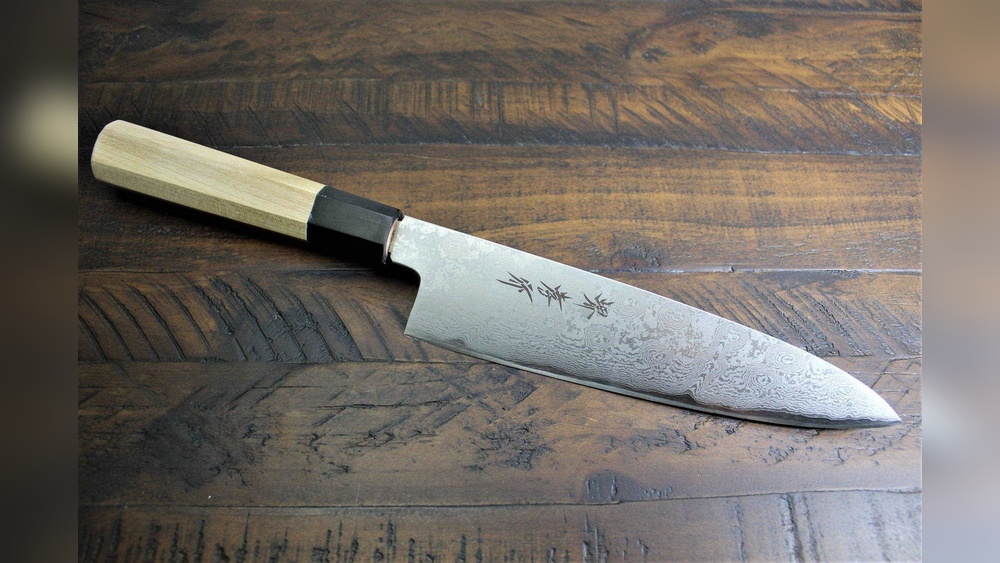
The Gyuto knife is more than just a chef’s tool, it’s a bridge between Japanese precision and Western versatility. Whether you’re a home cook wanting to improve your slicing technique or a professional chef seeking better control, learning how to use a Gyuto knife can transform your food preparation. Many people admire its sharpness and beauty but struggle to use it properly. This guide will show you how to choose, hold, care for, and master a Gyuto knife, so you can work with confidence and safety in your kitchen.
What Is A Gyuto Knife?
The Gyuto knife is the Japanese version of the classic Western chef’s knife. The word “Gyuto” translates to “beef sword,” but this tool is designed for much more than just meat. Its blade is usually between 7 and 10 inches (18, 27 cm) long, with a gently curved edge and a pointed tip.
This shape allows for both rocking and push-cutting motions.
The Gyuto stands out because of its thin, hard steel blade, which holds a sharp edge longer than many Western knives. While a German chef’s knife is often heavier and thicker, the Gyuto is lighter and more agile. This makes it ideal for precise cuts, whether you’re slicing vegetables, dicing onions, or cutting proteins.
Choosing The Right Gyuto Knife
Finding the right Gyuto knife for your kitchen isn’t just about picking the most expensive model. Several factors decide how comfortable and effective your knife will be.
Blade Material
Most Gyuto knives are made from either high-carbon steel or stainless steel. High-carbon steel can achieve a razor-sharp edge and is easier to sharpen, but it can rust if not cared for properly. Stainless steel resists corrosion and requires less maintenance, though it may lose its edge faster.
Blade Length
The most common sizes are 210 mm (8. 2 inches) and 240 mm (9. 4 inches). Shorter blades offer more control, which is great for beginners or cooks with smaller hands. Longer blades make it easier to cut through large ingredients but require more skill to handle safely.
Handle Style
Gyuto handles come in two main types: Western-style (yo) and Japanese-style (wa). Western handles are heavier and have a full tang (the metal goes through the whole handle), providing balance. Japanese handles are lighter and often made from wood, giving a different feel in the hand.
Comparing Gyuto Features
Here’s a quick comparison of Gyuto knife features to help you choose:
| Feature | Option 1 | Option 2 | What It Means |
|---|---|---|---|
| Blade Material | High-Carbon Steel | Stainless Steel | Sharpness vs. Ease of Care |
| Blade Length | 210 mm | 240 mm | Control vs. Cutting Power |
| Handle Type | Western (Yo) | Japanese (Wa) | Weight and Balance Differences |
Pro Tip: If you’re new to Japanese knives, start with a stainless steel Gyuto with a 210 mm blade for the best balance of control and ease of maintenance.

Credit: www.youtube.com
How To Hold A Gyuto Knife
The way you hold your Gyuto affects both your safety and cutting precision. Many beginners grip the handle with their whole hand (the “hammer grip”). While this feels secure, it reduces control.
The Pinch Grip
Professional chefs use the pinch grip for most tasks. Here’s how to do it:
- Pinch the blade where it meets the handle using your thumb and index finger.
- Wrap your remaining fingers around the handle.
- Keep your grip firm but relaxed.
This grip gives you more control over the blade tip and helps you make precise, even cuts. It also reduces fatigue during long food prep sessions.
Positioning Your Guide Hand
Your non-cutting hand guides the food. Curl your fingertips under, resting your knuckles against the blade. This “claw” grip keeps your fingers safe and gives you stability.
Example: When slicing an onion, pinch the blade with your dominant hand. With your other hand, curl your fingers so your knuckles guide the side of the blade, keeping your fingertips tucked away from danger.
Core Cutting Techniques With A Gyuto
Using a Gyuto knife effectively involves more than just pressing down. The knife’s design allows for several cutting motions:
1. Push Cut
Push cutting means moving the knife forward and slightly downward through the food, using the full length of the blade. This method takes advantage of the Gyuto’s sharp, thin edge.
- Best for: Slicing carrots, onions, and other vegetables.
- How: Place the tip on the board, push forward and down in one motion.
2. Pull Cut
Pull cutting is the opposite, pulling the knife backward toward you as you cut.
- Best for: Soft foods like tomatoes or fish.
- How: Start with the blade tip on the board, then draw the knife back toward your body.
3. Rock Chop
With a rocking motion, the tip stays in contact with the board while the heel moves up and down.
- Best for: Herbs, garlic, or fast chopping.
- How: Hold the tip steady, move the handle up and down in a rocking motion.
4. Slicing
Use long, smooth strokes from heel to tip, letting the blade do the work.
- Best for: Meats and large vegetables.
- How: Keep the blade angle shallow, slice in one smooth motion.
5. Precision Cuts
For fine work (like julienne or brunoise), use the front third of the blade and the pinch grip for control.
- Best for: Dicing vegetables finely or making decorative cuts.
Cutting Motions Comparison
Here’s a summary of when to use each cutting style:
| Technique | Best For | Motion |
|---|---|---|
| Push Cut | Firm vegetables | Forward & Down |
| Pull Cut | Soft foods | Back & Down |
| Rock Chop | Herbs | Tip Down, Heel Up/Down |
| Slicing | Meats, Fish | Long Smooth Strokes |

Credit: www.koiknives.com
Common Foods To Cut With A Gyuto
The Gyuto’s shape makes it a true all-rounder. Here’s how it performs with different foods:
Vegetables
The thin blade slices cleanly through onions, carrots, bell peppers, and more. Because the edge is so sharp, delicate vegetables like tomatoes will not crush.
Proteins
With its pointed tip and long blade, the Gyuto handles raw and cooked meats well. It’s perfect for slicing chicken breasts, trimming fat, or portioning steak. It’s also great for fish, though a dedicated sashimi knife is better for very fine slices.
Fruits
The sharpness allows you to cut through fruits like apples and citrus cleanly. For watermelon or pineapple, use a larger Gyuto for more reach.
Herbs And Garlic
The rocking motion makes mincing herbs quick and safe. The flat of the blade can also be used to crush garlic.
Warning: Avoid using your Gyuto on bones, frozen foods, or hard seeds. The thin blade can chip or break.
How To Care For Your Gyuto Knife
Proper care keeps your Gyuto sharp and beautiful for years. Many new owners forget these steps, leading to rust, dullness, or even injury.
Cleaning
- Always hand-wash your Gyuto with mild soap and warm water.
- Dry immediately with a soft towel. Do not let it air-dry, as water spots and rust can form quickly.
- Never put it in the dishwasher. Heat and detergent can damage both the blade and handle.
Storage
Store your Gyuto in a knife block, magnetic strip, or blade guard. Avoid tossing it in a drawer, where the edge can get damaged.
Sharpening
A Gyuto needs regular sharpening to perform at its best. Japanese knives are sharpened at a more acute angle (typically 15, 20 degrees) than Western knives.
- Use a whetstone for the best results. Pull the blade across the stone at the correct angle, working both sides evenly.
- For touch-ups, a ceramic honing rod can help maintain the edge between full sharpenings.
Oiling (for High-carbon Blades)
If your Gyuto is made from high-carbon steel, apply a light coat of food-safe mineral oil after cleaning. This prevents rust.
Pro Tip: In my experience, sharpening with a medium-grit whetstone (1000, 3000 grit) every 1, 2 months keeps the Gyuto razor-sharp for regular home cooking.
Safety Tips When Using A Gyuto Knife
A sharp knife is safer than a dull one, but only if you use it correctly. Here are some key safety rules:
- Keep your cutting board stable. Place a damp towel underneath to stop it from sliding.
- Focus on your fingers. Always use the claw grip with your guide hand.
- Avoid distractions. Don’t cut while talking, texting, or watching TV.
- Store your knife safely. Use a sheath or magnetic strip, never leave it loose.
- Never use your Gyuto for prying, opening cans, or cutting bones.
What Makes A Gyuto Different From Other Knives?
It’s easy to confuse the Gyuto with other chef’s knives, but small differences matter. Here’s a side-by-side comparison:
| Knife Type | Blade Thickness | Edge Angle | Main Use |
|---|---|---|---|
| Gyuto | Thin | 15, 20° | General, precision |
| Western Chef’s Knife | Thicker | 20, 22° | General, tough cuts |
| Santoku | Medium | 15, 18° | Vegetables, small proteins |
The Gyuto’s thinner blade and steeper edge angle mean it can make finer cuts, but it’s more fragile than a Western chef’s knife.
Common Mistakes Beginners Make With A Gyuto
Switching to a Gyuto from a Western chef’s knife can be tricky. Here are mistakes I’ve seen many cooks make:
- Using too much force: The Gyuto’s sharpness means you don’t need to press hard.
- Incorrect sharpening: Using a Western-style sharpener can ruin the edge. Always use a whetstone at the proper angle.
- Poor care: Leaving the blade wet or storing it without protection leads to rust and dullness.
- Cutting hard items: Trying to chop bones or frozen foods can chip the blade.
- Wrong grip: Holding the handle too tightly or not using the pinch grip reduces control.
Pro Tip: Many beginners overlook blade angle when sharpening. Even a small difference in angle can affect sharpness and longevity. Practice on a less expensive knife first to master your technique.
When (and Why) To Upgrade Your Gyuto
If you already own a basic Gyuto, you may wonder when it’s worth investing in a higher-end model. Here are signs it’s time to upgrade:
- Your current knife loses its edge quickly, even with proper care.
- You want a blade with a unique steel type for better performance.
- Your hand size or grip style doesn’t match your current handle.
- You’re cooking more often or for larger groups, needing a longer or heavier blade.
High-end Gyuto knives use advanced steels (like VG-10 or SG2), have better balance, and may be handcrafted for improved comfort. They also hold their edge longer, reducing sharpening time.
Warning: Expensive knives require careful maintenance. If you’re not ready to commit to hand-washing and regular sharpening, stick with a quality mid-range model first.

Credit: dreamofjapan.com
How To Practice And Improve Your Skills
Skill with a Gyuto comes from practice. Here’s how to get better, even if you’re new:
- Start with soft foods like cucumbers, zucchini, or cooked potatoes.
- Focus on even slices, try to make each piece the same size.
- Practice the pinch grip and claw technique every time.
- Gradually move to harder items, like carrots or raw potatoes.
- Watch expert chefs on YouTube or in person for technique tips.
Example: Try making a salad with perfectly uniform cucumber slices. Then move on to dicing onions or julienning carrots. Track your progress by comparing your cuts over time.
Maintaining Your Gyuto’s Performance Over Time
A Gyuto is an investment, and with the right care, it can last for decades. Here are advanced care tips:
- Avoid acidic foods sitting on the blade for long periods, wipe clean after cutting citrus or tomatoes.
- Have your knife professionally sharpened once a year if you’re unsure about your own skills.
- Rotate between two knives if you cook daily. This gives each blade a chance to “rest” and reduces wear.
For more on Japanese knife craftsmanship, visit the Wikipedia page on Japanese cutlery.
Frequently Asked Questions
What’s The Best Angle To Sharpen A Gyuto Knife?
Sharpen your Gyuto at a 15, 20 degree angle per side. This creates a fine edge suitable for precise cuts. If you’re unsure, most Japanese knife makers recommend starting at 15 degrees for high-carbon steel and up to 20 degrees for softer stainless steel.
Can I Use A Gyuto Knife For Bread Or Cheese?
A Gyuto can slice through soft bread and cheeses, but it’s not ideal for very crusty loaves or hard cheeses. The thin blade may stick or bend. For these foods, use a serrated bread knife or a dedicated cheese knife.