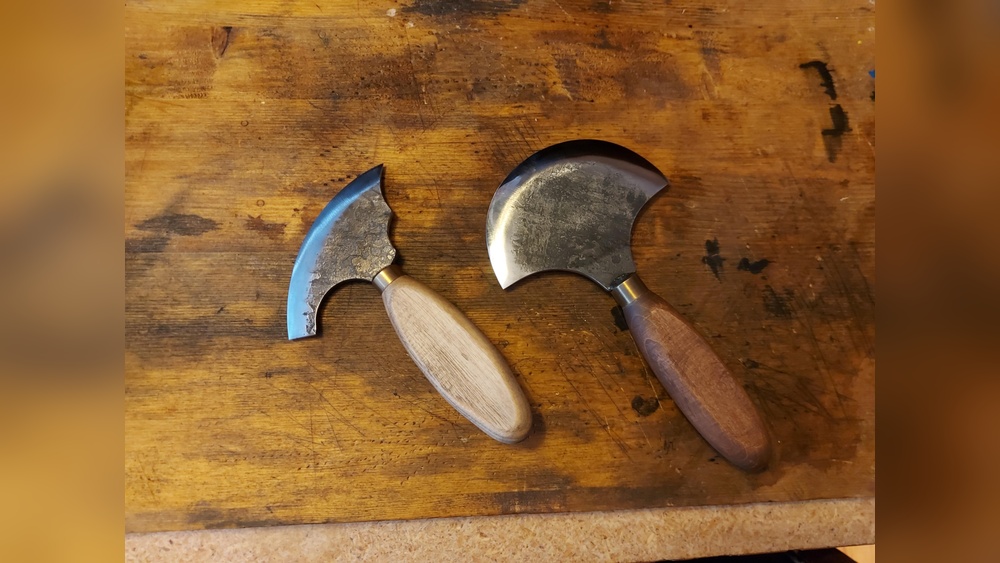
Leatherworking, shoemaking, and saddlery have stood the test of time, with hand tools evolving alongside the crafts themselves. Among the most iconic and essential of these tools are the head knife and the round knife. Though often mentioned in the same breath and even used interchangeably by some, these two knives each have distinct histories, designs, and optimal uses. The choice between a head knife and a round knife can significantly impact the quality, speed, and safety of your work, whether you’re a professional leatherworker, a hobbyist, or just starting.
Understanding the subtle yet critical differences between the head knife and the round knife is vital for anyone serious about leathercraft or related trades. Selecting the correct knife isn’t merely a matter of tradition or preference; it affects your workflow efficiency, the finish of your cuts, and even your long-term ergonomic health.
In my experience, the right knife can transform a challenging project into a satisfying, precise endeavor. This article draws on research, expert opinions, and real-world applications to provide a comprehensive comparison, helping you make an informed decision for your toolkit.
Key Takeaways
- Head knives and round knives are both indispensable in leathercraft but differ in blade shape, handling, and optimal applications.
- The head knife offers versatility for intricate curves, skiving, and straight cuts, while the round knife excels in sweeping, curved cuts and trimming.
- Factors like blade size, steel quality, handle ergonomics, and maintenance play crucial roles in overall performance.
- Proper technique and safety protocols are essential for maximizing tool longevity and ensuring user safety.
- The choice between the two often depends on project type, leather thickness, and user experience level.
- Both knives require regular sharpening and care for optimal results and safety.

Credit: makersleathersupply.com
The Origins And Evolution Of Head Knives And Round Knives
The Head Knife: A Tool With Deep Roots
The head knife has been a staple of leathercraft since at least the 18th century. Its distinctive, broad, semi-circular blade was designed for versatility, allowing craftsmen to perform a variety of cuts with a single tool. Early head knives were hand-forged and often personalized by their owners, reflecting the artisan’s preferences and needs.
European saddlers and American pioneers alike depended on head knives for preparing hides, cutting straps, and detailed pattern work. Today, renowned brands like Osborne and Vergez Blanchard continue to produce head knives that adhere to traditional designs, albeit with modern materials and manufacturing methods.
The Round Knife: A Parallel Development
The round knife closely resembles the head knife, but with a more pronounced, almost fully circular blade profile. Its origins are somewhat murkier, but it gained popularity in the 19th century, particularly in North America. The round knife’s shape allows for powerful, controlled sweeping cuts, making it ideal for trimming, patterning, and cutting curves in thick leathers.
Modern manufacturers such as Tandy Leather and Weaver Leather Supply offer round knives crafted from high-carbon steels and ergonomic handles, building on a rich heritage while responding to contemporary demands.
Distinguishing The Two: Evolution Through Application
While both knives evolved in tandem, their designs were shaped by the specific needs of craftspeople. The head knife’s flatter edge facilitates straight and angled cuts, whereas the round knife’s continuous curve is tailored for fluid, unbroken motions. Over time, these subtle differences have defined their respective places in workshops around the world.
Example: A 19th-century American saddler might use a head knife for patterning saddle skirts, while a shoemaker in the same era would favor a round knife for cutting out intricate boot uppers.
Credit: craftntools.com
Anatomy Of The Knives: Design, Materials, And Ergonomics
Blade Shape And Size
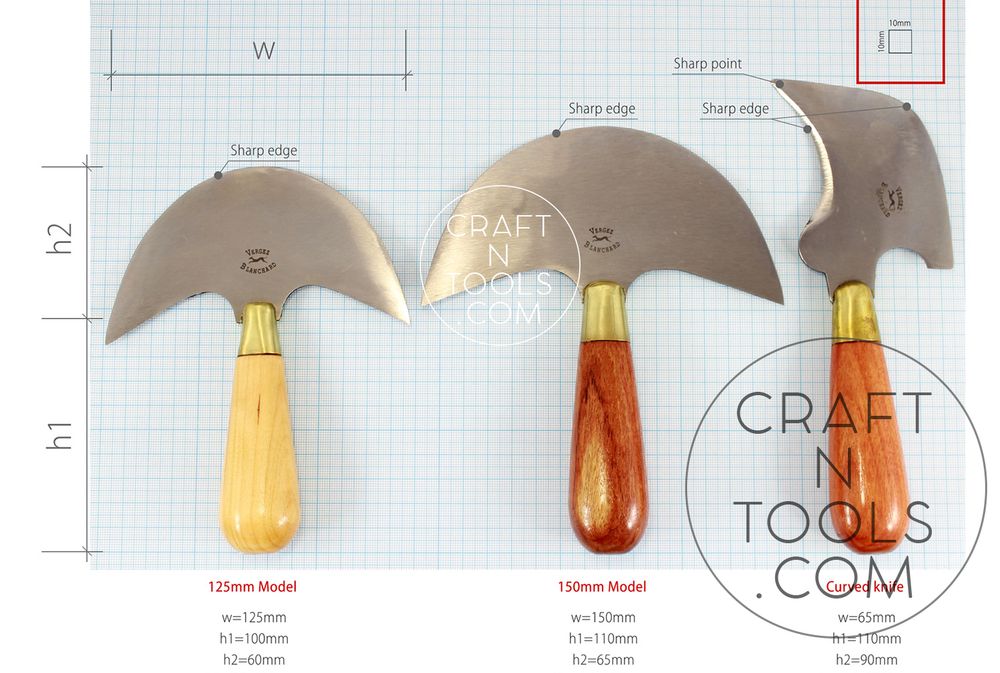
The most obvious difference between the two knives lies in the blade profile.
- Head Knife: Features a broad, semi-circular blade with pronounced corners at the base, offering both a straight edge and sweeping curve.
- Round Knife: Has a nearly full circular blade, maximizing the curved edge and minimizing straight segments.
Head knives typically range in blade width from 4 to 6 inches, while round knives are slightly smaller, averaging 3 to 5 inches.
Steel Quality And Blade Construction
Both knives are traditionally made from high-carbon steel, prized for its edge retention and ease of sharpening. Some contemporary versions use stainless steel or tool steel alloys for enhanced corrosion resistance and durability.
Pro Tip: Always check the Rockwell hardness rating (commonly 55-62 HRC) when selecting a knife, as this indicates edge durability.
Handle Design And Comfort
Ergonomics is critical for prolonged use. Head knives often feature a straight or gently contoured wooden handle, designed for a secure grip during both push and pull cuts. Round knives may have a slightly bulbous or flared handle, promoting comfort during the rotational motions typical of their use.
Example: When working on a large piece of saddle leather, a well-balanced handle reduces fatigue and allows for greater control, especially during extended cutting sessions.
Weight And Balance
A properly balanced knife ensures consistent, safe cuts. Head knives tend to be slightly heavier due to their larger blades, while round knives are lighter, allowing for quicker, more agile movement.
Comparison Table: Key Design Features
| Feature | Head Knife | Round Knife |
|---|---|---|
| Blade Profile | Semi-circular, straight sides | Full circular/rounded edge |
| Typical Blade Width | 4, 6 inches | 3, 5 inches |
| Handle Shape | Straight or contoured | Bulbous/flared |
| Weight | Heavier | Lighter |
| Material | High-carbon/stainless steel | High-carbon/stainless steel |

Credit: www.etsy.com
Cutting Performance: Techniques And Typical Uses
Techniques For The Head Knife
The head knife is renowned for its versatility. Users can employ various parts of the blade for different tasks:
- Flat edge: Ideal for straight cuts and trimming edges.
- Curved edge: Excellent for sweeping, freehand curves.
- Corner points: Useful for starting cuts or precision work.
A common technique involves rolling the knife forward, using the curve to “walk” through the leather with minimal resistance.
Techniques For The Round Knife
The round knife excels in making long, sweeping curves, especially when cutting out patterns or trimming thick, vegetable-tanned leathers. The continuous curve allows for a rocking motion, keeping the blade in constant contact with the material for smooth, controlled cuts.
Skilled users often rotate the knife slightly as they cut, following complex patterns without needing to reposition the leather.
Common Applications
Head Knife
- Cutting straight lines for belts and straps
- Shaping curves for saddlery and harness work
- Skiving (thinning) leather edges
- Trimming after sewing
Round Knife
- Cutting boot and shoe uppers
- Trimming excess material on curved projects
- Pattern work requiring fluid lines
- General-purpose shop cutting
Real-world Example: Saddle Making
A professional saddle maker may start by using a head knife to cut the large, straight sections of skirt leather, then switch to a round knife to trim the intricate, curved outlines of the fender and seat pieces. This tandem use leverages the strengths of both knives for maximum efficiency.
Advantages And Disadvantages: Head Knife Vs Round Knife
Head Knife: Pros And Cons
Advantages
- Versatility: Can perform nearly all cutting tasks in leatherwork.
- Precision: Sharp points enable detailed pattern work and inside corners.
- Control: Larger blade provides stability during long cuts.
Disadvantages
- Learning curve: Requires practice to master varied techniques.
- Heavier weight: May cause fatigue in extended sessions.
Round Knife: Pros And Cons
Advantages
- Superior for curves: Ideal for fluid, sweeping cuts.
- Agility: Lighter and easier to maneuver in tight patterns.
- Speed: Rocking motion allows for rapid, continuous cutting.
Disadvantages
- Limited straight cutting: Not as effective for long, straight edges.
- Requires skill: Proper technique is essential for clean results.
Comparison Table: Strengths And Weaknesses
| Aspect | Head Knife | Round Knife |
|---|---|---|
| Best for | Straight & curved cuts, skiving | Curved cuts, pattern work |
| Learning Curve | Moderate | High |
| Ergonomics | Stable, but heavier | Lighter, agile |
| Versatility | High | Medium |
| Maintenance | Requires frequent sharpening | Requires frequent sharpening |
Choosing The Right Knife For Your Needs
Project Type And Leather Thickness
Selecting the right knife depends largely on the type of work and the thickness of leather you most often use.
- Thick, heavy leather (8 oz+): Both knives perform well, but the round knife’s rocking cut can minimize resistance.
- Thin leathers (2, 4 oz): Head knives offer superior control for delicate cuts and skiving.
- Pattern work: Round knives excel at following intricate templates and organic shapes.
Skill Level And Personal Preference
- Beginners: May find head knives easier to master, as they offer a more stable platform for straight and basic curved cuts.
- Experienced craftsmen: Often keep both tools in their kit, choosing based on the specific task at hand.
Handle Fit And Comfort
Trying out different handle shapes is essential. In my experience, a poorly fitting handle can cause hand fatigue, blisters, or even repetitive strain injuries over time.
Budget And Brand Considerations
High-quality head and round knives range from $40 to over $200, depending on materials and craftsmanship. Established brands like Osborne, Vergez Blanchard, and Tandy Leather offer reliable options. Investing in a reputable brand ensures better edge retention and overall performance.
Example: A professional leatherworker investing in a Vergez Blanchard head knife may pay more upfront, but the tool’s longevity and cutting precision often justify the cost.
Maintenance Requirements
Both knives demand regular sharpening and stropping. If you prefer lower maintenance, look for stainless steel blades, but be aware they may not take as keen an edge as high-carbon steel.
Safety And Maintenance: Best Practices
Safe Handling Techniques
Both knives are extremely sharp and can cause severe injuries if mishandled. Follow these safety protocols:
- Always cut away from your body and fingers.
- Use a sturdy, self-healing cutting mat to protect your work surface and blade.
- Store knives in a sheath or dedicated holder when not in use.
Warning: Never attempt to catch a falling knife, let it drop to the floor.
Sharpening And Stropping
A keen edge is essential for clean cuts and safety. Most experts recommend:
- Sharpening with a whetstone or diamond plate every few hours of use.
- Stropping on leather with polishing compound to maintain a razor edge.
- Checking blade sharpness regularly, dull knives are more dangerous than sharp ones.
Cleaning And Rust Prevention
After each use, wipe the blade with a soft cloth to remove moisture and debris. Apply a light coat of oil to prevent rust, especially on high-carbon steel blades.
Storage Solutions
Store knives in a dry location, preferably in a sheath or magnetic holder, to avoid accidental cuts and blade damage.
Real-world Applications And Case Studies
Custom Leatherwork Studio
A boutique leather studio specializing in bespoke belts and wallets relies on head knives for straight cuts and strap trimming, while using round knives for pattern-intensive projects like curved wallet pockets and organic-shaped bag flaps. The dual-tool approach streamlines workflow and improves finished product quality.
Shoemaking Workshop
In a traditional shoemaking workshop, round knives are the primary tool for cutting out complex upper patterns and trimming excess material after stitching. The fluid motion enabled by the round knife’s design allows for rapid, precise work that is difficult to match with a head knife.
Personal Experience: Mastering Both Tools
When I first began leatherworking, the head knife felt more intuitive for basic tasks. However, as my skills progressed, I found that mastering the round knife expanded my capabilities, particularly for advanced pattern work and skiving. Today, I rely on both tools, switching seamlessly between them depending on project requirements.
Expert Opinions And Community Preferences
Survey Data And Trends
A survey conducted by the Leatherworkers Guild of America in 2026 found that 58% of professional leatherworkers preferred the head knife for general use, while 42% favored the round knife for specialized cutting and pattern work. The majority agreed that keeping both knives on hand provided the greatest flexibility.
Notable Expert Endorsements
- Al Stohlman, a legendary figure in leathercraft, frequently advocated for the versatility of the head knife in his instructional books and videos.
- Chuck Dorsett, a modern leathercraft educator, demonstrates both knives in his workshops, emphasizing technique over tool choice.
Community Insights
Online forums such as Leatherworker.net and social media groups often feature lively debates about which knife reigns supreme. The consensus is that both knives have earned their place, and the ideal choice depends on the user’s style, project type, and personal comfort.
Example: In a recent thread, a seasoned saddler recommended head knives for beginners, while a bespoke shoemaker insisted the round knife was irreplaceable for cutting intricate patterns.
Head Knife Vs Round Knife: Data-driven Comparison
To help clarify the distinctions, the following table summarizes key aspects based on user reports, expert commentary, and product specifications.
| Criteria | Head Knife | Round Knife |
|---|---|---|
| Precision Cutting | Excellent for straight lines, corners | Superior for smooth curves, patterns |
| Versatility | High (straight, curve, skive) | Medium (primarily curves) |
| Ease of Learning | Moderate | Challenging for beginners |
| Maintenance | Frequent sharpening required | Frequent sharpening required |
| Ergonomics | Stable, heavier | Lighter, agile |
| Best Use Case | General leatherwork, skiving | Shoemaking, curved patterns |
Frequently Asked Questions
What Is The Primary Difference Between A Head Knife And A Round Knife In Terms Of Blade Shape?
The head knife features a semi-circular blade with pronounced corners at the base, offering both straight and curved edges. In contrast, the round knife has an almost fully circular blade, which provides a continuous curve for sweeping cuts. This difference in blade geometry directly impacts how each knife handles specific cutting tasks, with the round knife excelling at curves and the head knife offering more versatility for straight and detailed cuts.
How Do I Choose The Correct Size Of Head Knife Or Round Knife For My Projects?
Blade size should correspond to the scale of your projects and your hand size. Larger blades (5, 6 inches) suit big, straight cuts and thick leathers, while smaller blades (3, 4 inches) offer greater control for intricate work and thin leathers.
Testing different sizes in hand before purchase is recommended for optimal comfort and control.
Are There Any Recommended Sharpening Techniques Specific To These Knives?
Both knives benefit from sharpening on a flat whetstone or diamond plate, followed by frequent stropping on leather with polishing compound. For the round knife, maintain the blade’s continuous curve by rotating it gently during sharpening, ensuring even edge wear.
Head knives require attention to both the curved edge and the corner points. Consistent maintenance preserves cutting performance and safety.
Can I Use Either Knife For Cutting Synthetic Or Non-leather Materials?
While both knives are designed for leather, they can cut synthetic materials like vinyl or rubber with proper care. However, cutting hard or abrasive materials may dull the blade faster and risk chipping the edge. Always clean and resharpen the knife after working with non-leather materials to maintain its integrity.
Where Can I Find Reliable, High-quality Head Knives Or Round Knives?
Leading suppliers such as Osborne Leather Tools and Tandy Leather offer a range of professional-grade head and round knives. Reading user reviews and seeking recommendations from experienced leatherworkers can further guide your selection toward reputable brands known for quality and durability.
Selecting between a head knife and a round knife is more than a technical decision, it’s a personal journey shaped by your craft, projects, and hands-on experience. By understanding the nuances of both tools, you can choose the knife that best complements your workflow, boosts your efficiency, and elevates the quality of your finished products.
Whether you’re cutting belts, crafting intricate patterns, or refining your technique, the right knife is an investment in your artistry and safety.