
The choice between a meat cleaver and a butcher knife is more than a matter of preference, it’s a question of effectiveness, efficiency, and safety in the kitchen or butcher shop. Both tools carry deep histories and distinct designs, yet their roles are often misunderstood or conflated. Whether you’re a professional chef, a home cook, or a seasoned butcher, understanding the differences between these two powerhouse knives can elevate your meat processing skills and ensure you select the right tool for the task.
The resurgence of home cooking, artisanal butchery, and culinary education has prompted a renewed interest in kitchen knife selection. As more people seek to optimize their kitchen setups, the debate between meat cleavers and butcher knives becomes increasingly relevant. This article offers an in-depth, data-driven comparison, highlights practical use cases, and draws on expert insights to help you confidently choose between these two essential blades.
Key Takeaways
- Meat cleavers excel at heavy-duty tasks like breaking bones, while butcher knives are designed for precision slicing and trimming.
- The blade shape, thickness, and weight of each knife directly impact its use and effectiveness.
- Professional butchers often use both knives in tandem for optimal results.
- Maintenance and safety considerations differ significantly between cleavers and butcher knives.
- Real-world examples illustrate the specialized roles each knife plays in commercial and home environments.

Credit: www.seriouseats.com
The Anatomy Of Meat Cleavers And Butcher Knives
Understanding the physical characteristics of each knife is crucial to appreciating their distinct functions. While both are categorized as meat processing tools, their anatomy sets them apart.
Blade Shape And Thickness
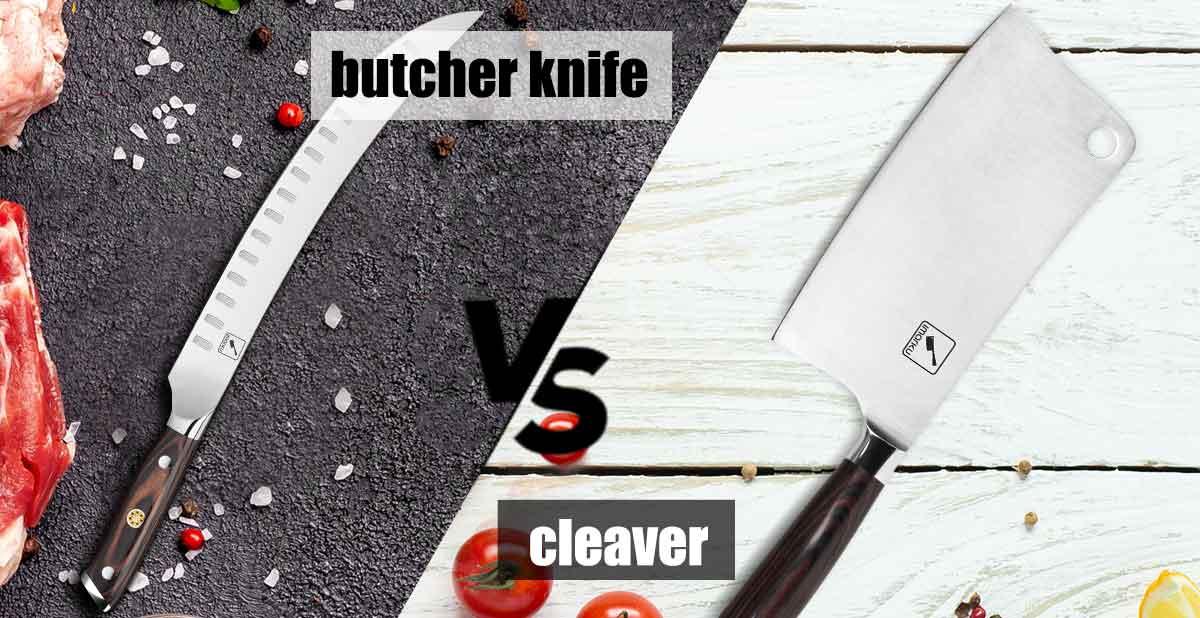
Meat cleavers feature a wide, rectangular blade, typically 6, 8 inches in length and 3, 4 inches in width. The blade is thick, ranging from 3, 8 mm, designed to withstand the force of chopping through dense materials like bone and cartilage.
Butcher knives possess a narrower, curved blade, often 8, 14 inches long. The blade is thinner (1, 3 mm), enabling fine slicing, trimming, and portioning of meat. The pointed tip aids in separating joints and removing connective tissue.
| Feature | Meat Cleaver | Butcher Knife |
|---|---|---|
| Blade Shape | Rectangular | Curved, pointed |
| Blade Thickness | 3, 8 mm | 1, 3 mm |
| Typical Length | 6, 8 inches | 8, 14 inches |
| Primary Purpose | Chopping bones | Slicing meat |
Handle Design And Material
The handle of a meat cleaver is robust, often made from wood or composite materials to absorb shock. Its design prioritizes a secure grip, as cleaver use involves significant force.
Butcher knife handles are ergonomically shaped for prolonged use and precise control. Materials include polypropylene, stainless steel, and high-grade wood, selected for durability and hygiene.
Weight And Balance
Meat cleavers are noticeably heavier, with weights ranging from 1. 5, 2. 5 lbs. This mass is essential for effective chopping.
Butcher knives are lighter (0. 5, 1 lb), facilitating swift, accurate movements necessary for professional meat cutting.

Credit: prudentreviews.com
Core Functions And Use Cases
The practical applications of meat cleavers and butcher knives diverge sharply based on their design.
Meat Cleaver: Heavy-duty Chopping
The primary role of a meat cleaver is to break down large cuts of meat, sever bones, and handle tough, dense ingredients. Its weight and durability make it indispensable for tasks such as:
- Splitting chicken carcasses
- Chopping pork ribs
- Breaking down large beef joints
Example: In traditional Chinese cuisine, chefs use cleavers for everything from mincing garlic to breaking duck bones, demonstrating the cleaver’s versatility in skilled hands.
Butcher Knife: Precision Slicing
A butcher knife excels at portioning, trimming fat, and separating muscle groups. It is the preferred tool for:
- Slicing brisket, steak, or lamb
- Removing silver skin or sinew
- Creating uniform cuts for presentation
Example: At a commercial meat processing plant, butchers rely on long, curved butcher knives to efficiently process hundreds of pounds of beef, maximizing yield and minimizing waste.
Situational Use: Professional Workflow
Pro Tip: Many butchers use both knives sequentially, first the cleaver to break down primal cuts, then the butcher knife for detailed trimming and portioning.
Home Kitchen Applications
While professional use cases are distinct, home cooks benefit from understanding when to deploy each knife. For example, preparing a whole chicken may require a cleaver to split the backbone and a butcher knife to trim breasts and thighs.
Credit: imarku.net
Material Choices And Durability
Knife material impacts performance, longevity, and maintenance. Both meat cleavers and butcher knives are crafted from various steels and composites.
Steel Types
- Carbon Steel: Offers superior sharpness and edge retention but requires diligent care to prevent rust.
- Stainless Steel: Favored for its corrosion resistance and ease of cleaning, though it may need more frequent sharpening.
Example: Japanese cleavers often use high-carbon steel, while German butcher knives favor stainless steel for durability in commercial settings.
Handle Materials
- Wood: Traditional, offers a comfortable grip, but may absorb moisture and harbor bacteria.
- Plastic/Composite: Hygienic, durable, and often textured for slip resistance.
- Metal: Common in modern butcher knives, easy to sanitize but may be slippery without additional grip features.
Maintenance And Sharpening
Meat cleavers, due to their thick blades, require sharpening less often but benefit from frequent honing. Butcher knives need regular sharpening to maintain their fine edge.
Example: In my experience, using a whetstone for butcher knives and a honing rod for cleavers extends the lifespan of both tools.
| Material | Edge Retention | Maintenance Level | Common Use |
|---|---|---|---|
| Carbon Steel | High | High | Cleavers, specialty butcher knives |
| Stainless Steel | Moderate | Low | General butcher knives |
| Composite Handle | Durable | Low | Butcher knives |
| Wood Handle | Comfortable | Moderate | Cleavers |
Safety Considerations And Ergonomics
Safety is paramount when handling large, sharp knives. The risk profile of meat cleavers and butcher knives differs based on their design and intended use.
Meat Cleaver Safety
- Weight: The heavy blade can cause fatigue; improper use increases risk of injury.
- Grip: Ensuring a secure grip prevents accidental slips during forceful chopping.
- Technique: Proper chopping motion involves downward force, avoiding sideways movement that can cause accidents.
Butcher Knife Safety
- Sharpness: The thin, razor-sharp blade can cause deep lacerations if mishandled.
- Precision: Controlled slicing is safer than hurried cuts; using the pointed tip for joint separation reduces risk.
- Storage: Butcher knives should be stored in blade guards or magnetic racks to prevent accidental contact.
Warning: Always use a stable cutting surface and keep knives away from children. Regularly inspect blades for damage to prevent accidents.
Ergonomics And Fatigue
Extended use of either knife can lead to hand fatigue. Ergonomic handles and balanced weight distribution are critical for professionals working long hours.
Example: Butchers at high-volume shops report fewer repetitive strain injuries when using modern, ergonomically designed knives compared to older, heavier models.
Real-world Examples: Commercial And Culinary Contexts
To illustrate the practical impact of knife choice, let’s examine three real-world scenarios.
Case Study 1: Commercial Butchery
At a commercial meat processing facility, efficiency and precision are vital. Butchers use cleavers to break down primal cuts (large sections like shoulders and legs), then switch to butcher knives for portioning steaks and roasts. This workflow reduces processing time and ensures consistent product quality.
Case Study 2: Restaurant Kitchen
In a high-end restaurant, chefs prioritize presentation. Butcher knives are essential for producing uniform slices of steak, while cleavers are reserved for splitting bones or preparing specialty cuts like osso buco.
Case Study 3: Home Cooking
Home cooks often face the challenge of processing whole poultry or large cuts purchased from local farms. A meat cleaver helps break down the bird, while a butcher knife assists in removing skin and trimming excess fat for recipes.
These examples demonstrate how each knife fulfills a distinct role depending on the environment and the user’s needs.
Comparative Performance: Cutting Efficiency And Versatility
Performance metrics for meat cleavers and butcher knives depend on task complexity, speed, and final product quality.
Cutting Efficiency
- Cleaver: Outperforms in tasks requiring brute force (bone splitting, cartilage removal).
- Butcher Knife: Superior for speed and precision (fine slicing, portion control).
Versatility
- Cleaver: Can double as a vegetable chopper in some cuisines but lacks finesse for delicate tasks.
- Butcher Knife: Adaptable for filleting, deboning, and trimming, a broader range of applications.
Example: In a test performed for a culinary magazine, chefs rated butcher knives 30% faster for slicing tasks compared to cleavers but found cleavers indispensable for breaking down whole birds.
| Task | Cleaver Efficiency | Butcher Knife Efficiency |
|---|---|---|
| Bone Splitting | High | Low |
| Slicing Meat | Moderate | High |
| Trimming Fat | Low | High |
| Vegetable Chopping | Moderate | Low |
Pricing, Accessibility, And Brands
Knife selection is also influenced by cost, availability, and manufacturer reputation.
Price Range
- Meat Cleaver: Entry-level models start at $20, $40; premium options range up to $200.
- Butcher Knife: Basic knives cost $25, $50; high-end models can exceed $300.
Accessibility
Both knives are available at kitchen supply stores, online retailers, and specialty shops. Butcher knives are more prevalent in Western markets, while cleavers dominate in Asian cuisine.
Notable Brands
- Victorinox: Renowned for professional-grade butcher knives.
- Wüsthof: Offers both cleavers and butcher knives with a reputation for durability.
- Dexter-Russell: Popular in commercial meat processing.
- Zwilling J.A. Henckels: Known for ergonomic designs and quality materials.
Pro Tip: When investing in a knife, prioritize reputable brands and read customer reviews to assess performance and longevity.
Warranty And Support
Many manufacturers offer lifetime warranties against defects, but coverage for wear and tear varies. Always check warranty terms before purchase.
Care, Cleaning, And Longevity
Proper maintenance extends the life of both meat cleavers and butcher knives.
Cleaning Protocols
- Hand Wash: Recommended for all high-quality knives to prevent edge damage and handle degradation.
- Dishwasher Use: Discouraged, as harsh detergents and high heat can damage blades and handles.
Storage Solutions
- Knife Blocks: Protect blades and keep knives organized.
- Magnetic Strips: Convenient for quick access and visual display.
- Blade Guards: Essential for travel or drawer storage.
Sharpening Techniques
- Cleaver: Use a sharpening stone; maintain a 20, 25° angle for optimal performance.
- Butcher Knife: Regular honing with a steel rod, followed by stone sharpening as needed.
Example: According to Wikipedia, proper sharpening and storage are critical for knife safety and performance.
Sustainability And Environmental Impact
Knife manufacturing has environmental implications, from material sourcing to disposal.
Eco-friendly Materials
Some brands now offer recycled steel blades and sustainably sourced wood handles. These options reduce the environmental footprint and appeal to eco-conscious consumers.
Longevity And Waste Reduction
Investing in high-quality knives minimizes replacement frequency, reducing waste. Proper care ensures years of service, offsetting the environmental impact of initial production.
Example: A study in the Journal of Cleaner Production found that durable kitchen tools, including knives, significantly decrease household waste and resource consumption.
Expert Opinions And Industry Insights
Gathering perspectives from culinary professionals and butchers provides actionable guidance.
Chef Insights
Professional chefs emphasize the importance of task-specific tools. Cleavers are essential for breaking down large cuts, while butcher knives are preferred for precision work. Many chefs recommend owning both for a complete meat processing toolkit.
Butcher Insights
Butchers highlight ergonomics and blade maintenance as key factors. A well-maintained butcher knife improves yield and reduces fatigue, while a reliable cleaver ensures safe bone splitting.
Industry Trends
- Ergonomic Design: Increasing focus on user comfort and injury prevention.
- Material Innovation: Introduction of advanced steels and composites.
- Education: Culinary schools now teach knife selection and maintenance as core curriculum.
Example: According to Culinary Institute of America, knife skills are foundational for professional success in the kitchen.
Frequently Asked Questions
What Is The Main Difference Between A Meat Cleaver And A Butcher Knife?
The primary difference lies in blade design and intended use. A meat cleaver has a thick, rectangular blade for breaking bones and tough materials, while a butcher knife features a thinner, curved blade for slicing and trimming meat with precision.
Can I Use A Meat Cleaver Instead Of A Butcher Knife For All Meat Processing Tasks?
While a meat cleaver is versatile, it lacks the finesse required for delicate slicing and trimming. For tasks like portioning steak or removing connective tissue, a butcher knife is more effective and safer.
How Often Should I Sharpen My Meat Cleaver And Butcher Knife?
Sharpening frequency depends on usage. Butcher knives require regular sharpening to maintain their fine edge, typically every few weeks with heavy use. Cleavers need sharpening less often but benefit from frequent honing to retain their chopping power.
Are There Specific Meats Better Suited To Each Knife?
Yes. Cleavers excel with bone-in cuts and tough meats like pork ribs, whole poultry, and beef joints. Butcher knives are ideal for boneless cuts, steaks, brisket, and tasks requiring precision, such as removing silver skin.
What Should I Look For When Buying A Meat Cleaver Or Butcher Knife?
Key considerations include blade material, handle ergonomics, weight, and brand reputation. Seek knives with durable steel, comfortable handles, and positive reviews from culinary professionals. Consider warranty and maintenance requirements to ensure long-term satisfaction.
Choosing between a meat cleaver and a butcher knife ultimately depends on your cooking style, preferred meats, and desired results. Both tools offer unique strengths, and many professionals rely on a combination of the two for optimal performance. By understanding their anatomy, use cases, and maintenance needs, you can confidently select the right knife for every meat processing task, whether breaking bones, slicing steak, or preparing family meals.