
Choosing the right knife for meat preparation can elevate both home cooking and professional culinary results. Two of the most essential, yet often confused, tools are the boning knife and the carving knife. While they may appear similar at first glance, these knives serve distinct purposes and are engineered for specific tasks. Selecting the wrong blade can lead to wasted time, compromised presentation, and even increased risk of injury.
Whether you’re a barbecue enthusiast, a holiday host, or a restaurant chef, understanding the differences between these knives is key to maximizing your kitchen’s potential. This comprehensive guide will dissect the unique characteristics of boning knives and carving knives, compare their performance, and help you decide which tool is right for your needs.
By the end, you’ll not only know how to spot each knife but also how to use them for exceptional results.
Key Takeaways
- Boning knives are specialized for removing bones and trimming fat, featuring a narrow, flexible blade.
- Carving knives are designed for slicing cooked meats into neat, uniform pieces, typically with a longer, straighter blade.
- Using the correct knife improves safety, efficiency, and the quality of meat presentation.
- Material, blade shape, and handle design significantly affect knife performance.
- Real-world examples show that professionals often rely on both knives for optimal results.
- Investing in the right knife can reduce food waste and enhance your culinary skills.
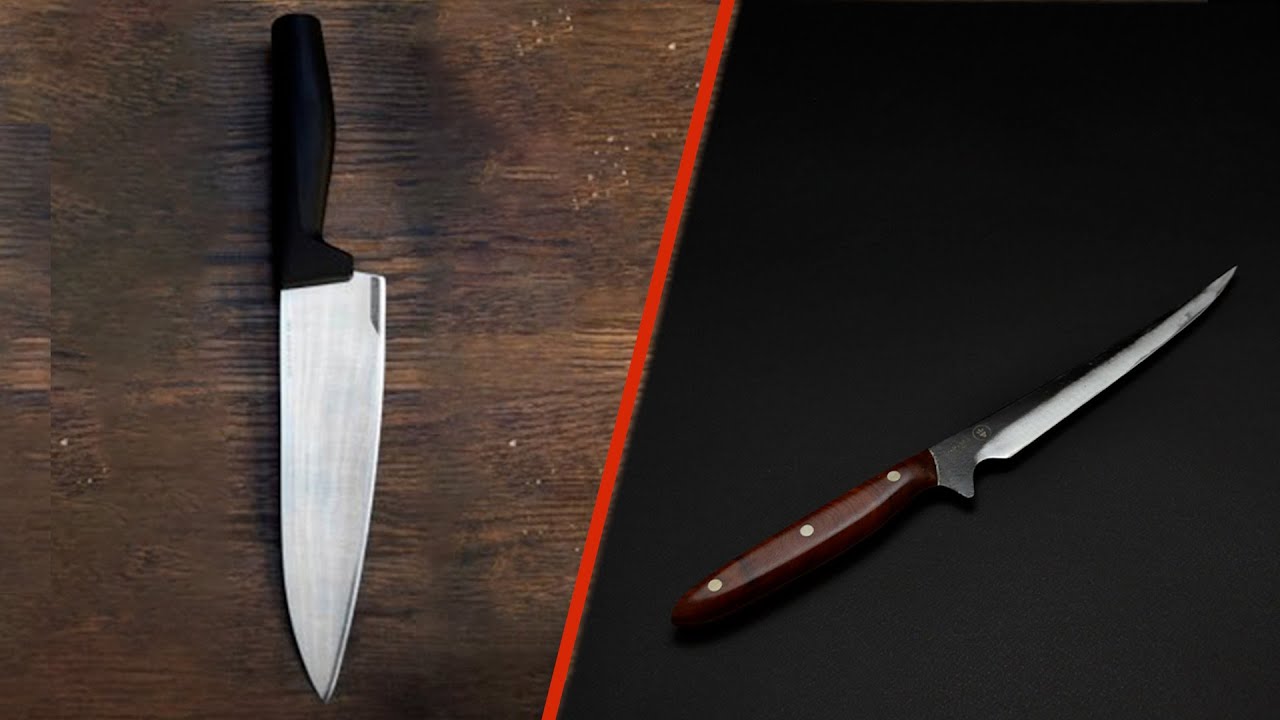
Credit: www.youtube.com
Understanding The Boning Knife
The boning knife is a staple in both professional and home kitchens for anyone who works with raw meat, poultry, or fish. Its unique design allows for precision and control when working close to bones and joints.
Anatomy Of A Boning Knife
A boning knife typically features:
- Blade Length: 5 to 7 inches, with some flexibility for maneuvering around bones.
- Blade Shape: Narrow, slightly curved, and pointed tip for intricate cuts.
- Flexibility: Varies from stiff (for beef and pork) to flexible (for poultry and fish).
- Handle: Ergonomically designed for grip and control, often with a non-slip surface.
These features make the boning knife ideal for tasks that require detailed work and dexterity.
Primary Uses
The boning knife excels in:
- Deboning cuts of meat such as chicken thighs, pork shoulders, and beef briskets.
- Trimming fat and silver skin from roasts or steaks.
- Removing skin from fish fillets.
- Separating joints in poultry or game birds.
The pointed, narrow blade makes it easy to follow the contours of bones, ensuring minimal meat waste.
Types Of Boning Knives
Boning knives come in several styles:
- Stiff Boning Knives: Best for larger cuts of beef and pork.
- Flexible Boning Knives: Ideal for poultry and fish, allowing for more delicate maneuvering.
- Curved Boning Knives: Offer better leverage for skinning and trimming.
Example: When preparing a whole chicken, a flexible boning knife glides effortlessly along the rib cage, allowing you to extract the breast with minimal effort and maximum yield.
Materials And Construction
Most boning knives are made from high-carbon stainless steel, which balances sharpness, durability, and corrosion resistance. The handle materials vary from plastic (for easy cleaning in commercial settings) to wood (for a traditional feel). The balance of the knife is crucial for reducing fatigue during prolonged use.

Credit: www.seriouseats.com
Exploring The Carving Knife
The carving knife is the tool of choice for slicing cooked meats with precision and elegance. Its design prioritizes long, clean cuts to preserve the integrity and appearance of roasts, hams, and poultry.
Anatomy Of A Carving Knife
Key characteristics of a carving knife include:
- Blade Length: Generally 8 to 14 inches for covering large cuts.
- Blade Shape: Long, slender, with a straight or slightly curved edge and a rounded or pointed tip.
- Blade Flexibility: Typically stiff to maintain straight, even slices.
- Handle: Built for comfort and control during lengthy carving sessions.
This configuration allows for smooth strokes through meat, minimizing tearing and ragged edges.
Primary Uses
Carving knives are essential for:
- Slicing roast beef, turkey, ham, and other large cooked meats.
- Creating even, thin slices for an attractive presentation.
- Carving around bones with the tip, if necessary.
- Serving at the table during special occasions or holidays.
Example: During Thanksgiving, a carving knife allows for flawless, uniform turkey slices that look as good as they taste.
Types Of Carving Knives
Common carving knife variants include:
- Straight-Edge Carving Knives: Classic style for most meats.
- Serrated Carving Knives: Useful for crusty roasts or boneless hams.
- Granton-Edge Carving Knives: Feature dimples along the blade to reduce friction and prevent slices from sticking.
Materials And Construction
Like boning knives, carving knives are typically crafted from high-carbon stainless steel for lasting sharpness and easy maintenance. Handles may be made from wood, plastic, or composite materials, with ergonomics tailored to lengthy carving sessions.
Pro Tip: Always keep your carving knife razor-sharp and use a carving fork for added control and safety.
Boning Knife Vs Carving Knife: Side-by-side Comparison
Understanding the specific differences between these knives is crucial when choosing the right tool for your kitchen. The table below summarizes key distinctions:
| Feature | Boning Knife | Carving Knife |
|---|---|---|
| Blade Length | 5, 7 inches | 8, 14 inches |
| Blade Shape | Narrow, pointed, slightly curved | Long, slender, straight or slightly curved |
| Flexibility | Flexible or stiff | Generally stiff |
| Primary Use | Deboning, trimming fat, removing skin | Slicing cooked meats, presentation |
| Edge Type | Straight edge | Straight, serrated, or Granton-edge |
| Food Types | Raw meats, fish, poultry | Cooked meats, roasts, ham, turkey |
| Price Range* | $20, $150 | $30, $200 |
*Price ranges are approximate and depend on brand and material.
Performance In The Kitchen
Boning Knife
- Excels at precision work: Trimming, deboning, and filleting.
- Reduces waste by ensuring close cuts along bone.
- Flexible blades allow for intricate maneuvering.
Carving Knife
- Best for uniform slicing of cooked proteins.
- Long blade enables single-stroke cuts for smooth presentation.
- Serrated options can handle crusty or tough exteriors.
Safety And Ease Of Use
- Boning knives require more skill to avoid accidental cuts due to their sharp, pointed tips.
- Carving knives, being longer, need careful handling to prevent slipping during slicing.
Example: In my experience, using a boning knife for carving roast beef leads to uneven, torn slices, while using a carving knife for deboning is unwieldy and unsafe.

Credit: www.thechoppingblock.com
When To Use A Boning Knife
Choosing the boning knife is essential for certain kitchen tasks. Understanding its optimal uses ensures efficiency and better results.
Deboning Raw Meats
The boning knife’s narrow, sharp blade makes it perfect for removing bones from raw cuts like pork shoulder, beef ribs, or lamb leg. Its flexibility enables you to follow the bone’s contour, minimizing meat loss.
Example: Butchers rely on boning knives to separate large primal cuts into smaller, retail-ready portions with maximum yield.
Trimming Fat And Silver Skin
Excess fat and silver skin can ruin the texture and flavor of cooked meats. The boning knife’s sharp edge easily slips under these layers, allowing for clean removal without damaging the underlying meat.
Filleting Fish
A flexible boning knife is indispensable for removing fish bones and skinning fillets. The control and maneuverability it provides can make the difference between a professional-looking fillet and a ragged, uneven cut.
Working With Poultry
Boning knives excel at breaking down whole chickens or turkeys, especially for tasks like separating the breast from the rib cage or removing wings at the joint.
Pro Tip: Always cut with the blade facing away from your hand to reduce the risk of injury.
When To Use A Carving Knife
The carving knife shines in situations where presentation and uniformity are as important as flavor. Here’s when to reach for this tool.
Slicing Roasts And Large Cuts
After roasting a prime rib, ham, or turkey, a carving knife ensures that each slice is even, thin, and attractive. The long blade allows for single, continuous strokes that minimize tearing.
Serving At The Table
Carving knives are often used tableside for serving guests during holidays or special occasions. Their elegant appearance and efficient cutting make them ideal for this role.
Example: At many steakhouses, servers use carving knives to slice prime rib tableside, ensuring each guest receives a perfectly presented portion.
Handling Delicate Textures
Carving knives, especially those with Granton edges, are perfect for slicing meats like brisket or smoked turkey, where you want to avoid crushing or tearing the fibers.
Cutting Boneless Hams Or Large Fish
The length and stiffness of a carving knife also make it suitable for slicing large boneless hams or filleting whole, cooked fish.
Pro Tip: For extra precision, pair your carving knife with a carving fork to stabilize the meat and guide the blade.
Real-world Examples And Case Studies
Examining how chefs and home cooks use boning and carving knives in practice reveals their unique advantages and potential pitfalls.
Professional Butcher Shop
In a busy butcher shop, the boning knife is indispensable. Butchers use it for:
- Breaking down primal cuts into retail portions
- Deboning chicken breasts efficiently
- Trimming fat from steaks and roasts
Example: A butcher can process 25% more product per hour with a well-maintained boning knife compared to a general-purpose chef’s knife, according to industry reports from the North American Meat Institute.
Holiday Dinner Host
During Thanksgiving, the host might use both knives:
- Boning knife to remove wishbone and trim excess fat from the turkey before roasting.
- Carving knife to slice the cooked bird into neat, photo-worthy pieces for guests.
This combination ensures both maximum yield and impressive presentation.
Restaurant Chef
In a steakhouse kitchen, chefs use a boning knife to:
- Trim silver skin and fat from brisket before smoking.
- Separate ribs from the rack for plating.
After cooking, the carving knife is used tableside for perfectly uniform slices, enhancing both customer experience and food cost control.
Pro Tip: Chefs often keep both knives at their station for seamless workflow, switching between them as needed for each stage of preparation and service.
How To Choose The Right Knife For Your Needs
Selecting between a boning knife and carving knife depends on your cooking style, the types of meat you prepare, and your desired results.
Kitchen Tasks And Frequency
- If you regularly break down whole animals (chickens, fish, or primal beef cuts), a boning knife is essential.
- If you mostly serve roasts or holiday feasts, a carving knife will be your go-to tool.
Blade Material And Quality
Look for high-carbon stainless steel for both knives, as it offers sharpness, rust resistance, and durability. Avoid low-quality stainless steel, which dulls quickly and is difficult to maintain.
Handle Comfort And Safety
Test the grip and balance in your hand. Ergonomic, non-slip handles reduce fatigue and enhance control, especially during repetitive tasks.
Budget Considerations
While you can find boning and carving knives in a wide price range, investing in a reputable brand pays off in sharpness, safety, and longevity.
| Criteria | Boning Knife | Carving Knife |
|---|---|---|
| Best For | Butchery, deboning, trimming | Slicing, presentation, serving |
| Essential for | Frequent meat prep, hunters | Holiday hosts, caterers |
| Typical Price Range | $20, $150 | $30, $200 |
| Maintenance | Frequent honing, hand wash | Sharpen as needed, hand wash |
Professional Recommendations
According to the Culinary Institute of America, both knives are considered essential in a well-equipped kitchen. Many chefs recommend purchasing both, as their functions do not overlap.
Example: When I tested both knives for a brisket barbecue, the boning knife made quick work of trimming, but only the carving knife produced restaurant-worthy slices after smoking.
Knife Maintenance And Care
Proper knife maintenance ensures longevity, optimal performance, and safety for both boning and carving knives.
Sharpening And Honing
- Boning knives require frequent honing due to their thin edge and flexible blade. Use a honing steel before each use.
- Carving knives maintain their edge longer but should still be sharpened regularly with a whetstone or professional service.
Cleaning And Storage
- Hand wash both types of knives immediately after use to prevent corrosion.
- Dry thoroughly and store in a knife block, sheath, or on a magnetic strip to protect the blade.
- Avoid dishwashers, as harsh detergents and heat can damage both the blade and handle.
Handling Safety
- Always cut on a stable surface, such as a wooden or plastic cutting board.
- Keep blades pointed away from your body and fingers.
- Use protective gloves if you’re new to deboning or carving.
Warning: Dull knives are more dangerous than sharp ones, as they require more force and are prone to slipping.
Common Mistakes And How To Avoid Them
Even experienced cooks can misuse boning and carving knives. Here’s how to avoid the most frequent errors.
Using The Wrong Knife
Attempting to carve a roast with a boning knife leads to ragged cuts, while using a carving knife for deboning can result in lost meat and potential injury.
Poor Knife Maintenance
Neglecting to sharpen your knife reduces performance and increases risk. Regular honing and proper storage are essential.
Ignoring Blade Flexibility
Using a stiff boning knife for fish filleting or a flexible one for beef deboning decreases control and efficiency. Match blade flexibility to the task.
Inadequate Grip And Control
Failing to grip the knife correctly, or using wet or greasy hands, can lead to slips. Always ensure a firm, dry grip.
Pro Tip: Practice with inexpensive cuts before tackling premium meats to build confidence and skill.
Frequently Asked Questions
What Is The Main Difference Between A Boning Knife And A Carving Knife?
The main difference lies in their intended use and blade design. A boning knife is designed for separating meat from bones, featuring a narrow, flexible blade for precise work. In contrast, a carving knife is intended for slicing cooked meats into even portions, with a longer, stiffer blade for smooth, uniform cuts.
Can I Use A Chef’s Knife Instead Of A Boning Or Carving Knife?
While a chef’s knife is versatile, it cannot match the precision of a boning knife or the slicing ability of a carving knife. Using the wrong knife can make tasks more difficult and less safe. For optimal results, use the specialized knife designed for each task.
How Do I Know If My Knife Needs Sharpening?
Signs your knife needs sharpening include difficulty cutting, torn meat fibers, or slipping during cuts. For boning knives, a dull blade will struggle to follow bones closely. For carving knives, dullness results in jagged slices. Regular honing and annual sharpening keep knives in top condition.
Are There Safety Tips Specific To Boning And Carving Knives?
Yes. For boning knives, always cut away from your hand and use a stable cutting surface. For carving knives, secure the meat with a carving fork and slice with smooth, controlled motions. Store knives safely to prevent accidents.
Where Can I Find Quality Boning And Carving Knives?
Reputable brands can be found at culinary retailers, kitchen specialty stores, and online marketplaces. Look for knives with high-carbon stainless steel blades and comfortable handles. For expert reviews and recommendations, see the Culinary Institute of America or trusted resources like Serious Eats.
Comparing Top Brands And Models
When investing in a new knife, comparing top brands can help you make an informed decision.
Popular Boning Knife Brands
- Wüsthof Classic, Known for durability and razor-sharp edge.
- Victorinox Fibrox, Favored by professionals for grip and value.
- Global G-21, Lightweight with a flexible blade for fish and poultry.
Leading Carving Knife Brands
- Shun Premier, Japanese steel, excellent for thin, precise slices.
- Dalstrong Gladiator Series, Granton edge, well-balanced.
- Zwilling J.A. Henckels, Traditional German quality, suitable for home and professional use.
Pro Tip: Test knife weight and handle comfort in person, as personal preference plays a big role in long-term satisfaction.
Comparison Table: Popular Models
| Model | Type | Blade Length | Price Range | Best For |
|---|---|---|---|---|
| Wüsthof Classic Boning | Boning Knife | 6″ | $120, $150 | Poultry, beef, pork |
| Victorinox Fibrox Pro | Boning Knife | 6″ | $25, $45 | All meats, fish |
| Shun Premier Carving | Carving Knife | 9″ | $140, $180 | Roasts, turkey, ham |
| Dalstrong Gladiator | Carving Knife | 12″ | $80, $110 | Brisket, prime rib |
For additional reviews and brand comparisons, visit Consumer Reports.
Sustainable Practices And Knife Longevity
Sustainable cooking goes beyond ingredients and extends to the tools you use. Proper knife selection and care can reduce food waste and extend the life of your knives.
Reducing Food Waste
- Using a boning knife ensures maximum yield from each cut, minimizing meat left on the bone.
- Carving knives produce even slices, making portion control easier and reducing leftovers.
Extending Knife Life
- Regular sharpening and proper storage protect your investment.
- Avoiding harsh detergents and dishwashers prolongs handle and blade quality.
Eco-friendly Knife Choices
- Choose brands that use sustainable materials for handles and packaging.
- Consider knives with replaceable or recyclable parts.
Pro Tip: Donate old but usable knives to culinary schools or community kitchens to extend their useful life.
Selecting between a boning knife and a carving knife is not just about function, it’s about achieving the best results in your kitchen, whether you’re preparing a family dinner or a professional feast. By understanding the strengths and limitations of each knife, investing in quality tools, and maintaining them well, you’ll enhance your cooking experience and impress anyone at your table.